
Laurence Anyways
A vibrant, bittersweet romantic melodrama chronicling a decade of impossible love and true identity. Like holding breath underwater until the lungs explode, it portrays the overwhelming deluge of passionate connection colliding with personal revolution and societal boundaries.
Laurence Anyways
Laurence Anyways
18 May 2012 Canada 168 min ⭐ 7.6 (889)
Director: Xavier Dolan
Cast: Melvil Poupaud, Suzanne Clément, Nathalie Baye, Monia Chokri, Susan Almgren
Drama Romance
Identity and Authenticity The Limits of Unconditional Love Societal Alienation and Prejudice Time, Memory, and Nostalgia
Budget: $9,500,000

Laurence Anyways - Ending Explained

⚠️ Spoiler Analysis

The film is framed as a retrospective interview ten years after Laurence begins her transition. Throughout the narrative, we see the tragic dissolution of Laurence and Fred's bond. After a valiant attempt to stay together, Fred breaks under societal pressure and her own lack of same-sex attraction. She leaves Laurence, marries a man named Albert, and has a child, attempting to force herself into a "normal" life.

Years later, Laurence and Fred secretly reunite and run away to the Isle of Black. Their passion briefly reignites, proving their soulmate connection, but reality crashes in when Fred's husband discovers the affair, leading to a permanent fracture. In the final, devastating scene in a café, they both realize they no longer fit together; the "baggage" is simply too heavy. They part ways forever. The film then pulls off a brilliant twist: the final shot flashes back to the day they first met. A closeted Laurence introduces himself, saying, "Laurence, anyways." This reveals the hidden meaning of the title—despite the gender transition, the lost decade, and the tragedy, her core essence was, is, and will always be simply "Laurence."

Alternative Interpretations

The Ending: Eternal Doom vs. Eternal Beauty
The film concludes by looping back to the very first time Laurence and Fred met on a film set, where Laurence introduces herself as "Laurence, anyways." Some viewers interpret this cyclically as a tragedy—that their relationship was doomed from the first second because it was built on a hidden truth. Conversely, an optimistic interpretation views this as a celebration: regardless of the pain and the breakup, the essence of Laurence remained the same, and the profound beauty of their connection is eternally preserved in their memories.

Fred's Breakdown as Expressionist Fantasy
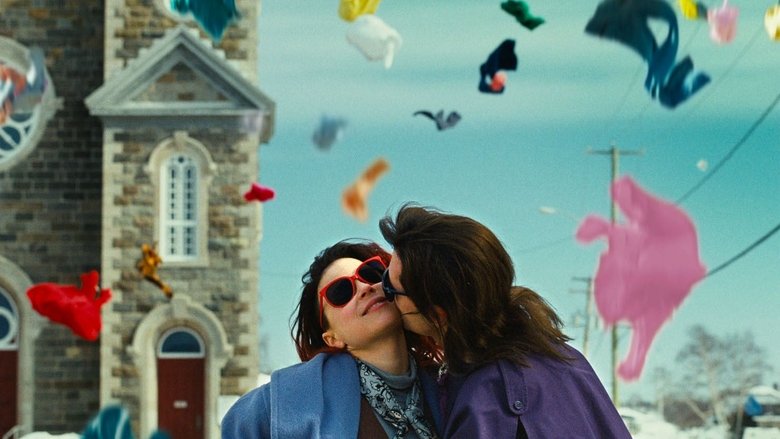
During Fred's psychological breakdown, the film features highly surreal sequences, including the extravagant 'Cinebal' party and her shedding clothes down a hallway. Some critics read these moments not as literal events occurring in the plot, but as expressionistic, subjective fantasies occurring entirely within Fred's mind as she desperately tries to escape her suffocating reality.

Self-Actualization vs. Narcissism
A critical debate surrounds the ethics of Laurence's journey. Some audiences interpret Laurence's transition while remaining in the relationship as an act of inherent selfishness, forcing Fred into a queer dynamic she did not consent to. The counter-interpretation strongly asserts that Laurence's actions are purely a matter of survival, positing that self-actualization cannot be "selfish" when the alternative is psychological death, even if it causes unavoidable collateral damage.