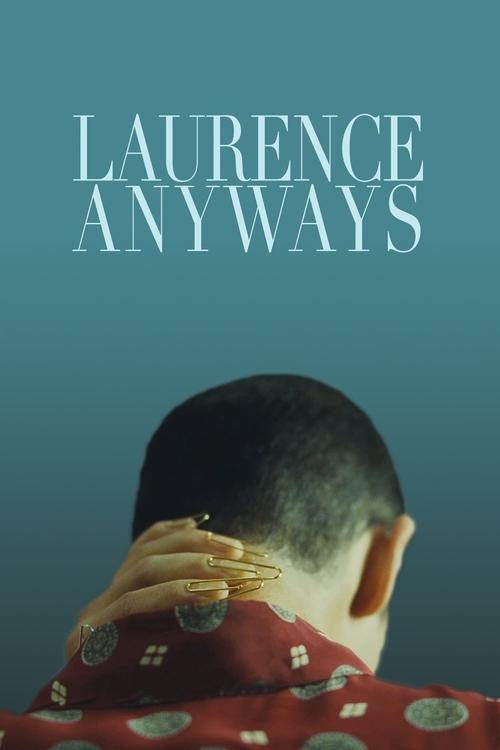
Laurence Anyways
Overview
Set in Montreal during the late 1980s and 1990s, the film follows Laurence Alia, a brilliant, award-winning literature teacher, and his fierce, passionate relationship with his girlfriend, Fred. They share an intensely intimate bond, existing in a private world where they list the banal things that "minimize their pleasure" to separate themselves from ordinary society. Their romance is overwhelming and colorful, defined by a deep mutual understanding.
The narrative fractures on Laurence's 35th birthday when he confesses a secret he has repressed his entire life: he is a transgender woman and must transition to survive. Despite the initial shock and devastation, Fred resolves to stay by Laurence's side and support her transformation. What follows is a turbulent, decade-long journey as Laurence navigates her transition in a highly prejudiced society, while Fred struggles to reconcile her profound love for Laurence with her own heterosexual identity.
Spanning a decade, the story chronicles the agonizing realization that love alone cannot always conquer profound personal differences. It serves as a sweeping, stylistic epic about human connection, the immense cost of living authentically, and the tragedy of two soulmates whose evolving identities eventually force them onto separate paths.
Core Meaning
Xavier Dolan explores the devastating friction between personal authenticity and the impossibility of unconditional love. The core message is that self-actualization often requires profound, unavoidable collateral damage. Laurence must transition to survive, but this vital act of self-preservation inadvertently shatters the woman she loves most.
The film suggests that while love can be infinite in its emotional depth, it is often bound by physical and identity-based parameters in reality. It asks us to accept the beautiful but tragic truth that two people can be soulmates yet remain fundamentally incompatible, making the film a bittersweet ode to the enduring power of memories after a romance has structurally failed.
Thematic DNA
Identity and Authenticity
The film delves into the agonizing struggle of reconciling one's internal self with external reality. Laurence describes living as a man as "holding breath underwater." Her journey is an uncompromising pursuit of her true female identity, demonstrating that living an authentic life is a matter of survival, even when it costs her job, her safety, and her closest relationships.
The Limits of Unconditional Love
Through Fred's arc, the film tests the romantic ideal that "love conquers all." Fred deeply loves Laurence's soul, but her own sexual identity is heterosexual. The film masterfully portrays the heartbreak of a love that is spiritually profound but practically impossible, showing that boundaries of sexual orientation and gender identity cannot simply be erased by affection.
Societal Alienation and Prejudice
Both Laurence and Fred face the immense pressure of a judgmental society. Laurence is fired by the university's conservative administration and faces physical violence in a bar. Meanwhile, Fred suffers from the relentless, invasive gaze of outsiders, culminating in her explosive breakdown at a diner. The film highlights how societal intolerance poisons personal sanctuaries.
Time, Memory, and Nostalgia
Spanning ten years, the narrative shows how time heals, distorts, and preserves. Dolan emphasizes the power of nostalgia, showing that while the relationship fails in the present, the passionate memories of the past remain untouchable and eternally beautiful.
Character Analysis
Laurence Alia
Melvil Poupaud
Motivation
To stop living a lie, align her physical body with her true gender, and survive an existence that was previously suffocating her.
Character Arc
Laurence transforms from a closeted, repressed male literature teacher into a fully actualized, confident transgender woman. Along the way, she loses her job, faces physical and emotional abuse, and tragically loses her soulmate, but ultimately achieves the internal peace she desperately needed.
Frédérique "Fred" Belair
Suzanne Clément
Motivation
To fiercely protect her immense love for Laurence while desperately trying to maintain her own sexual identity and mental health.
Character Arc
Fred begins as an intensely devoted partner who bravely tries to navigate Laurence's transition. However, she breaks under the weight of societal judgment and the realization that she is not attracted to women. She attempts to build a "normal" life with a husband, but remains eternally tethered to Laurence through memory.
Julienne Alia
Nathalie Baye
Motivation
To maintain her emotional boundaries while finding a pragmatic way to support her child's radical life change.
Character Arc
Julienne starts as a cold, distant mother who shares a strained relationship with her child. Following Laurence's transition, Julienne eventually accepts her daughter with a blunt pragmatism, surprisingly forming a closer bond with Laurence the woman than she ever had with Laurence the man.
Symbols & Motifs
Holding Breath Underwater
It symbolizes Laurence's lifelong repression of her true gender, representing the suffocating, deadly nature of living a lie.
Laurence relates her suffering to a childhood game of holding her breath underwater. She tells Fred that for 35 years she has been holding her breath, and now her "lungs are exploding," explaining why her transition is a matter of absolute life and death.
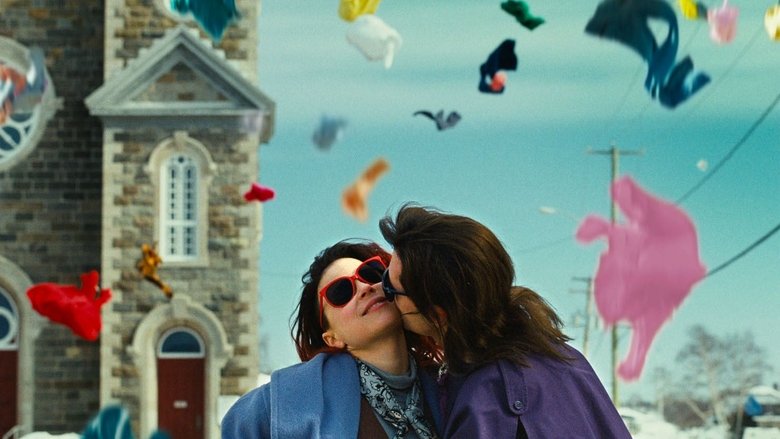
Falling Clothes
This recurring visual motif symbolizes shedding past identities, discarding societal expectations, and undergoing an emotional rebirth.
In highly stylized, expressionistic sequences, such as when Laurence and Fred step out of a house, a torrential rainfall of colorful clothing falls from the sky, visually manifesting the shedding of their old lives.
The "Minimizing Pleasure" List
It symbolizes the exclusive, deeply intimate bubble that Laurence and Fred have built to protect themselves from the mundane, banal world.
Introduced in the opening scenes, the lovers playfully recite things that limit human pleasure. This intellectual exercise isolates them as a united front against society, making it tragic when society's norms eventually break into their private world.
The Butterfly
It is a classic symbol of transformation, metamorphosis, and fragile beauty, mirroring Laurence's transition.
The film ends by flashing back to the moment the lovers first met. Laurence, presenting as a man, offers Fred a butterfly pendant, subtly foreshadowing the profound metamorphosis she will undergo and how it will alter their lives.
Memorable Quotes
Je cherche une personne qui comprend ma langue et la parle. Une personne qui, sans être un paria, s'interrogera non seulement sur les droits et la valeur des marginaux, mais aussi sur ceux des gens qui prétendent être normaux.
— Laurence Alia
Context:
Laurence says this during an interview with a journalist, which acts as the framing device for the film ten years after her transition began.
Meaning:
This establishes the thesis of Laurence's journey: she demands to be understood not as a freak, but as a human being whose existence questions the very fabric of what society deems "normal."
C'est une révolte ? - Non sire, c'est une révolution.
— Michel Lafortune & Laurence Alia
Context:
Laurence arrives to teach her university class presenting in feminine clothing for the very first time. A colleague asks the question, and Laurence whispers the iconic reply.
Meaning:
A historical reference to the French Revolution, emphasizing that Laurence's transition is not a minor rebellion or a phase, but a complete, irreversible overthrow of her previous existence.
J'ai jamais eu l'impression que t'étais ma mère. - Ben moi j'ai jamais eu l'impression que t'étais mon fils. Par contre j'ai l'impression que t'es ma fille.
— Laurence & Julienne Alia
Context:
Laurence and her mother have a tense but honest conversation in a car, confronting their historically distant relationship.
Meaning:
A breathtaking moment of mutual understanding and acceptance that cuts through decades of familial coldness and alienation.
Tu pognes ton café, tu sers tes assiettes, tu prends ton huit piastres, pis tu fermes ton ostie de gueule !
— Frédérique "Fred" Belair
Context:
Fred screams this and shatters plates in a diner after an intrusive, judgmental waitress makes passive-aggressive comments about Laurence's appearance.
Meaning:
Shows the immense, toxic pressure of societal judgment. Fred's violent outburst highlights how exhausting it is to constantly defend their existence against the "normal" world.
Philosophical Questions
Is love truly unconditional, or is it inextricably bound by physical form and identity?
The film severely tests the romantic trope that "love conquers all." Fred loves Laurence's soul unconditionally, but her own sexual identity is heterosexual. The film explores the heartbreaking reality that spiritual love is sometimes not enough to overcome the fundamental incompatibility of physical and gender identities.
What is the ethical cost of living your authentic truth?
Laurence must transition to survive, stating her "lungs are exploding" from holding her breath. However, this necessary act of self-preservation shatters Fred's life and alienates her family. The film philosophically questions the moral weight of living authentically when it inflicts profound, unavoidable grief on those you love most.
Alternative Interpretations
The Ending: Eternal Doom vs. Eternal Beauty
The film concludes by looping back to the very first time Laurence and Fred met on a film set, where Laurence introduces herself as "Laurence, anyways." Some viewers interpret this cyclically as a tragedy—that their relationship was doomed from the first second because it was built on a hidden truth. Conversely, an optimistic interpretation views this as a celebration: regardless of the pain and the breakup, the essence of Laurence remained the same, and the profound beauty of their connection is eternally preserved in their memories.
Fred's Breakdown as Expressionist Fantasy
During Fred's psychological breakdown, the film features highly surreal sequences, including the extravagant 'Cinebal' party and her shedding clothes down a hallway. Some critics read these moments not as literal events occurring in the plot, but as expressionistic, subjective fantasies occurring entirely within Fred's mind as she desperately tries to escape her suffocating reality.
Self-Actualization vs. Narcissism
A critical debate surrounds the ethics of Laurence's journey. Some audiences interpret Laurence's transition while remaining in the relationship as an act of inherent selfishness, forcing Fred into a queer dynamic she did not consent to. The counter-interpretation strongly asserts that Laurence's actions are purely a matter of survival, positing that self-actualization cannot be "selfish" when the alternative is psychological death, even if it causes unavoidable collateral damage.
Cultural Impact
Laurence Anyways stands as a monumental achievement in 2010s queer cinema. Premiering in the Un Certain Regard section at the 2012 Cannes Film Festival, it won the Queer Palm and earned Suzanne Clément the Best Actress award. Historically, transgender narratives in cinema often focused solely on the transitioning individual's physical journey. Dolan broke significant ground by placing equal narrative weight on the romantic partner, depicting the agonizing complexities of a cisgender, heterosexual woman navigating her partner's transition with profound empathy and rawness.
Aesthetically, the film solidified Dolan's reputation as a bold visual stylist. Its unapologetic melodrama, highly saturated color palettes, and use of 90s pop music influenced a generation of indie filmmakers. Critics frequently compared its visual language to Wong Kar-wai and late Stanley Kubrick. Despite its daunting 161-minute runtime and struggles finding initial distribution in the US, it has garnered a devoted cult following. It remains a celebrated cultural touchstone for its uncompromising look at the intersection of gender identity, societal alienation, and the limits of romantic love.
Audience Reception
Audience reception for Laurence Anyways was highly polarized but deeply passionate. Viewers widely praised the film's emotional rawness, the breathtaking, stylized cinematography, and the powerhouse, lived-in performances of Melvil Poupaud and Suzanne Clément. The eclectic 80s and 90s soundtrack and dynamic editing were also celebrated for heightening the film's operatic melodrama.
However, the film faced significant criticism for its sprawling 161-minute runtime. Many audiences and critics felt that the third act dragged, arguing that the film sometimes drifted into self-indulgence and could have benefited from tighter editing. Furthermore, some viewers found the characters' explosive, often toxic arguments emotionally exhausting. Despite these critiques, the overall verdict remains overwhelmingly positive, with audiences revering it as a deeply affecting, maximalist epic of unfulfilled love.
Interesting Facts
- Director Xavier Dolan was only 23 years old when the film was released, continuing his streak as a cinematic prodigy.
- The story was heavily inspired by Luce Baillargé, the former partner of the film's producer, Lyse Lafontaine.
- Actor Louis Garrel was originally cast to play Laurence but dropped out before filming, leading to Melvil Poupaud taking the role.
- Filming was deliberately paused for a five-month break to accommodate the changing seasons. This allowed Dolan to edit the first half and the actors to deepen their understanding of their characters.
- Unlike his previous films 'I Killed My Mother' and 'Heartbeats', Xavier Dolan opted not to star in the lead role, preferring to stay entirely behind the camera.
Easter Eggs
Xavier Dolan's party cameo
Though Dolan decided not to play a major acting role in this film, he makes a very brief, uncredited cameo as a guest at a party during a pivotal scene, keeping up his tradition of physically appearing in his early works.
The 1.33:1 aspect ratio
The film is shot in the classic 1.33:1 (4:3) Academy ratio. Dolan chose this "box-like" frame to purposefully restrict the visual field, keeping the audience's focus intensely claustrophobic and locked entirely onto the characters' emotional states rather than the surrounding environment.
⚠️ Spoiler Analysis
Click to reveal detailed analysis with spoilers
Frequently Asked Questions
Explore More About This Movie
Dive deeper into specific aspects of the movie with our detailed analysis pages
Comments (0)
No comments yet. Be the first to share your thoughts!