"Nothing is written."
Lawrence of Arabia - Symbolism & Philosophy
Symbols & Motifs
The Desert
The desert is the film's most powerful symbol, representing a space of both absolute freedom and immense danger. It is a 'clean' slate where Lawrence can reinvent himself, away from the confines of British society. It is also a crucible that tests his physical and mental endurance to the breaking point. Visually, its vastness emphasizes the smallness and solitude of man, reflecting Lawrence's own internal emptiness and his epic journey of self-discovery.
The desert is the dominant setting for the entire film. Cinematographer Freddie Young's sweeping 70mm shots capture its unforgiving beauty, from the shimmering heat of a mirage during Sherif Ali's introduction to the golden dawns that follow nights of contemplation. Lawrence's famous line, "It's clean," encapsulates his personal attraction to this seemingly empty space as a place of purification and potential.
Lawrence's White Robes
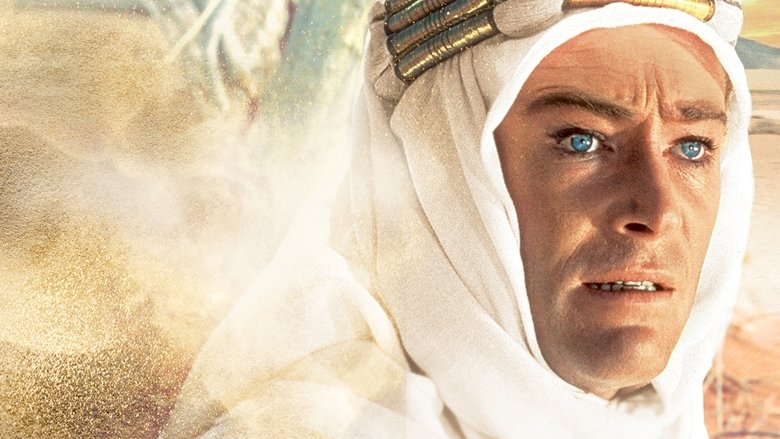
The white Arab robes given to Lawrence by Sherif Ali symbolize his transformation and dual identity. On one hand, they represent his attempt to assimilate into Arab culture and his status as a messianic leader. The color white suggests purity and even a god-like quality. On the other hand, the pristine white stands in stark contrast to the desert landscape, visually marking him as a perpetual outsider. The robes become a symbol of both his power and his ultimate alienation.
After rescuing Gasim from the desert, Lawrence is gifted the robes by a grateful Sherif Ali. The scene where he joyfully admires his reflection on his dagger blade marks the peak of his self-creation. From this point on, he rarely wears his British uniform in the desert, and his white figure becomes an iconic image, whether riding atop a captured train or leading a charge.
The Match Cut to the Sun
This famous transition symbolizes the immense scale of the adventure Lawrence is about to embark upon. It connects a small, man-made flame to the gigantic, elemental power of the desert sun, suggesting that Lawrence's personal ambition ('fun') will ignite a massive conflict in a 'burning, fiery furnace.' It's a visual metaphor for the idea that "big things have small beginnings."
In Cairo, before leaving for his mission, Lawrence confidently tells Dryden that his journey into the desert is "going to be fun." He then strikes a match to light Dryden's cigarette and extinguishes the flame with his fingers. The film cuts directly from a close-up of the smoking match to an extreme long shot of the sun rising over the vast, empty desert. This iconic edit bridges two vastly different scales and propels the narrative into its main setting.
Philosophical Questions
Is it possible for an individual to truly escape their own culture and forge a new identity?
The film relentlessly explores this question through Lawrence. He immerses himself in Arab culture, mastering the language, customs, and warfare. He sheds his British uniform for Arab robes and feels more at home in the desert than he ever did in England. Yet, he is never fully accepted, nor can he fully escape who he is. Prince Faisal notes his Englishness, and Sherif Ali eventually sees him as an outsider again. In a moment of despair, Lawrence points to his white skin and tells Ali, "That's me... and there's nothing I can do about it." The film suggests that while one can adopt the trappings of another culture, one's core identity, forged by birth and upbringing, is inescapable.
What is the relationship between heroism, ego, and self-destruction?
"Lawrence of Arabia" presents a compelling case study on the dark side of heroism. Lawrence's heroic actions are inseparable from his immense ego and his belief that he is an extraordinary man for whom "nothing is written." This belief empowers him to achieve incredible feats, like crossing the Nefud desert. However, this same hubris leads to his downfall. He begins to believe his own legend, developing a messiah complex and an appetite for violence that horrifies his allies. His capture and torture in Deraa are a direct result of his arrogant belief in his own invincibility. The film argues that the very qualities that create a hero—immense self-belief and a willingness to transgress normal limits—can also lead to moral corruption and psychological ruin.
Do great historical events depend on 'great men' or impersonal forces?
The film frames the Arab Revolt largely through the actions of one extraordinary individual, T.E. Lawrence. His vision, charisma, and strategic genius appear to be the primary catalysts for the Arabs' success. However, the film simultaneously undermines this 'great man' theory of history. Lawrence is manipulated by Dryden and Allenby, who represent the impersonal forces of British imperial strategy. The tribal divisions that ultimately doom the Arab Council in Damascus exist independently of Lawrence and prove impossible for him to overcome. The Sykes-Picot agreement reveals that the fate of Arabia is being decided by politicians in Europe, regardless of Lawrence's actions in the desert. The film leaves the question open: Lawrence was a remarkable man who shaped events, but he was also a pawn in a much larger game, ultimately crushed by the forces of history he sought to command.
Core Meaning
At its heart, "Lawrence of Arabia" is a profound exploration of identity, hubris, and the clash of cultures. Director David Lean uses the vast, elemental desert as a crucible to test and ultimately break its protagonist. The film questions the very nature of heroism, portraying Lawrence not as a simple hero, but as a complex, fractured individual torn between his allegiance to Britain and his genuine affinity for the Arab people. It is a deep character study about a man who tries to forge a new identity for himself and for a nation, only to find himself an outsider to both. The core message is a tragic one: the pursuit of a grand destiny can lead to self-destruction, and the grand political machinations of empires inevitably crush the ideals of individuals. The film serves as a powerful commentary on the futility of war and the deceptive nature of colonial ambitions.