Lawrence of Arabia
A sweeping historical epic of personal torment and grandeur, painting a portrait of a fractured hero against the vast, unforgiving canvas of the desert.
Lawrence of Arabia

Lawrence of Arabia

"Nothing is written."

11 December 1962 United Kingdom 228 min ⭐ 8.0 (3,227)
Director: David Lean
Cast: Peter O'Toole, Alec Guinness, Omar Sharif, Anthony Quinn, Jack Hawkins
War History Adventure
Identity and Belonging The Nature of War and Violence Imperialism and Colonial Betrayal Mythmaking and Heroism
Budget: $15,000,000
Box Office: $69,995,385

Overview

"Lawrence of Arabia" begins with the 1935 death of T.E. Lawrence (Peter O'Toole) in a motorcycle accident. At his memorial, differing opinions on his character set the stage for a complex flashback. The story transports viewers to World War I, where Lawrence is a misfit British Army lieutenant in Cairo. Noted for his intelligence and audacity, he is dispatched by Mr. Dryden (Claude Rains) of the Arab Bureau to assess the Arab Revolt against the Turks, who are allied with Germany.

In Arabia, Lawrence meets with Prince Faisal (Alec Guinness) and quickly earns his trust. Defying his British superiors, Lawrence conceives and leads a daring surprise attack on the strategic Turkish port of Aqaba, a feat considered impossible as it requires crossing the brutal Nefud Desert. This victory transforms Lawrence into a messianic figure among the Arab tribes, earning him the name 'El Aurens'. He adopts their customs and dress, forging a deep bond with Sherif Ali (Omar Sharif) and securing an alliance with the formidable chieftain Auda abu Tayi (Anthony Quinn).

As his influence grows, Lawrence leads a successful guerrilla war against the Turks, disrupting their supply lines. However, his journey is also one of intense internal struggle. He grapples with his divided loyalties, the brutal violence of war, and his own escalating sense of infallibility, which is shattered after he is captured and tortured in the city of Deraa. The psychological toll of his experiences pushes him to the brink, leading to a climactic and bloody assault on Damascus that seals his legend but leaves him a broken and disillusioned man.
Core Meaning

At its heart, "Lawrence of Arabia" is a profound exploration of identity, hubris, and the clash of cultures. Director David Lean uses the vast, elemental desert as a crucible to test and ultimately break its protagonist. The film questions the very nature of heroism, portraying Lawrence not as a simple hero, but as a complex, fractured individual torn between his allegiance to Britain and his genuine affinity for the Arab people. It is a deep character study about a man who tries to forge a new identity for himself and for a nation, only to find himself an outsider to both. The core message is a tragic one: the pursuit of a grand destiny can lead to self-destruction, and the grand political machinations of empires inevitably crush the ideals of individuals. The film serves as a powerful commentary on the futility of war and the deceptive nature of colonial ambitions.

Thematic DNA

Identity and Belonging 35%
The Nature of War and Violence 30%
Imperialism and Colonial Betrayal 25%
Mythmaking and Heroism 10%

Identity and Belonging

The central theme is T.E. Lawrence's tortured search for identity. A misfit in the rigid British military, he finds a sense of purpose and belonging in the desert. He adopts Arab robes and customs, symbolically shedding his Englishness. This transformation is visually marked when Sherif Ali burns Lawrence's uniform and gives him white robes, cementing his new persona as 'El Aurens'. However, this new identity is fragile. He is constantly reminded of his otherness, both by his British superiors and by the Arabs themselves. Ultimately, he belongs to neither world, becoming a solitary figure trapped between two cultures. His internal conflict is a powerful exploration of what it means to be an outsider.

The Nature of War and Violence

The film does not glorify war but instead depicts its brutal and corrupting influence. Lawrence's initial idealism is eroded by the violence he must commit. A key moment is when he is forced to execute Gasim, a man he had previously risked his life to save, to prevent a tribal feud. This act marks a significant change in his character. His psychological state deteriorates further after being tortured in Deraa, leading him to embrace a ruthless bloodlust, culminating in the massacre of retreating Turkish soldiers. The film shows that war dehumanizes everyone it touches, transforming would-be heroes into killers.

Imperialism and Colonial Betrayal

The Arab Revolt is set against the backdrop of British and French imperial ambitions. While Lawrence genuinely fights for Arab independence, he is also a pawn in a larger geopolitical game. His superiors, like General Allenby and Mr. Dryden, manipulate him and the Arab tribes to serve British interests. The film exposes the cynicism of colonialism through the secret Sykes-Picot Agreement, which planned to carve up the Ottoman Empire between Britain and France, betraying the promises of freedom made to the Arabs. Prince Faisal's poignant lines about the Arabs' desire not to trade one master for another underscore this theme of betrayal.

Mythmaking and Heroism

The film deconstructs the concept of the hero. Lawrence's legend is built by the American journalist Jackson Bentley, who sees him as a romantic figure to sell to the public. Lawrence himself becomes enamored with his own myth, believing in his own invincibility. However, Lean repeatedly shows the flawed man behind the legend—arrogant, masochistic, and emotionally tormented. The film suggests that heroes are often creations of circumstance and propaganda, and the reality is far more complex and tragic than the myth.

Character Analysis

T.E. Lawrence

Peter O'Toole

Archetype: Antihero / Tragic Hero
Key Trait: Enigmatic

Motivation

Lawrence's motivations are complex and often contradictory. Initially, he seeks a stage grand enough for his ambitions and a way to escape the stifling conformity of British military life. He possesses a genuine romantic admiration for the Arab people and their cause for independence. However, this is intertwined with a powerful ego, a desire for glory, and perhaps a masochistic need to test his own limits. He is driven by the belief that he can write his own destiny: "Nothing is written."

Character Arc

Lawrence begins as an eccentric, arrogant, and brilliant but marginalized British officer. The desert allows him to unleash his potential, and he transforms into a charismatic, messianic war leader. He embraces his new identity as 'El Aurens,' believing himself to be a man of destiny. However, the burdens of leadership, the brutality of war, and his capture and torture shatter his spirit and his sense of self. He becomes increasingly ruthless and disillusioned, culminating in his tragic realization that his dream of a unified Arabia was a mirage and he was merely a tool for British imperial interests. He leaves Arabia a broken man, stripped of the identity he fought so hard to create.

Sherif Ali

Omar Sharif

Archetype: The Ally / The Conscience
Key Trait: Loyal

Motivation

Ali's primary motivation is a fierce loyalty to his people and a deep-seated desire for Arab independence. He is pragmatic and grounded in the realities of tribal politics and desert life. He follows Lawrence because he believes Lawrence is the key to achieving Arab unity and victory against the Turks. His loyalty is to the cause, not to Lawrence's personal mythology.

Character Arc

Sherif Ali is initially introduced as a fierce and traditional Bedouin warrior, distrustful of the British outsider. His relationship with Lawrence evolves from suspicion to a deep, complex friendship built on mutual respect. Ali acts as Lawrence's guide, both literally in the desert and morally. He is the first to recognize Lawrence's extraordinary qualities but also the first to be horrified by his growing brutality. As Lawrence loses his humanity, Ali becomes the film's moral compass. Their friendship ultimately fractures under the weight of Lawrence's messiah complex and bloodlust, and Ali abandons him in Damascus, disillusioned.

Prince Faisal

Alec Guinness

Archetype: The Mentor / The Statesman
Key Trait: Pragmatic

Motivation

Faisal is driven by a long-term vision of a modern, independent Arab state. He is less interested in the romance of battle and more focused on the political outcome. He uses Lawrence's military genius to further his own strategic goals, knowing that the real battle will be fought not in the desert but at the negotiating tables in Europe. His motivation is the survival and sovereignty of his people.

Character Arc

Prince Faisal is a wise, shrewd, and pragmatic Arab leader. He is initially cautious of Lawrence but recognizes his potential value to the Arab Revolt. He serves as a mentor figure, guiding Lawrence in the complexities of Arab politics. Faisal understands the larger political game being played by the British far better than Lawrence does. His arc is one of a shrewd politician navigating the treacherous waters between tribal factions and imperial powers. While Lawrence's journey ends in personal failure, Faisal ultimately transitions from a desert revolt leader to a political player on the world stage, prepared to negotiate the future of his people with the British, even after their betrayal.

Auda abu Tayi

Anthony Quinn

Archetype: The Wild Card / The Warrior
Key Trait: Ferocious

Motivation

Auda is motivated by personal pride, wealth, and the thrill of battle. He famously declares, "I am a river to my people!" He fights for the prosperity and honor of his tribe above all else. While Lawrence convinces him to fight for a larger Arab cause, his primary interests remain more personal and material than the idealistic goals of Lawrence or the political ambitions of Faisal. He scorns being a servant to anyone, Turk or British.

Character Arc

Auda abu Tayi, the leader of the powerful Howeitat tribe, is a force of nature—volatile, proud, and driven by a desire for plunder and glory. He is initially a mercenary, allied with the Turks, but Lawrence persuades him to join the Arab Revolt with promises of gold and the chance to take Aqaba. Auda represents the untamable, individualistic spirit of the Bedouin warrior, which is both a great strength and a great weakness for the Arab cause. His arc shows him becoming a committed patriot, but he remains deeply cynical about politics, ultimately returning to the desert when the dream of a unified Arab council in Damascus collapses into squabbling.

Symbols & Motifs

The Desert

Meaning:

The desert is the film's most powerful symbol, representing a space of both absolute freedom and immense danger. It is a 'clean' slate where Lawrence can reinvent himself, away from the confines of British society. It is also a crucible that tests his physical and mental endurance to the breaking point. Visually, its vastness emphasizes the smallness and solitude of man, reflecting Lawrence's own internal emptiness and his epic journey of self-discovery.

Context:

The desert is the dominant setting for the entire film. Cinematographer Freddie Young's sweeping 70mm shots capture its unforgiving beauty, from the shimmering heat of a mirage during Sherif Ali's introduction to the golden dawns that follow nights of contemplation. Lawrence's famous line, "It's clean," encapsulates his personal attraction to this seemingly empty space as a place of purification and potential.

Lawrence's White Robes

Meaning:

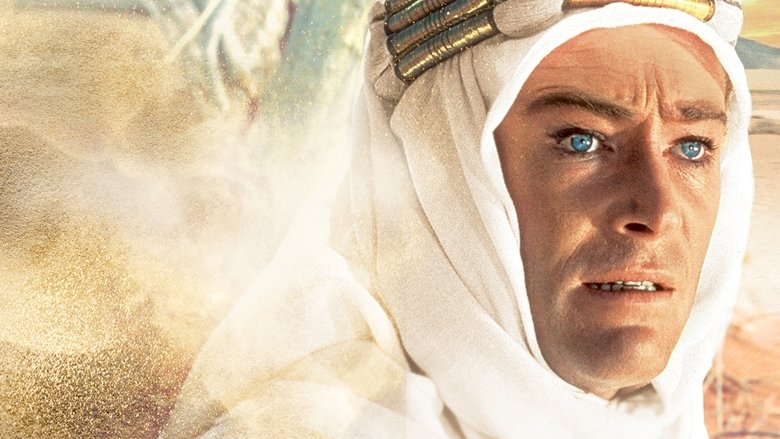
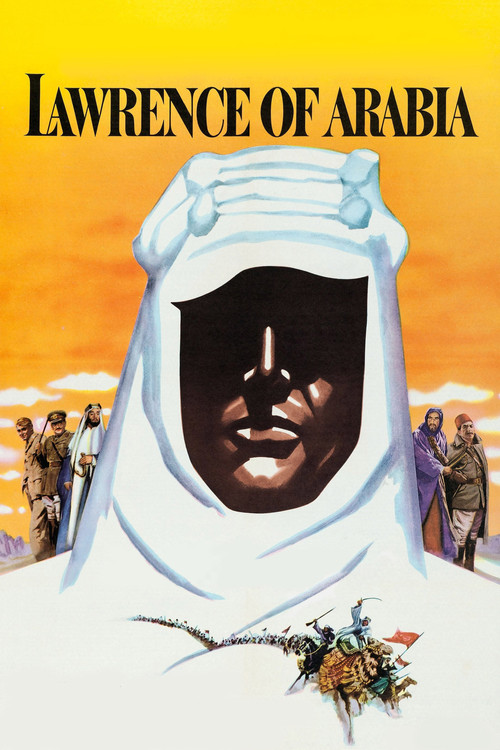
The white Arab robes given to Lawrence by Sherif Ali symbolize his transformation and dual identity. On one hand, they represent his attempt to assimilate into Arab culture and his status as a messianic leader. The color white suggests purity and even a god-like quality. On the other hand, the pristine white stands in stark contrast to the desert landscape, visually marking him as a perpetual outsider. The robes become a symbol of both his power and his ultimate alienation.

Context:

After rescuing Gasim from the desert, Lawrence is gifted the robes by a grateful Sherif Ali. The scene where he joyfully admires his reflection on his dagger blade marks the peak of his self-creation. From this point on, he rarely wears his British uniform in the desert, and his white figure becomes an iconic image, whether riding atop a captured train or leading a charge.

The Match Cut to the Sun

Meaning:

This famous transition symbolizes the immense scale of the adventure Lawrence is about to embark upon. It connects a small, man-made flame to the gigantic, elemental power of the desert sun, suggesting that Lawrence's personal ambition ('fun') will ignite a massive conflict in a 'burning, fiery furnace.' It's a visual metaphor for the idea that "big things have small beginnings."

Context:

In Cairo, before leaving for his mission, Lawrence confidently tells Dryden that his journey into the desert is "going to be fun." He then strikes a match to light Dryden's cigarette and extinguishes the flame with his fingers. The film cuts directly from a close-up of the smoking match to an extreme long shot of the sun rising over the vast, empty desert. This iconic edit bridges two vastly different scales and propels the narrative into its main setting.

Memorable Quotes

The trick, William Potter, is not minding that it hurts.

— T.E. Lawrence

Context:

Early in the film, at the British headquarters in Cairo, Lawrence demonstrates how he can extinguish a lit match with his fingers. When a corporal named William Potter tries to imitate him and gets burned, Lawrence delivers this iconic line, showcasing his unusual philosophy on pain and endurance.

Meaning:

This quote reveals Lawrence's extraordinary willpower and masochistic tendencies. It establishes his character as someone who not only endures hardship but seems to derive a sense of superiority from it. It's a key insight into the psychology that allows him to survive, and thrive, in the punishing environment of the desert.

Big things have small beginnings, sir.

— Mr. Dryden

Context:

In Cairo, General Murray dismisses the Arab Revolt as a "sideshow of a sideshow." Mr. Dryden, the cunning Arab Bureau diplomat, responds with this line, subtly indicating that he sees a much greater potential in the situation and in sending Lawrence to assess it.

Meaning:

This line serves as the film's thesis statement, foreshadowing how Lawrence's seemingly minor assignment in Arabia will escalate into a major theater of the war with vast historical consequences. It speaks to the unpredictable nature of history and how a single individual can become a catalyst for monumental events.

Nothing is written.

— Sherif Ali / T.E. Lawrence

Context:

Lawrence's Bedouin guide, Tafas, refuses to travel further to a well, saying "it is written" that he will not go. Sherif Ali appears and kills Tafas for drinking from his well without permission. When Lawrence calls him a barbarian, Ali says that because Tafas was his guide, his life was Lawrence's responsibility, and that for some men, "nothing is written unless they write it."

Meaning:

This phrase encapsulates the central philosophical conflict of the film: fate versus free will. Initially, it is Ali's response to Lawrence's guide who says their journey is "written." Lawrence later adopts it as his personal mantra, believing that he is the master of his own destiny and can achieve the impossible through sheer force of will. The tragic irony is that by the end, Lawrence's fate is indeed written by forces far beyond his control.

What is it, Major Lawrence, that attracts you personally to the desert?

— General Allenby

Context:

After his triumphant capture of Aqaba, Lawrence returns to the British headquarters in Cairo. He stands in stark contrast to the formal officers in his dusty Arab robes. General Allenby, intrigued and slightly bemused by him, asks this direct question to understand his unusual subordinate.

Meaning:

Lawrence's one-word reply, "It's clean," is profoundly revealing. It suggests his disillusionment with the moral corruption and hypocrisy of Western civilization. For him, the desert represents a pure, elemental world, free from the clutter and compromise of society. It's a place where a person's worth is stripped down to their essence, which appeals to his ascetic and idealistic nature.

Young men make wars, and the virtues of war are the virtues of young men: courage and hope for the future. Then old men make the peace, and the vices of peace are the vices of old men: mistrust and caution.

— Prince Faisal

Context:

In his desert tent, Prince Faisal explains the political realities of his situation to an idealistic Lawrence. He is trying to temper Lawrence's youthful zeal with the hard-earned wisdom that war is only the first part of a much more complex political struggle.

Meaning:

This is a cynical but wise summation of the cycle of conflict and politics. Faisal explains the fundamental disconnect between the idealistic soldiers who fight the battles and the cautious, pragmatic politicians who decide the outcome. It foreshadows the eventual betrayal of the Arab cause at the hands of the old men of the British and French empires.

Philosophical Questions

Is it possible for an individual to truly escape their own culture and forge a new identity?

The film relentlessly explores this question through Lawrence. He immerses himself in Arab culture, mastering the language, customs, and warfare. He sheds his British uniform for Arab robes and feels more at home in the desert than he ever did in England. Yet, he is never fully accepted, nor can he fully escape who he is. Prince Faisal notes his Englishness, and Sherif Ali eventually sees him as an outsider again. In a moment of despair, Lawrence points to his white skin and tells Ali, "That's me... and there's nothing I can do about it." The film suggests that while one can adopt the trappings of another culture, one's core identity, forged by birth and upbringing, is inescapable.

What is the relationship between heroism, ego, and self-destruction?

"Lawrence of Arabia" presents a compelling case study on the dark side of heroism. Lawrence's heroic actions are inseparable from his immense ego and his belief that he is an extraordinary man for whom "nothing is written." This belief empowers him to achieve incredible feats, like crossing the Nefud desert. However, this same hubris leads to his downfall. He begins to believe his own legend, developing a messiah complex and an appetite for violence that horrifies his allies. His capture and torture in Deraa are a direct result of his arrogant belief in his own invincibility. The film argues that the very qualities that create a hero—immense self-belief and a willingness to transgress normal limits—can also lead to moral corruption and psychological ruin.

Do great historical events depend on 'great men' or impersonal forces?

The film frames the Arab Revolt largely through the actions of one extraordinary individual, T.E. Lawrence. His vision, charisma, and strategic genius appear to be the primary catalysts for the Arabs' success. However, the film simultaneously undermines this 'great man' theory of history. Lawrence is manipulated by Dryden and Allenby, who represent the impersonal forces of British imperial strategy. The tribal divisions that ultimately doom the Arab Council in Damascus exist independently of Lawrence and prove impossible for him to overcome. The Sykes-Picot agreement reveals that the fate of Arabia is being decided by politicians in Europe, regardless of Lawrence's actions in the desert. The film leaves the question open: Lawrence was a remarkable man who shaped events, but he was also a pawn in a much larger game, ultimately crushed by the forces of history he sought to command.

Alternative Interpretations

While the film's primary narrative is a tragic character study and an anti-war epic, it is rich enough to support several alternative interpretations that have been discussed by critics and scholars.

A Post-Colonial Critique: From this perspective, the film, despite its critique of British imperialism, is itself a product of an Orientalist viewpoint. It centers the story of the Arab Revolt on a white, British hero, marginalizing the Arab characters and their agency. The Arab tribes are often depicted as primitive, greedy, and incapable of governing themselves without Lawrence's leadership, reinforcing colonial stereotypes. In this reading, Lawrence is not a liberator but an agent of empire who, despite his personal sympathies, ultimately imposes a Western narrative and will upon the 'Orient.'

A Queer Interpretation: Many critics have noted a strong homoerotic subtext throughout the film. There are no female speaking roles, and the most intense emotional relationships are between men, particularly Lawrence and Sherif Ali. Lawrence himself is portrayed with a certain androgyny and physical vanity. The harrowing scene in Deraa, where Lawrence is captured by the Turkish Bey (played by José Ferrer), is heavily implied to involve sexual assault. This traumatic event is a turning point that shatters his spirit. This interpretation suggests that Lawrence's inner turmoil is partly rooted in a repressed or conflicted sexuality, which finds a complex, non-traditional expression in the hyper-masculine world of the desert war.

Cultural Impact

"Lawrence of Arabia" is widely regarded as one of the greatest films ever made, a landmark of epic cinema that has profoundly influenced generations of filmmakers. Released in 1962, it revived the grand historical epic with a new level of psychological complexity and visual grandeur. Director David Lean's masterful use of Super Panavision 70 cinematography set a new standard for capturing vast landscapes, making the desert itself a central character. Its influence can be seen in countless films, from the desert vistas of "Star Wars" to the epic scale of "Dune." Filmmakers like Steven Spielberg have cited it as a formative cinematic experience.

Critically, the film was a massive success, winning seven Academy Awards, including Best Picture and Best Director. It made an international star out of Peter O'Toole and solidified the careers of Omar Sharif and composer Maurice Jarre, whose sweeping score is one of the most iconic in film history.

Culturally, the film cemented the romantic, mythic image of T.E. Lawrence in the popular imagination, an image largely created decades earlier by American journalist Lowell Thomas. However, the film has also faced criticism, particularly from Arab perspectives, for its romanticized portrayal of a white man as the hero of an Arab struggle and for depicting Arabs as savage or fractious. Some historians also note its various historical inaccuracies, which conflate events and characters for dramatic effect. Despite these critiques, the film's complex portrayal of a flawed hero, its anti-imperialist themes, and its exploration of identity continue to resonate, making it a subject of ongoing academic and cultural discussion.

Audience Reception

Upon its release, "Lawrence of Arabia" was met with widespread critical acclaim and was a significant box office success. Audiences were captivated by the film's epic scale, stunning 70mm cinematography, Peter O'Toole's star-making performance, and Maurice Jarre's powerful score. It was praised for its intelligent script and its complex, psychological portrait of a historical figure, which was a departure from the simpler heroes of earlier epics. It went on to win seven Academy Awards, including Best Picture, cementing its reputation.

Over the decades, its reputation has only grown, and it consistently ranks among the greatest films ever made in polls of critics and audiences alike. Viewers praise its visual storytelling, ambitious narrative, and the profound themes it explores. The main points of criticism, which have become more prominent in contemporary discussions, revolve around its historical inaccuracies and its colonial, 'white savior' perspective. The casting of white actors like Alec Guinness and Anthony Quinn in Arab roles is also a point of modern criticism. Nevertheless, the overall verdict from audiences remains overwhelmingly positive, with most seeing it as a monumental achievement in filmmaking whose artistry transcends its flaws.

Interesting Facts

  • Peter O'Toole, who was a relative unknown at the time, got the lead role after Albert Finney and Marlon Brando turned it down.
  • During the chaotic filming of the attack on Aqaba, Peter O'Toole was nearly killed when he fell from his camel, but the animal miraculously stood over him, protecting him from the charging horses of the extras.
  • The famous 'mirage' shot, where Omar Sharif's character slowly materializes out of the heat haze, was filmed using a special, extremely long 482mm lens created specifically for the film by Panavision. This lens is now known as the 'David Lean Lens' and has reportedly not been used since.
  • King Hussein of Jordan was a great supporter of the film's production, lending an entire brigade of his Arab Legion to serve as extras. During the filming, he met a 20-year-old British production assistant, Antoinette Gardiner, whom he later married. She became Queen Muna of Jordan, and their eldest son is the current king, Abdullah II.
  • There are no speaking roles for women in the entire film.
  • To get into his role as Auda abu Tayi, Anthony Quinn spent hours applying his own makeup, using a photograph of the real Auda to make himself look as much like him as possible.
  • Director David Lean was influenced by John Ford's classic western "The Searchers" (1956) for ideas on how to shoot the vast desert landscapes.
  • Peter O'Toole found riding a camel so painful that he padded his saddle with a piece of sponge rubber. The Bedouin extras saw how much more comfortable it made riding and began copying him, giving O'Toole the honorary nickname 'Ab al-'Isfanjah', meaning 'Father of the Sponge'.
  • The film was banned in many Arab countries, including Jordan, due to perceptions that it misrepresented Arab historical figures and peoples.

⚠️ Spoiler Analysis

Click to reveal detailed analysis with spoilers

Frequently Asked Questions

Explore More About This Movie

Dive deeper into specific aspects of the movie with our detailed analysis pages

Comments (0)

Leave a comment

No comments yet. Be the first to share your thoughts!