"His only friend was his gun!"
Le Samouraï - Symbolism & Philosophy
Symbols & Motifs
The Caged Bullfinch
The bird represents Jef's own soul and situation: a solitary creature trapped in a cage (the apartment/his life/fate). It also serves a practical function as an alarm system, warning him of intruders.
Placed centrally in Jef's gray apartment, the bird is the only living thing he interacts with tenderly. When the police bug his room, the bird's agitated feathers alert Jef to the intrusion.
The Trench Coat and Fedora
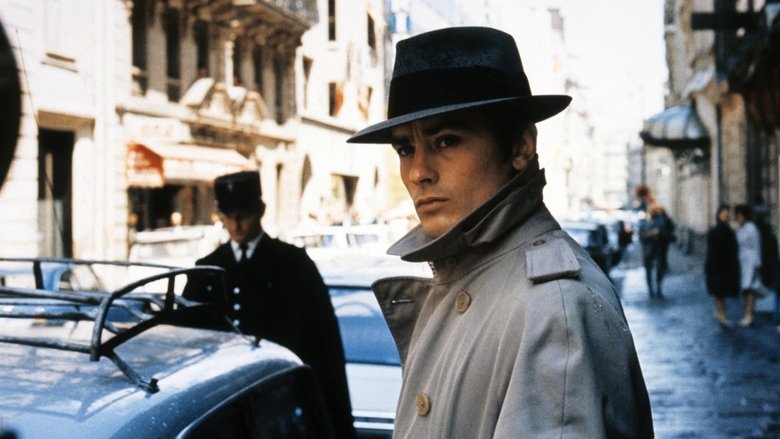
These are Jef's armor and uniform. They strip him of individual personality and transform him into the archetype of the 'noir' figure. Putting them on is part of his ritual of preparing for the world.
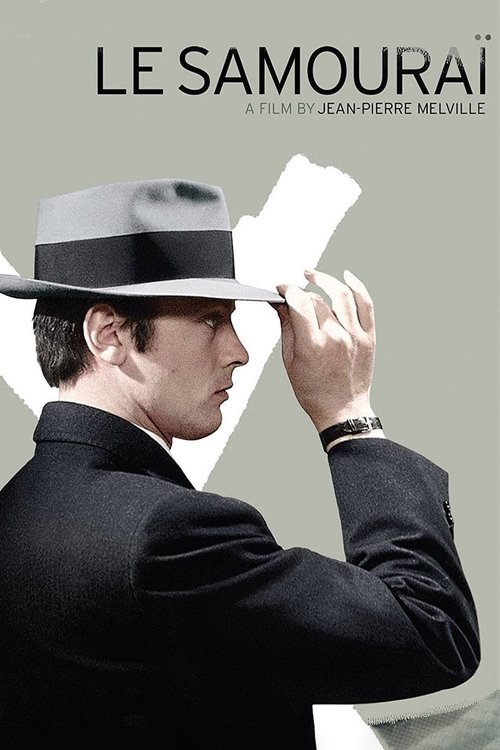
Jef is rarely seen without them. Before leaving his apartment, he meticulously adjusts the brim of his hat in the mirror, a gesture of self-composure and armoring.
The Ring of Keys
Symbolizes Jef's methodical nature and his ability to access forbidden spaces, yet also underscores the mechanical, repetitive nature of his existence.
Used in the scene where Jef patiently tries key after key to steal a Citroën DS, demonstrating his patience and professionalism.
White Gloves
They represent the ritual of death and Jef's desire to leave no trace, both physically (fingerprints) and morally (keeping his hands 'clean' in a spiritual sense).
Jef deliberately puts on white gloves before entering the nightclub to kill the owner, and again in the final scene, signaling his intent.
Philosophical Questions
Does strict adherence to a personal code grant freedom or imprison the individual?
The film explores this paradox through Jef. His code makes him superior to the chaotic world and grants him a form of dignity, yet it also turns him into a machine, traps him in a cage of routine, and ultimately demands his life. Is he a master of his fate or a slave to his own rules?
Can honor exist in a world devoid of morality?
Melville places a character with 'old world' values (bushido, loyalty, silence) into a modern, transactional, and treacherous environment. The film asks whether such virtues are noble or simply absurd and suicidal in a modern context.
Core Meaning
Jean-Pierre Melville's Le Samouraï is a meditation on the existential solitude of the modern individual. The film posits that true perfection and adherence to a code lead inevitably to isolation and death. Melville strips the crime genre of its moralizing and sensationalism to reveal a tragic hero who is a prisoner of his own professionalism. The 'Samurai' title refers not to a literal warrior, but to a state of mind—a 'Ronin' without a master, operating in a world where honor is obsolete. The film explores the idea that fate is a cage we build for ourselves through our choices and rituals.