
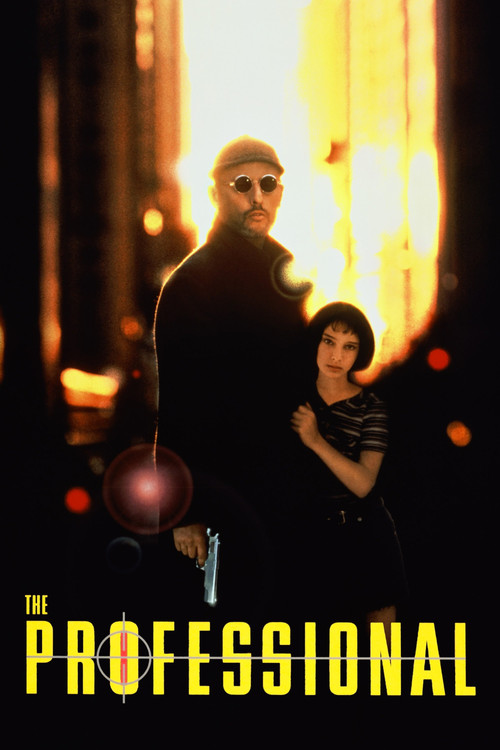
Léon: The Professional
A hauntingly beautiful, action-packed drama where the stark loneliness of a hitman's world collides with the fierce innocence of a young girl, forging an unforgettable bond in the crucible of violence and revenge.
Léon: The Professional

Léon

"If you want the job done right, hire a professional."

14 September 1994 France 111 min ⭐ 8.3 (15,480)
Director: Luc Besson
Cast: Jean Reno, Natalie Portman, Gary Oldman, Danny Aiello, Peter Appel
Drama Crime Action
Loneliness and Connection Loss of Innocence vs. Rediscovered Humanity Revenge and Redemption Moral Ambiguity
Budget: $16,000,000
Box Office: $45,284,974

Léon: The Professional - Symbolism & Philosophy

Symbols & Motifs

The Houseplant

Meaning:

The houseplant symbolizes Léon himself. Like the plant, Léon is rootless, constantly moving from place to place, and lives a solitary, contained existence. He cares for it meticulously, mirroring the simple, disciplined care he takes of himself. He tells Mathilda it's his "best friend" because it's "always happy, no questions." The plant represents his desire for stability and roots, which he has never had.

Context:

Léon is seen caring for the plant throughout the film; it is the first thing he saves when escaping danger. In the final scene, after Léon's death, Mathilda plants it in the schoolyard, symbolically giving him the roots he always wanted and allowing him to finally rest. This act signifies Mathilda's own attempt to put down roots and begin a new, more stable life.

Milk

Meaning:

Léon's consistent drinking of milk symbolizes his childlike innocence and emotional immaturity. Despite his deadly profession, milk is his drink of choice, contrasting sharply with the alcohol and drugs consumed by other characters, particularly the villainous Stansfield. It reinforces the idea that, at his core, Léon is simple and uncorrupted by the vices of the world he inhabits.

Context:

Léon is frequently shown drinking glasses of milk in his apartment, treating it as a ritual of comfort and normalcy in his otherwise violent life. It is part of his daily routine that establishes his character as something other than a hardened killer, making his gentle nature more believable.

The Sun

Meaning:

The sun, and light in general, often symbolizes the hope, life, and emotional warmth that Mathilda brings into Léon's dark, secluded world. His life is lived in the shadows, both literally and figuratively.

Context:

When Mathilda first begs Léon to open his door and save her, she is standing in the brightly lit hallway while he is in his dark apartment. As he opens the door, a flood of light enters, physically overwhelming Mathilda and symbolizing her entry into his life. Later, Léon wears sunglasses even indoors, shielding himself from the world, but Mathilda encourages him to engage with the light and with life itself.

Philosophical Questions

Can a person's inherent morality be separated from their actions?

The film delves into this question through its protagonist, Léon. He is a professional killer, an occupation universally considered immoral. Yet, the film portrays him as a fundamentally good person: he is gentle, has a childlike innocence, and lives by a strict personal code of not harming women or children. He is contrasted with Stansfield, a DEA agent who commits far more heinous acts of violence without any moral compass. The film challenges the audience to judge Léon not by his profession but by his character and his capacity for love and self-sacrifice, asking whether a 'good' person can do 'bad' things and still retain their essential goodness.

What constitutes a family?

"Léon: The Professional" presents a powerful argument for the idea that family is defined by love and mutual care, not by blood. Mathilda comes from a biological family that is neglectful and abusive. After they are killed, she forms a new, unconventional family unit with Léon. Despite the violent context of their relationship, Léon provides her with more protection, guidance, and genuine affection than her own father ever did. Their bond, built on shared loneliness and trauma, becomes a stronger and more meaningful familial connection than the one she was born into, questioning societal definitions of family.

Is vengeance a justifiable path to justice?

Mathilda's quest for revenge is the primary driver of the plot. The film explores her belief that killing Stansfield will bring her justice and peace. However, Léon, who has his own history with revenge, advises against it, suggesting it's "better to forget." The film ultimately shows that Mathilda's attempts at revenge are reckless and nearly get her killed. Léon's final act is not about revenge but about saving Mathilda's life. By having Mathilda return to school at the end, the film seems to conclude that true justice lies in moving forward and choosing life, rather than being consumed by a cycle of violence.

Core Meaning

The core meaning of "Léon: The Professional" revolves around the transformative power of human connection and the possibility of redemption, even in the most violent of worlds. Director Luc Besson explores the idea that even a person as isolated and emotionally stunted as Léon, a man who refers to himself as a "cleaner," can rediscover their humanity through an unlikely relationship. The film posits that love and companionship can provide a "taste for life" and a reason to live beyond mere survival.

The film delves into the juxtaposition of innocence and corruption, showing how Mathilda, though young, is forced into a brutal adult world, while Léon, an adult killer, possesses a childlike emotional immaturity. It questions the nature of good and evil, presenting a professional killer as a sympathetic protagonist and a law enforcement agent as the monstrous villain. Ultimately, the film's message is one of sacrifice and love; Léon's final act is not one of professional duty but of profound personal sacrifice to give Mathilda a chance at a new life, suggesting that redemption is found not in vengeance, but in selfless love.