Léon: The Professional
Léon
"If you want the job done right, hire a professional."
Overview
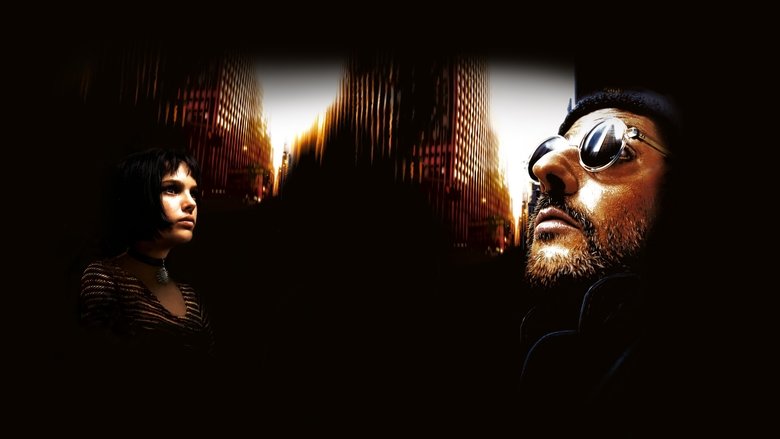
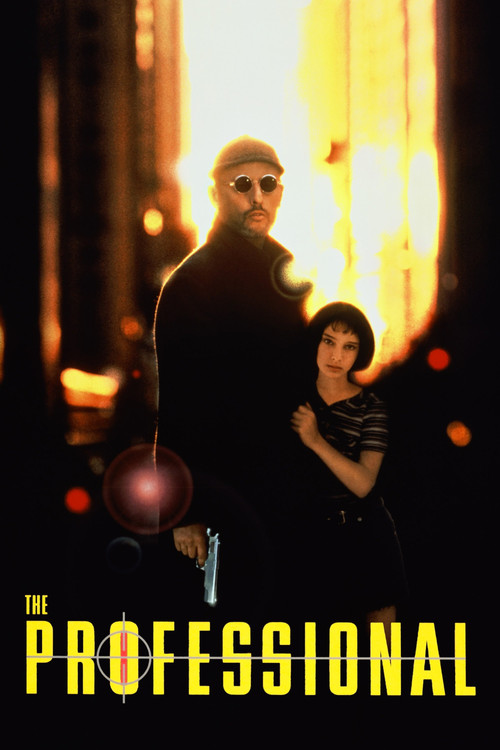
"Léon: The Professional" is a 1994 English-language French action-thriller directed by Luc Besson. The film centers on Léon (Jean Reno), a solitary and highly efficient hitman, or "cleaner," living in New York City. His meticulously ordered and emotionally detached life is irrevocably disrupted when he reluctantly takes in his 12-year-old neighbor, Mathilda (Natalie Portman, in her debut role).
Mathilda's dysfunctional family is brutally murdered by a corrupt and unhinged DEA agent, Norman Stansfield (Gary Oldman), after her father double-crosses him in a drug deal. Witnessing the massacre, Mathilda seeks refuge with Léon, and upon discovering his profession, she implores him to teach her his skills so she can avenge the death of her four-year-old brother. This unlikely pairing forms the emotional core of the film, as Léon, a man with a childlike simplicity despite his violent trade, finds his world opened up by the fiercely determined and wounded young girl.
Their relationship evolves into a complex and controversial bond, resembling that of a father and daughter, as well as a mentor and protégée. As Léon trains Mathilda, he begins to experience emotions and a connection to life he had long suppressed. However, Mathilda's quest for revenge puts them on a direct collision course with the dangerously unpredictable Stansfield, leading to an explosive and poignant climax.
Core Meaning
The core meaning of "Léon: The Professional" revolves around the transformative power of human connection and the possibility of redemption, even in the most violent of worlds. Director Luc Besson explores the idea that even a person as isolated and emotionally stunted as Léon, a man who refers to himself as a "cleaner," can rediscover their humanity through an unlikely relationship. The film posits that love and companionship can provide a "taste for life" and a reason to live beyond mere survival.
The film delves into the juxtaposition of innocence and corruption, showing how Mathilda, though young, is forced into a brutal adult world, while Léon, an adult killer, possesses a childlike emotional immaturity. It questions the nature of good and evil, presenting a professional killer as a sympathetic protagonist and a law enforcement agent as the monstrous villain. Ultimately, the film's message is one of sacrifice and love; Léon's final act is not one of professional duty but of profound personal sacrifice to give Mathilda a chance at a new life, suggesting that redemption is found not in vengeance, but in selfless love.
Thematic DNA
Loneliness and Connection
Both Léon and Mathilda are profoundly lonely figures at the film's outset. Léon's isolation is a self-imposed professional necessity, his only companion a houseplant he describes as his "best friend." Mathilda is emotionally abandoned by her dysfunctional family. Their meeting is a collision of two solitary worlds. Their bond, however unconventional, provides them both with the companionship and sense of belonging they desperately lack, forming the emotional heart of the story. This connection forces Léon to confront his empty existence and gives Mathilda a source of stability and protection for the first time.
Loss of Innocence vs. Rediscovered Humanity
The film presents a stark contrast between its two protagonists. Mathilda, a 12-year-old, is violently stripped of her remaining innocence after her family's murder, forcing her to confront the world's brutality and seek vengeance. Conversely, Léon, a seasoned killer, is emotionally immature and lives a simple, almost childlike existence when not working. Through his relationship with Mathilda, who teaches him to read and shows him affection, Léon begins a journey of emotional awakening, rediscovering a humanity long buried by his profession. The film explores this duality, where a child must grow up too fast, and a man-child must learn to feel.
Revenge and Redemption
Mathilda's primary motivation is revenge against Stansfield for the murder of her younger brother. She believes that becoming a "cleaner" like Léon is the only path to achieving this. The film questions the efficacy and morality of vengeance. While Mathilda pursues revenge, Léon's arc becomes one of redemption. His initial reluctance to care for Mathilda gives way to a profound sense of responsibility and love, culminating in his ultimate self-sacrifice to ensure her safety. This suggests that true redemption is achieved not through violence and retribution, but through selfless love and sacrifice.
Moral Ambiguity
"Léon: The Professional" operates in a world of gray morality, challenging traditional notions of good and evil. The protagonist is a sympathetic hitman who lives by a personal code—"No women, no kids." The antagonist, in contrast, is a corrupt DEA agent who murders an entire family, including a small child, in a drug-fueled rage. The film forces the audience to root for a killer while despising a figure of the law. This inversion of archetypes creates a complex moral landscape where right and wrong are not clearly defined, and survival often dictates ethics.
Character Analysis
Léon
Jean Reno
Motivation
Initially, Léon's motivation is simple survival and professional pride. He kills for money and adheres to the rules set by his handler, Tony. After meeting Mathilda, his primary motivation shifts to protecting her and, eventually, ensuring she has a future. He is driven by a newfound sense of purpose and love, telling her before he dies, "You've given me a taste for life."
Character Arc
Léon begins as a solitary, emotionally repressed hitman who lives by a strict code and finds comfort only in his routine. His life is devoid of human connection. When he takes in Mathilda, he is initially unsettled and resistant. However, her presence forces him to open up. He transforms from a detached "cleaner" into a protective father figure, learning to read, feel love, and desire a life with "roots." His final act of sacrificing himself for Mathilda completes his arc from an isolated killer to a redeemed man who has experienced love.
Mathilda Lando
Natalie Portman
Motivation
Her primary motivation is to avenge the murder of her four-year-old brother, the only family member she truly loved. This singular goal drives her to seek out Léon and convince him to train her. As their relationship develops, her motivation becomes intertwined with her fear of losing Léon, the only person who has ever cared for her.
Character Arc
Mathilda starts as a lonely, neglected 12-year-old in a dysfunctional family. The trauma of her family's murder transforms her from a victim into a determined individual bent on revenge. Under Léon's tutelage, she learns the skills of a killer but also forms a deep, complicated emotional bond with him. While her initial goal is vengeance, her journey becomes one of survival and finding a new family. By the end, after Léon's death, she chooses a chance at a normal life by returning to school, indicating a maturation beyond her vengeful desires.
Norman Stansfield
Gary Oldman
Motivation
Stansfield is motivated by greed and a psychopathic love for violence and chaos. His initial actions are driven by retrieving his stolen cocaine. After Léon interferes, his motivation becomes a personal vendetta, an enraged and obsessive need to destroy the man who has challenged his authority and killed his men. He famously enjoys the "calm little moments before the storm" of violence.
Character Arc
Stansfield is a static character who represents pure, unadulterated corruption and chaos. A corrupt DEA agent addicted to pills, he is unpredictable, violent, and theatrical. He does not undergo any significant development; instead, his depravity and obsession with eliminating Léon escalate throughout the film. He serves as a dark foil to Léon's quiet professionalism and moral code, representing the chaotic evil that ultimately brings about the tragic conclusion.
Tony
Danny Aiello
Motivation
Tony's primary motivation is money and self-preservation. He manages Léon because he is a profitable asset. When threatened by Stansfield, he quickly abandons his loyalty to Léon to protect his own interests. He acts as a gatekeeper to Léon's earnings, a position he uses to his advantage even after Léon's death.
Character Arc
Tony is Léon's handler and banker, a mob boss who presents himself as a fatherly figure to Léon. However, his loyalty is ultimately revealed to be superficial. While he gives Léon his assignments and holds his money, he easily gives Léon up to Stansfield under pressure. After Léon's death, he refuses to give Mathilda her inheritance, fobbing her off with a small amount of cash and telling her to go back to school, showing his self-serving nature. His character serves to highlight the transactional and treacherous nature of the criminal world.
Symbols & Motifs
The Houseplant
The houseplant symbolizes Léon himself. Like the plant, Léon is rootless, constantly moving from place to place, and lives a solitary, contained existence. He cares for it meticulously, mirroring the simple, disciplined care he takes of himself. He tells Mathilda it's his "best friend" because it's "always happy, no questions." The plant represents his desire for stability and roots, which he has never had.
Léon is seen caring for the plant throughout the film; it is the first thing he saves when escaping danger. In the final scene, after Léon's death, Mathilda plants it in the schoolyard, symbolically giving him the roots he always wanted and allowing him to finally rest. This act signifies Mathilda's own attempt to put down roots and begin a new, more stable life.
Milk
Léon's consistent drinking of milk symbolizes his childlike innocence and emotional immaturity. Despite his deadly profession, milk is his drink of choice, contrasting sharply with the alcohol and drugs consumed by other characters, particularly the villainous Stansfield. It reinforces the idea that, at his core, Léon is simple and uncorrupted by the vices of the world he inhabits.
Léon is frequently shown drinking glasses of milk in his apartment, treating it as a ritual of comfort and normalcy in his otherwise violent life. It is part of his daily routine that establishes his character as something other than a hardened killer, making his gentle nature more believable.
The Sun
The sun, and light in general, often symbolizes the hope, life, and emotional warmth that Mathilda brings into Léon's dark, secluded world. His life is lived in the shadows, both literally and figuratively.
When Mathilda first begs Léon to open his door and save her, she is standing in the brightly lit hallway while he is in his dark apartment. As he opens the door, a flood of light enters, physically overwhelming Mathilda and symbolizing her entry into his life. Later, Léon wears sunglasses even indoors, shielding himself from the world, but Mathilda encourages him to engage with the light and with life itself.
Memorable Quotes
Is life always this hard, or is it just when you're a kid?
— Mathilda
Context:
Mathilda asks this question to Léon as they sit together, shortly after she has moved in with him. It is a moment of vulnerability where she seeks understanding about the difficulty of her life, reflecting the film's somber tone.
Meaning:
This poignant question captures the film's exploration of suffering and the transition from childhood to adulthood. Léon's simple, heartbreaking reply, "Always like this," confirms the harsh reality of their world and solidifies their shared experience of pain and isolation.
Revenge is not a good thing, it's better to forget.
— Léon
Context:
Léon says this to Mathilda as she expresses her burning desire to kill the men who murdered her brother. It is his attempt to steer her away from the dark path that he himself has walked his entire adult life.
Meaning:
This line encapsulates Léon's core philosophy, which stands in direct opposition to Mathilda's driving motivation. It reflects his own tragic past—he became a hitman after avenging the murder of his first love—and his understanding that violence only perpetuates a cycle of pain. It foreshadows the film's ultimate message that redemption lies in love, not retribution.
You've given me a taste for life. I wanna be happy. Sleep in a bed, have roots.
— Léon
Context:
Léon says this to Mathilda during the film's climax, as he is helping her escape from the building besieged by Stansfield's forces. It is part of his final farewell and his confession of love for her.
Meaning:
This quote signifies the profound transformation Léon has undergone through his relationship with Mathilda. It's a declaration of his newfound humanity and his desire for a normal life, something he never thought possible. The mention of "roots" directly connects to the symbolism of his plant and his lifelong loneliness.
Bring me everyone. What do you mean 'everyone'? EVERYONE!
— Norman Stansfield
Context:
Stansfield screams this order over the phone after his men are being systematically eliminated by Léon during the final siege. It's a moment of pure, unrestrained fury and a demand for overwhelming force.
Meaning:
This iconic line, famously improvised by Gary Oldman, perfectly captures Stansfield's unhinged and excessive nature. It shows his complete disregard for proportionality and his explosive, theatrical rage. The sheer manic energy of the delivery makes it one of the most memorable villain lines in cinema history.
The rifle is the first weapon you learn how to use, because it lets you keep your distance from the client. The closer you get to being a pro, the closer you can get to the client. The knife, for example, is the last thing you learn.
— Léon
Context:
Léon explains this to Mathilda during one of their first training sessions. He is teaching her the tools of the trade, starting with a sniper rifle on a rooftop.
Meaning:
This quote serves as a piece of professional wisdom from Léon to Mathilda, but it also functions as a metaphor for emotional intimacy. Léon has spent his life keeping people at a distance. His journey with Mathilda forces him to get closer to someone than ever before, mirroring the progression from a long-range weapon to the intimacy of a knife.
Philosophical Questions
Can a person's inherent morality be separated from their actions?
The film delves into this question through its protagonist, Léon. He is a professional killer, an occupation universally considered immoral. Yet, the film portrays him as a fundamentally good person: he is gentle, has a childlike innocence, and lives by a strict personal code of not harming women or children. He is contrasted with Stansfield, a DEA agent who commits far more heinous acts of violence without any moral compass. The film challenges the audience to judge Léon not by his profession but by his character and his capacity for love and self-sacrifice, asking whether a 'good' person can do 'bad' things and still retain their essential goodness.
What constitutes a family?
"Léon: The Professional" presents a powerful argument for the idea that family is defined by love and mutual care, not by blood. Mathilda comes from a biological family that is neglectful and abusive. After they are killed, she forms a new, unconventional family unit with Léon. Despite the violent context of their relationship, Léon provides her with more protection, guidance, and genuine affection than her own father ever did. Their bond, built on shared loneliness and trauma, becomes a stronger and more meaningful familial connection than the one she was born into, questioning societal definitions of family.
Is vengeance a justifiable path to justice?
Mathilda's quest for revenge is the primary driver of the plot. The film explores her belief that killing Stansfield will bring her justice and peace. However, Léon, who has his own history with revenge, advises against it, suggesting it's "better to forget." The film ultimately shows that Mathilda's attempts at revenge are reckless and nearly get her killed. Léon's final act is not about revenge but about saving Mathilda's life. By having Mathilda return to school at the end, the film seems to conclude that true justice lies in moving forward and choosing life, rather than being consumed by a cycle of violence.
Alternative Interpretations
The central relationship between Léon and Mathilda is the primary source of alternative interpretations. While the mainstream reading sees their bond as a complex, largely platonic father-daughter dynamic, some critics and viewers have interpreted it differently, especially concerning the longer international version of the film.
One interpretation, fueled by scenes in the director's cut where Mathilda explicitly asks to be his "lover," posits that the film is a modern, twisted take on the "Lolita" archetype. This reading focuses on the uncomfortable sexual tension and Mathilda's precocious sexuality, suggesting that Léon is wrestling with a forbidden attraction. Jean Reno's portrayal of Léon as emotionally stunted was a deliberate choice to counteract this reading and maintain audience sympathy, but the ambiguity remains.
Another perspective views their relationship less as a literal love story and more as a metaphor for two broken souls finding solace and completing each other. Mathilda represents the life, emotion, and connection that Léon's sterile existence lacks, while Léon provides the stability, protection, and purpose that Mathilda lost with her family. In this reading, their "love" is a desperate, non-sexual bond forged in trauma and survival.
Finally, some see the film as a dual coming-of-age story. Mathilda is forced to grow up and navigate a world of violence, but by the end, she chooses a path back toward childhood by returning to school. Simultaneously, Léon, the man-child, is forced to "grow up" emotionally, learning to love and take responsibility for another person for the first time in his life.
Cultural Impact
Released in 1994, "Léon: The Professional" quickly became a cult classic and is considered one of the most impactful films of the 1990s. It distinguished itself from typical action films of the era by blending stylized, intense violence with profound emotional depth and complex character development. The film's influence is visible in subsequent action-dramas that explore the trope of the hitman with a heart, such as the "John Wick" series.
The movie launched Natalie Portman's career and solidified Jean Reno's status as an international star. Gary Oldman's performance as the unhinged Norman Stansfield is frequently cited as one of the greatest cinematic villains of all time. Upon its release, the film received generally positive reviews, with praise for the lead performances and Besson's direction. Over time, its reputation has only grown, and it maintains a dedicated fanbase.
However, the film has also been a subject of enduring controversy, particularly concerning the depiction of the relationship between the 12-year-old Mathilda and the adult Léon. Debates surrounding the potential sexualization of a minor have persisted, especially in light of the extended international cut which includes more scenes of Mathilda expressing a romantic and sexual interest in Léon. In the #MeToo era, these aspects have been re-examined, with Portman herself expressing "complicated feelings" about the film, acknowledging it has "cringey" elements when viewed today.
Despite the controversy, the film's aesthetic, character archetypes, and emotional core have had a lasting impact on pop culture, with references appearing in music, fashion (Mathilda's choker and boots became iconic), and other films. It remains a powerful, if problematic, masterpiece that continues to be analyzed and debated decades after its release.
Audience Reception
Upon its release, "Léon: The Professional" garnered positive reviews and has since cultivated a massive cult following, with many viewers considering it a masterpiece. Audiences have overwhelmingly praised the compelling performances of the three leads: Jean Reno's quiet, sympathetic portrayal of Léon; Natalie Portman's stunning and mature debut as Mathilda; and Gary Oldman's terrifying and iconic performance as the villainous Stansfield. The film's unique blend of intense, stylish action and deep emotional storytelling is frequently highlighted as a major strength.
The main point of criticism and controversy, both at the time of release and continuing today, revolves around the central relationship between Léon and Mathilda. Many viewers find the romantic and sexual undertones of their bond, particularly in the extended director's cut, to be uncomfortable and inappropriate given Mathilda's age. This aspect has been described as "creepy" or "problematic" by a significant portion of the audience. Despite this, many others defend the relationship as a complex and platonic bond between two damaged individuals, focusing on the father-daughter dynamic. Overall, while the controversial elements are widely acknowledged, the film's powerful story, memorable characters, and stylistic direction have cemented its status as a beloved, albeit divisive, classic.
Interesting Facts
- The film was Natalie Portman's screen debut; she was only 11 years old when she was cast, beating out approximately 2,000 other girls for the role of Mathilda.
- Gary Oldman improvised many of his most memorable scenes, including the infamous "Bring me everyone!" line (which was done as a joke to make the director laugh) and his speech about his love for Beethoven.
- Jean Reno deliberately portrayed Léon as slightly mentally slow or emotionally stunted to ensure the audience would not see him as a sexual threat to Mathilda, allowing their relationship to be viewed as platonic.
- The film is an expansion of an idea from director Luc Besson's earlier film, "La Femme Nikita" (1990), which featured Jean Reno as a similar ruthless character named Victor the Cleaner.
- Due to the controversial nature of the story, Natalie Portman's parents had a strict contract that stipulated her character, Mathilda, could not be shown inhaling or exhaling cigarette smoke and must quit smoking by the end of the film.
- Luc Besson wrote the script in just 30 days while he was waiting for Bruce Willis to become available for his next project, "The Fifth Element".
- The international cut of the film is 24 minutes longer than the original U.S. theatrical release and includes scenes that delve deeper into Mathilda's training and the more controversial aspects of her relationship with Léon.
- A real robbery occurred near the set during filming. When the robber fled the store, he ran into a group of extras playing heavily armed police officers for the film's climax and immediately surrendered.
- The interior scenes of Léon's apartment were shot in Paris, while the exterior hallway scenes were filmed six weeks earlier in New York City.
⚠️ Spoiler Analysis
Click to reveal detailed analysis with spoilers
Frequently Asked Questions
Explore More About This Movie
Dive deeper into specific aspects of the movie with our detailed analysis pages
Comments (0)
No comments yet. Be the first to share your thoughts!