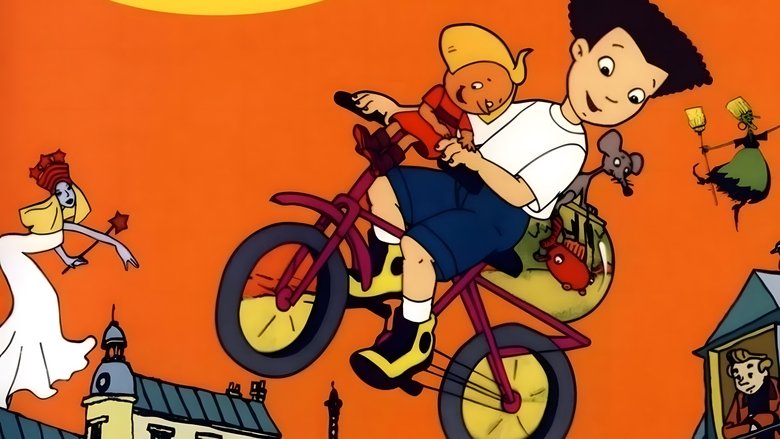

Les Contes de la rue Broca - Episode Highlights
Episode Highlights
La sorcière de la rue Mouffetard
This is arguably the most famous story from the collection. A very old witch reads in a witches' newspaper that she can become young again by eating a little girl with tomato sauce. She disguises herself to capture Nadia, the grocer's daughter. The episode is a perfect blend of genuine peril and whimsical humor, showcasing the series' unique tone.
It establishes the show's core premise: fairy-tale dangers intruding into the modern, everyday world of Paris. Nadia's eventual triumph through her brother's cleverness highlights the theme of sibling solidarity and childhood ingenuity defeating ancient evil.
Le géant aux chaussettes rouges
A lonely giant who lives underground decides he wants to get married and emerges in the middle of a village. His immense size causes panic, but his magical red socks, which grant wishes, ultimately help him find love. The story is a touching and humorous exploration of loneliness and finding connection.
This episode is significant for its theme of looking past appearances. The giant, initially feared, is revealed to be kind and lonely. It teaches a lesson about empathy and the unexpected ways love can be found.
La sorcière du placard aux balais
A young boy named Pierre buys a house for five francs, only to discover it's haunted by a witch who lives in the broom closet and appears when a specific song is sung. Aided by his friends Bachir and Nadia and their magical fish, he must face the witch's challenge.
This episode is foundational, as the protagonist is a younger version of the narrator, Monsieur Pierre himself. It connects the storyteller directly to the magical world he describes, suggesting his tales are born from personal experience. It emphasizes friendship and courage.
Le gentil petit diable
In Hell, a young devil is a disappointment to his family because he excels at being good, getting top marks in subjects like catechism. Exiled to Earth to learn to be wicked, he instead continues his good deeds and eventually finds his way into Heaven.
This tale is a brilliant subversion of traditional morality. It explores themes of identity and destiny, suggesting that one can choose their own nature, regardless of their origins or the expectations of others. It's one of the most humorous and philosophical episodes of the series.
Je-ne-sais-qui, je-ne-sais-quoi
Heavily inspired by Russian folklore, this is one of the more epic tales. A foolish younger brother is sent on an impossible quest by his jealous king to go "I-know-not-where" and bring back "I-know-not-what". Through kindness and perseverance, he succeeds with the help of a magical guide.
This episode showcases the literary roots of Gripari's work and its connection to a wider world of folklore. It's a classic hero's journey that emphasizes virtues like humility and kindness over arrogance and greed, teaching a powerful lesson about the nature of true wisdom.