Les Contes de la rue Broca
Overview
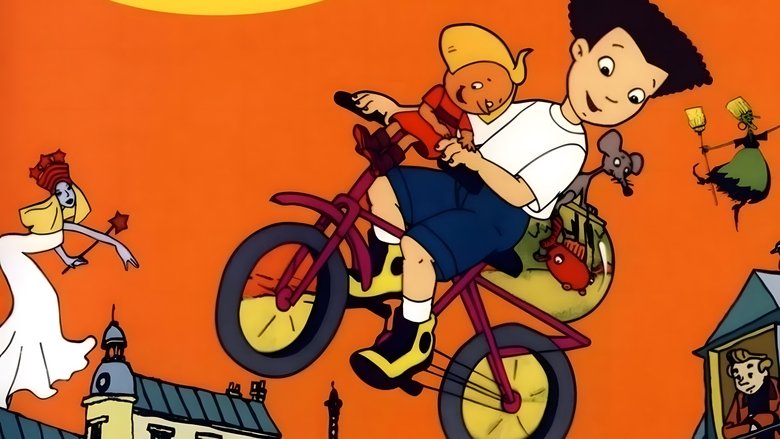
"Les Contes de la rue Broca" (Tales of Broca Street) is an animated anthology series based on the beloved children's stories by French author Pierre Gripari. The series is framed around Monsieur Pierre, a mysterious and kind elderly storyteller who regularly visits the small grocery shop of Papa Saïd. There, he captivates Papa Saïd's children, Nadia and Bachir, by narrating extraordinary tales that blend fairy-tale logic with the mundane reality of their Parisian neighborhood.
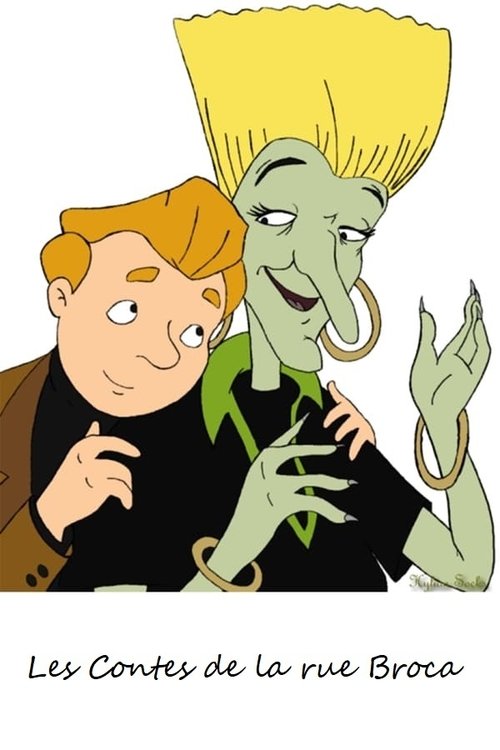
Each of the 26 episodes presents a self-contained story, introducing a host of fantastic characters and situations. Viewers meet a witch who wants to eat a little girl with tomato sauce to become young again, a giant with magical red socks, a love story between a potato and a guitar, a clever little pig, and a pair of sentient shoes. The magic is never far away; it can emerge from a water tap, be found in a broom closet, or live right under the streets of Paris. The Rue Broca itself acts as a magical nexus, a place where the ordinary world serves as a gateway to the marvelous, all through the power of storytelling.

Core Meaning
The core meaning of "Les Contes de la rue Broca" is the celebration of imagination as a force that imbues the ordinary world with magic and wonder. The series suggests that stories are not just escapism but a vital way of understanding life, morality, and one's place in the world. By grounding fantastical events in a real Parisian street, the show conveys that magic isn't confined to faraway castles but can be discovered in the most familiar corners of our lives. It champions a childlike perspective, where the absurd and the profound coexist, and teaches that empathy, cleverness, and kindness are the most powerful tools for navigating the strange challenges life throws one's way.
Thematic DNA
The Eruption of the Magical in the Mundane
The series consistently blurs the line between the real world and a magical one. Unlike traditional fairy tales set in distant forests or castles, these stories unfold in contemporary Paris, specifically in and around a local grocery store. A witch can live on Rue Mouffetard, a fairy can appear from a kitchen tap, and a giant can emerge in the middle of a village. This theme reinforces the idea that wonder is not something to be sought in another realm but is an inherent part of everyday reality, accessible to anyone with an open mind and a good story.
Modernized Morality and Subverted Tropes
Pierre Gripari's stories, and the series by extension, playfully invert classic fairy-tale conventions. A "Gentil Petit Diable" (Gentle Little Devil) wants to be good despite his father's infernal expectations, challenging preconceived notions of good and evil. Many stories resolve not with a grand royal wedding but with clever, practical solutions or humorous twists. The morals often touch upon contemporary issues like consumerism (a doll trying to force a father to buy a bicycle) or the importance of kindness and wit over brute strength, offering lessons that are both timeless and refreshingly modern.
The Power of Storytelling
The entire series is a meta-narrative about the importance of stories. The framing device of Monsieur Pierre telling tales to Bachir and Nadia highlights the oral tradition of passing on wisdom and entertainment. The stories he tells have the power to transform the children's perception of their own world. The author, Pierre Gripari, even stated that the character of Monsieur Pierre is a fictionalized version of himself, who co-created the stories with the children of his neighborhood, emphasizing that imagination is a collaborative and living force.
Love and Acceptance
Many of the tales explore different facets of love and the importance of acceptance. This can be seen in the unconventional romance between a potato and a guitar, the giant's search for a wife, or a prince's love for a mermaid against his parents' wishes. These stories teach that love can be found in unexpected forms and that one should follow their heart, even if it goes against societal norms or family expectations.
Character Analysis
Monsieur Pierre
Edgar Givry
Motivation
His motivation is to share the joy and wisdom of stories with the younger generation. He sees the imaginative potential in Bachir and Nadia and nurtures it by telling them tales that are fantastical yet emotionally resonant.
Character Arc
As the series' narrator and framing character, Monsieur Pierre doesn't have a dynamic arc but serves as the stable, wise, and mysterious conduit to the world of imagination. He is the constant who brings magic into the children's lives. According to the author Pierre Gripari, M. Pierre is his literary alter ego. His presence reinforces the series' core message about the power of oral storytelling.
Nadia
Marine Boiron
Motivation
Her primary motivation is curiosity and a desire for adventure. Within the tales, her motivation is often survival or helping others, such as when she shows kindness to the old woman who is secretly the witch.
Character Arc
Nadia is one of the listeners in the frame story and often the protagonist within the tales themselves. Her arc is not sequential but thematic. In stories like "La Sorcière de la rue Mouffetard," she represents childhood innocence targeted by dark forces. However, through courage and the help of others, she overcomes these threats. She embodies the resilience and inherent goodness of children.
Bachir
Sophie Arthuys
Motivation
Bachir is motivated by a boyish curiosity and a desire to understand the world. His questions often prompt Monsieur Pierre to elaborate on the tales, making the narrative more interactive.
Character Arc
Like his sister Nadia, Bachir is both a listener and a participant in the stories. He often represents the practical, inquisitive side of childhood. His interruptions and questions to Monsieur Pierre during the storytelling ground the tales in a child's logic. He doesn't have a multi-episode arc, but within each story, he often learns a lesson about cleverness, bravery, or the consequences of one's actions.
The Witch (of Rue Mouffetard / the Broom Closet)
Sophie Arthuys
Motivation
Her motivations are primal and selfish: to regain her youth by eating a child, or to torment the inhabitants of a house she haunts. She is driven by vanity and a desire for power.
Character Arc
The witch is a recurring archetype in the series, appearing in two of the most famous tales. Her arc is contained within her respective episodes. She represents a classic fairy-tale evil—selfish, deceptive, and predatory. However, she is always outsmarted by the cleverness and goodness of children, demonstrating the theme that intelligence and virtue can defeat malice.
Symbols & Motifs
Rue Broca and Papa Saïd's Shop
It symbolizes the threshold between the ordinary world and the realm of imagination. It is a concrete, real-world location in Paris that acts as the anchor for all the magical events, suggesting that fantasy and reality are intertwined. The shop is a safe, liminal space where stories come to life.
The series' framing narrative is set in Papa Saïd's grocery store on Rue Broca. It's the meeting point for the storyteller, Monsieur Pierre, and his audience, the children Nadia and Bachir. Many of the stories begin or connect back to this central, grounding location.
Common Household Objects
Objects like a pair of shoes, a broom closet, or a water tap are imbued with magical properties. This symbolizes the idea that magic is not exotic but domestic and accessible. It encourages viewers to see the potential for wonder in their own everyday surroundings.
Throughout the series, mundane items become central to the plot. In "La Paire de chaussures," a married pair of shoes has its own adventure. In "La Fée du robinet," a fairy emerges from a tap. In "La sorcière du placard aux balais," a simple broom closet is a witch's portal.
Food
Food often acts as a catalyst for the plot or a key magical element, symbolizing both sustenance and transformation. It's used in magical recipes, as a source of conflict, or as an object of desire, grounding the magical stakes in something primal and relatable.
The most famous example is in "La Sorcière de la rue Mouffetard," where the witch needs to eat the little girl Nadia with tomato sauce to regain her youth. In "Roman d'amour d'une patate," the main character is a potato. The setting of a grocery store further emphasizes the constant presence of food.
Memorable Quotes
Sorcière, sorcière, prends garde à ton derrière !
— Children's chant
Context:
This chant is famously used in the episode "La Sorcière du placard aux balais." Singing the full song summons the witch from her closet, and it becomes a central plot device in confronting her.
Meaning:
"Witch, witch, watch your behind!" This recurring magical chant is a powerful incantation used by the children to combat or reveal a witch. It symbolizes the power that lies in collective courage and the use of specific, rhythmic language—akin to a magic spell—to fight evil.
Episode Highlights
La sorcière de la rue Mouffetard
This is arguably the most famous story from the collection. A very old witch reads in a witches' newspaper that she can become young again by eating a little girl with tomato sauce. She disguises herself to capture Nadia, the grocer's daughter. The episode is a perfect blend of genuine peril and whimsical humor, showcasing the series' unique tone.
It establishes the show's core premise: fairy-tale dangers intruding into the modern, everyday world of Paris. Nadia's eventual triumph through her brother's cleverness highlights the theme of sibling solidarity and childhood ingenuity defeating ancient evil.
Le géant aux chaussettes rouges
A lonely giant who lives underground decides he wants to get married and emerges in the middle of a village. His immense size causes panic, but his magical red socks, which grant wishes, ultimately help him find love. The story is a touching and humorous exploration of loneliness and finding connection.
This episode is significant for its theme of looking past appearances. The giant, initially feared, is revealed to be kind and lonely. It teaches a lesson about empathy and the unexpected ways love can be found.
La sorcière du placard aux balais
A young boy named Pierre buys a house for five francs, only to discover it's haunted by a witch who lives in the broom closet and appears when a specific song is sung. Aided by his friends Bachir and Nadia and their magical fish, he must face the witch's challenge.
This episode is foundational, as the protagonist is a younger version of the narrator, Monsieur Pierre himself. It connects the storyteller directly to the magical world he describes, suggesting his tales are born from personal experience. It emphasizes friendship and courage.
Le gentil petit diable
In Hell, a young devil is a disappointment to his family because he excels at being good, getting top marks in subjects like catechism. Exiled to Earth to learn to be wicked, he instead continues his good deeds and eventually finds his way into Heaven.
This tale is a brilliant subversion of traditional morality. It explores themes of identity and destiny, suggesting that one can choose their own nature, regardless of their origins or the expectations of others. It's one of the most humorous and philosophical episodes of the series.
Je-ne-sais-qui, je-ne-sais-quoi
Heavily inspired by Russian folklore, this is one of the more epic tales. A foolish younger brother is sent on an impossible quest by his jealous king to go "I-know-not-where" and bring back "I-know-not-what". Through kindness and perseverance, he succeeds with the help of a magical guide.
This episode showcases the literary roots of Gripari's work and its connection to a wider world of folklore. It's a classic hero's journey that emphasizes virtues like humility and kindness over arrogance and greed, teaching a powerful lesson about the nature of true wisdom.
Philosophical Questions
Where does the boundary between reality and imagination lie?
The series constantly explores this question by having the most fantastical events occur in a real, identifiable place (Rue Broca, Paris). Monsieur Pierre's stories are not presented as mere fiction but as events that could happen just around the corner. The very structure of the show, a story within a story, invites the audience to consider how imagination shapes our reality and how reality can be a source of infinite magical possibilities.
Is 'good' and 'evil' innate or a matter of choice?
This question is most directly addressed in "Le gentil petit diable." A character born into an 'evil' environment (Hell) actively chooses goodness, defying his very nature and upbringing. This suggests that morality is not determined by one's origin but by one's actions and choices. The series frequently presents characters who are not purely good or evil, but complex beings whose motivations are explored with nuance and humor.
Alternative Interpretations
While presented as children's stories, some critics and adult viewers have interpreted Pierre Gripari's tales through a more complex lens. One interpretation sees the stories as a subtle commentary on social norms and conformity. For example, "Le gentil petit diable" can be read as an allegory for non-conformity and the courage to defy societal or familial expectations to be true to one's own nature.
Another perspective, particularly from a modern viewpoint, notes that some stories contain outdated social stereotypes or tropes from the 1960s when they were written. The story of Lustucru, who captures a woman's cat to force her to marry him, can be seen as problematic. These elements lead to an alternative reading of the tales not just as charming fantasies, but as cultural artifacts that reflect the social attitudes of their time, prompting discussions about how such stories are perceived by contemporary audiences.
Cultural Impact
"Les Contes de la rue Broca" holds a significant place in French popular culture, particularly for the generation of children who grew up in the 1990s. The series is remembered with great affection for its charm, humor, and unique blend of urban reality with fairy-tale magic. It was a departure from more traditional, often sanitized children's programming, introducing stories with genuine quirks, moments of absurdity, and sometimes even a touch of darkness that respected the intelligence of its young audience.
The original book by Pierre Gripari, published in 1967, was already a classic of French children's literature. The animated series revitalized these stories for a new medium, and its frequent rebroadcasts on channels like France 3 and Gulli ensured its longevity and introduced it to successive waves of viewers. The series' legacy lies in its successful modernization of the fairy tale. By placing magic in a familiar, multicultural Parisian setting, it made the fantastical feel accessible and immediate. It has influenced subsequent French animation and children's literature by demonstrating that compelling stories for children can be sophisticated, witty, and deeply rooted in a tangible, contemporary culture while still embracing the universal power of folklore.
Audience Reception
"Les Contes de la rue Broca" has been overwhelmingly well-received by audiences, particularly in France, where it is considered a nostalgic classic. Viewers consistently praise its originality, wit, and the clever way it subverts traditional fairy-tale tropes. The character of Monsieur Pierre is fondly remembered, as are the iconic stories of the witches, the giant, and the gentle devil. The series is often lauded for being intelligent children's programming that doesn't talk down to its audience, offering humor and moral lessons that resonate with both children and adults. The main points of praise focus on the creative storytelling, the memorable characters, and the charming, slightly dated animation style that adds to its nostalgic appeal. There is very little criticism of the series, though some modern viewers might point out that certain story elements reflect social norms of the 1960s that are now considered outdated. Overall, its legacy is that of a beloved and enduring piece of French animation.
Interesting Facts
- The series is based on the book of the same name by Pierre Gripari, first published in 1967 by Éditions de la Table Ronde.
- The creator, Pierre Gripari, claimed that he invented the stories with the help of the children he would meet and talk to in his neighborhood, making it a collaborative creative process.
- The TV series was created by Alain Jaspard and Claude Allix and first aired in France in 1995 on Canal J before being broadcast more widely on France 3 from December 1996.
- The character of Monsieur Pierre, the storyteller, is considered to be the author Pierre Gripari's fictional alter ego.
- The show is an anthology series, where each of the 26 episodes tells a different, self-contained story, though they are all connected by the framing device of M. Pierre at the grocery store.
- Prior to this popular animated series, there were other, lesser-known television adaptations of the stories in France, including one in 1975 and a live-action version in 1982.
⚠️ Spoiler Analysis
Click to reveal detailed analysis with spoilers
Frequently Asked Questions
Explore More About This Movie
Dive deeper into specific aspects of the movie with our detailed analysis pages
Comments (0)
No comments yet. Be the first to share your thoughts!