Les Contes de la rue Broca - Symbolism & Philosophy
Symbols & Motifs
Rue Broca and Papa Saïd's Shop
It symbolizes the threshold between the ordinary world and the realm of imagination. It is a concrete, real-world location in Paris that acts as the anchor for all the magical events, suggesting that fantasy and reality are intertwined. The shop is a safe, liminal space where stories come to life.
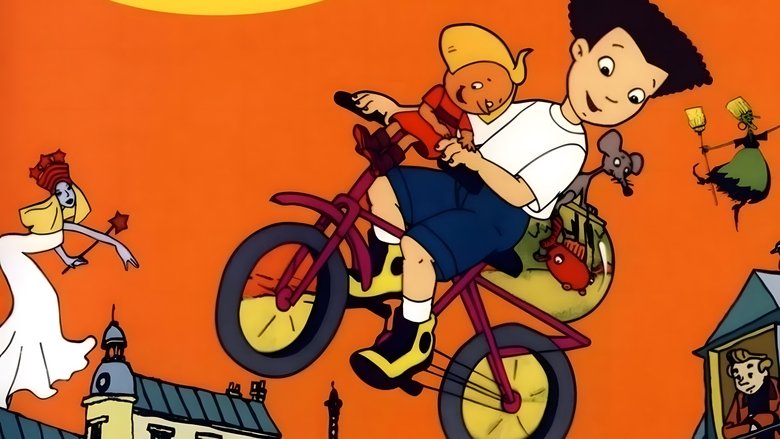
The series' framing narrative is set in Papa Saïd's grocery store on Rue Broca. It's the meeting point for the storyteller, Monsieur Pierre, and his audience, the children Nadia and Bachir. Many of the stories begin or connect back to this central, grounding location.
Common Household Objects
Objects like a pair of shoes, a broom closet, or a water tap are imbued with magical properties. This symbolizes the idea that magic is not exotic but domestic and accessible. It encourages viewers to see the potential for wonder in their own everyday surroundings.
Throughout the series, mundane items become central to the plot. In "La Paire de chaussures," a married pair of shoes has its own adventure. In "La Fée du robinet," a fairy emerges from a tap. In "La sorcière du placard aux balais," a simple broom closet is a witch's portal.
Food
Food often acts as a catalyst for the plot or a key magical element, symbolizing both sustenance and transformation. It's used in magical recipes, as a source of conflict, or as an object of desire, grounding the magical stakes in something primal and relatable.
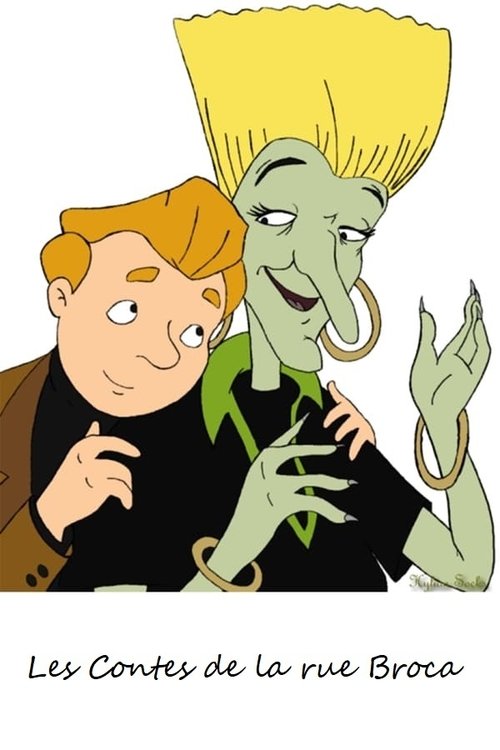
The most famous example is in "La Sorcière de la rue Mouffetard," where the witch needs to eat the little girl Nadia with tomato sauce to regain her youth. In "Roman d'amour d'une patate," the main character is a potato. The setting of a grocery store further emphasizes the constant presence of food.
Philosophical Questions
Where does the boundary between reality and imagination lie?
The series constantly explores this question by having the most fantastical events occur in a real, identifiable place (Rue Broca, Paris). Monsieur Pierre's stories are not presented as mere fiction but as events that could happen just around the corner. The very structure of the show, a story within a story, invites the audience to consider how imagination shapes our reality and how reality can be a source of infinite magical possibilities.
Is 'good' and 'evil' innate or a matter of choice?
This question is most directly addressed in "Le gentil petit diable." A character born into an 'evil' environment (Hell) actively chooses goodness, defying his very nature and upbringing. This suggests that morality is not determined by one's origin but by one's actions and choices. The series frequently presents characters who are not purely good or evil, but complex beings whose motivations are explored with nuance and humor.
Core Meaning
The core meaning of "Les Contes de la rue Broca" is the celebration of imagination as a force that imbues the ordinary world with magic and wonder. The series suggests that stories are not just escapism but a vital way of understanding life, morality, and one's place in the world. By grounding fantastical events in a real Parisian street, the show conveys that magic isn't confined to faraway castles but can be discovered in the most familiar corners of our lives. It champions a childlike perspective, where the absurd and the profound coexist, and teaches that empathy, cleverness, and kindness are the most powerful tools for navigating the strange challenges life throws one's way.