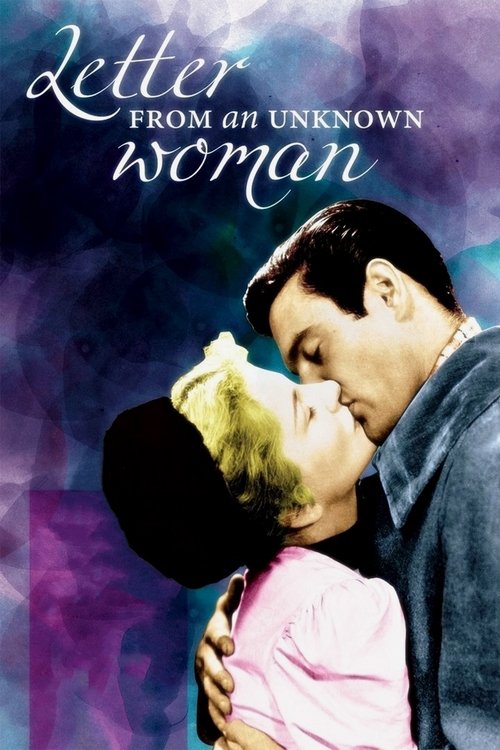
"This is the love every woman lives for…the love every man would die for!"
Letter from an Unknown Woman - Symbolism & Philosophy
Symbols & Motifs
The Spiral Staircase
Represents the social hierarchy, the passage of time, and the physical bridge between Lisa's world and Stefan's. It is the site of her voyeurism and their eventual crossings.
Used repeatedly: young Lisa watching Stefan bring women home, her own ascent to his apartment, and her final descent when she realizes he doesn't know her.
White Roses
Symbolizes Lisa's pure, anonymous devotion and her presence in Stefan's life even when he is unaware of her identity.
Stefan buys her a white rose on their date; later, she anonymously sends him white roses on his birthday every year. Their absence in the final timeline signifies her death.
The Fake Train Carriage
A metaphor for their relationship: an illusion of movement and journey that actually goes nowhere. It represents the artificiality of their romance.
During their one romantic night, they sit in a fairground attraction where painted scenery rolls past the window of a stationary train carriage.
The Letter
A voice from the grave that forces memory upon the amnesiac Stefan. It transforms Lisa from an object of gaze into the narrator of truth.
The framing device of the film; Stefan reads it throughout the night, with Lisa's voiceover guiding the visual flashbacks.
Philosophical Questions
Is love valid if it is not reciprocal?
The film asks whether Lisa's emotions have value despite Stefan's ignorance. It validates her internal world through the voiceover, suggesting her love was real and meaningful even if unshared.
What is the relationship between memory and morality?
Stefan is portrayed as immoral not because he is malicious, but because he forgets. The film equates moral weight with the capacity to remember others and hold them in one's consciousness.
Core Meaning
At its heart, Letter from an Unknown Woman is a tragic meditation on the asymmetry of love and memory. Max Ophüls uses the contrast between Lisa's absolute, detailed remembrance and Stefan's casual forgetfulness to critique the romantic ideal. The film exposes the cruelty of a 'Don Juan' lifestyle not through villainy, but through the devastating indifference of the male gaze versus the constancy of the female heart.