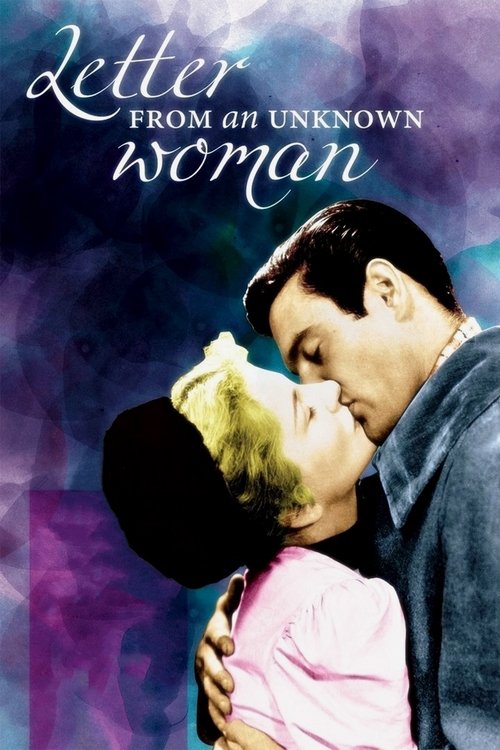
Letter from an Unknown Woman
A hauntingly beautiful Romantic Drama depicting a lifetime of unrequited obsession in turn-of-the-century Vienna. Through a tragic letter, a woman's forgotten existence pierces the heart of a dissolute pianist, illuminated by spiral staircases and falling snow.
Letter from an Unknown Woman

Letter from an Unknown Woman

"This is the love every woman lives for…the love every man would die for!"

28 April 1948 United States of America 87 min ⭐ 7.8 (330)
Director: Max Ophüls
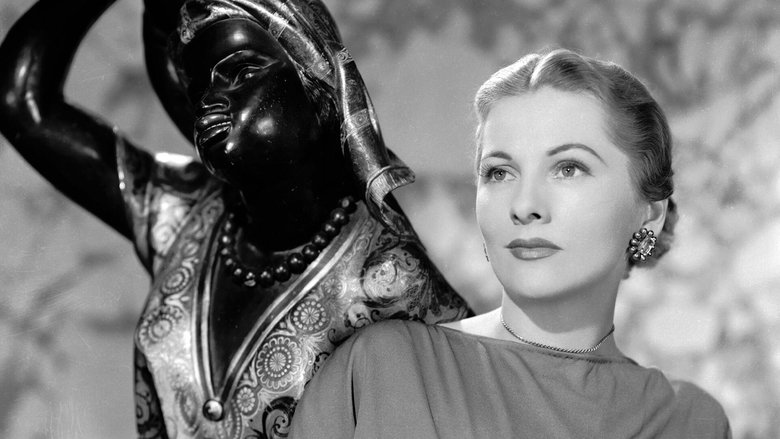
Cast: Joan Fontaine, Louis Jourdan, Mady Christians, Marcel Journet, Art Smith
Drama Romance
Asymmetry of Memory Unrequited Obsession Fate vs. Choice Class and Transience

Overview

In early 20th-century Vienna, former concert pianist Stefan Brand returns home late one night to find he is challenged to a duel at dawn. Planning to flee, he pauses to read a thick letter from an unknown woman. As he reads, the film flashes back to the life of Lisa Berndle, a shy girl who lived in his building and developed an all-consuming obsession with him from afar.

The narrative unfolds through Lisa's perspective, chronicling her journey from an infatuated teenager to a sophisticated woman. Despite one magical night together that results in a child, Stefan habitually forgets her, reducing her to just another conquest in his memory. Lisa builds a life with a respectable husband but remains emotionally tethered to Stefan, ultimately sacrificing everything for a man who cannot even recall her name until it is too late.
Core Meaning

At its heart, Letter from an Unknown Woman is a tragic meditation on the asymmetry of love and memory. Max Ophüls uses the contrast between Lisa's absolute, detailed remembrance and Stefan's casual forgetfulness to critique the romantic ideal. The film exposes the cruelty of a 'Don Juan' lifestyle not through villainy, but through the devastating indifference of the male gaze versus the constancy of the female heart.

Thematic DNA

Asymmetry of Memory 35%
Unrequited Obsession 25%
Fate vs. Choice 20%
Class and Transience 20%

Asymmetry of Memory

The film essentially juxtaposes two realities: Lisa's, where every moment is etched in eternity, and Stefan's, where people and events are fleeting and interchangeable. This is highlighted when Stefan fails to recognize Lisa even after intimate encounters.

Unrequited Obsession

Lisa's love is portrayed not as a simple romance but as a lifelong fever. The film questions whether such devotion is noble or self-destructive, as her obsession leads to the ruin of her secure life and the death of her son.

Fate vs. Choice

Lisa believes 'nothing happens by chance,' viewing her tragic path as destiny. However, the film subtly suggests her choices—to reject suitors, to return to Stefan—are active decisions driven by her fixated psyche.

Class and Transience

The social mobility of Lisa, rising from a poor neighbor to a wealthy diplomat's wife, contrasts with Stefan's decline from a promising artist to a dissolute playboy. Yet, emotional status remains inverted: she remains the beggar for his affection.

Character Analysis

Lisa Berndle

Joan Fontaine

Archetype: The Tragic Romantic
Key Trait: Unwavering Constancy

Motivation

To be the 'one woman' Stefan would finally recognize and love, seeking validation for her lifelong devotion.

Character Arc

Evolves from a shy, invisible teenager to a poised, wealthy woman, yet internally remains frozen in her adolescent worship of Stefan.

Stefan Brand

Louis Jourdan

Archetype: The Dissolute Artist / Don Juan
Key Trait: Casual Forgetfulness

Motivation

To pursue fleeting pleasure and avoid the 'luxury' of honor or commitment.

Character Arc

Starts as a promising, charismatic pianist and decays into a cynical, weary pleasure-seeker. His arc is one of awakening to the depth of what he squandered only when it is lost.

Johann Stauffer

Marcel Journet

Archetype: The Honorable Protector
Key Trait: Rigid Dignity

Motivation

To maintain honor and protect Lisa, even from herself, until her betrayal forces his hand.

Character Arc

Remains a stoic, rigid figure of stability who offers Lisa a life of dignity, which she ultimately rejects for her fantasy.

John (The Butler)

Art Smith

Archetype: The Silent Witness
Key Trait: Mute Remembrance

Motivation

Loyalty mixed with a silent acknowledgment of the truth.

Character Arc

He observes Stefan's revolving door of women with silent judgment but recognizes Lisa. He serves as the external memory that Stefan lacks.

Symbols & Motifs

The Spiral Staircase

Meaning:

Represents the social hierarchy, the passage of time, and the physical bridge between Lisa's world and Stefan's. It is the site of her voyeurism and their eventual crossings.

Context:

Used repeatedly: young Lisa watching Stefan bring women home, her own ascent to his apartment, and her final descent when she realizes he doesn't know her.

White Roses

Meaning:

Symbolizes Lisa's pure, anonymous devotion and her presence in Stefan's life even when he is unaware of her identity.

Context:

Stefan buys her a white rose on their date; later, she anonymously sends him white roses on his birthday every year. Their absence in the final timeline signifies her death.

The Fake Train Carriage

Meaning:

A metaphor for their relationship: an illusion of movement and journey that actually goes nowhere. It represents the artificiality of their romance.

Context:

During their one romantic night, they sit in a fairground attraction where painted scenery rolls past the window of a stationary train carriage.

The Letter

Meaning:

A voice from the grave that forces memory upon the amnesiac Stefan. It transforms Lisa from an object of gaze into the narrator of truth.

Context:

The framing device of the film; Stefan reads it throughout the night, with Lisa's voiceover guiding the visual flashbacks.

Memorable Quotes

By the time you read this letter, I may be dead.

— Lisa Berndle (Voiceover)

Context:

Spoken as Stefan opens the letter in the first scene, triggering the extended flashback.

Meaning:

The opening line that sets the tragic stakes and establishes the film's narrative structure as a message from beyond the grave.

I think everyone has two birthdays, the day of his physical birth and the beginning of his conscious life.

— Lisa Berndle (Voiceover)

Context:

Describing the moment she first saw Stefan moving into her apartment building.

Meaning:

Highlights how Lisa defines her entire existence solely through her awareness of Stefan.

Honor is a luxury only gentlemen can afford.

— Stefan Brand

Context:

Spoken to his friends when he plans to flee Vienna to avoid the duel at dawn.

Meaning:

Displays Stefan's cynicism and initial refusal to take responsibility for his actions or face the duel.

If only you could have recognized what was always yours, could have found what was never lost.

— Lisa Berndle (Voiceover)

Context:

The closing lines of the letter as Stefan realizes the magnitude of his loss.

Meaning:

The film's central tragedy: the disconnect between her total availability and his total blindness.

Philosophical Questions

Is love valid if it is not reciprocal?

The film asks whether Lisa's emotions have value despite Stefan's ignorance. It validates her internal world through the voiceover, suggesting her love was real and meaningful even if unshared.

What is the relationship between memory and morality?

Stefan is portrayed as immoral not because he is malicious, but because he forgets. The film equates moral weight with the capacity to remember others and hold them in one's consciousness.

Alternative Interpretations

The Feminist Reading: Some critics view Lisa not as a passive victim, but as the active creator of her own destiny. She rejects a conventional, safe marriage to pursue her desire, effectively choosing her own tragic ending rather than living a lie.

The Psychoanalytic Reading: Lisa's obsession is projected entirely onto a fantasy version of Stefan. The real Stefan is irrelevant; he is merely a vessel for her desire. Her refusal to identify herself to him in later years proves she prefers the fantasy of unrequited love to the reality of a relationship.

The Ghost Story: The film can be read as a ghost story where the letter haunts Stefan, forcing him to acknowledge the dead, leading him inevitably to his own death as penance.

Cultural Impact

Letter from an Unknown Woman is widely regarded as the definitive example of the 'woman's picture' transcended into high art. While contemporary 1948 critics dismissed it as 'schmaltz,' it was later championed by auteurist critics like Andrew Sarris and film theorists who analyzed its sophisticated visual language. The film is a touchstone for the study of the 'female gaze' and melodrama. It influenced directors like Martin Scorsese and Wes Anderson (particularly in The Grand Budapest Hotel) for its elegant camera movements and European sensibility. It remains the most celebrated adaptation of Stefan Zweig's work.

Audience Reception

Modern audiences and critics universally praise the film, holding a 100% rating on Rotten Tomatoes. Viewers are often moved to tears by the tragic ending and mesmerized by the fluid camera work. Common praise centers on Joan Fontaine's delicate performance and the heartbreaking irony of the plot. Criticism is rare but sometimes touches on the 'melodramatic' nature of the plot or Lisa's 'pathetic' lack of self-preservation, though most see this as a feature of the genre rather than a flaw.

Interesting Facts

  • Joan Fontaine co-founded Rampart Productions specifically to make this film, as she wanted to play a role that would allow her to age from a teenager to a mature woman.
  • The film was an initial box office failure in the United States, dismissed as a 'woman's picture,' but is now considered Max Ophüls' American masterpiece.
  • The character of the mute butler, John, does not exist in Stefan Zweig's original novella; he was added to serve as a silent witness who remembers Lisa when Stefan does not.
  • To achieve his signature fluid visual style, Ophüls reportedly insisted on painting the stairs and sets in varying shades of grey to better control the lighting and depth on black-and-white film.
  • The screenplay was written by Howard Koch, who also co-wrote 'Casablanca'.
  • Louis Jourdan was actually younger than Joan Fontaine, despite playing the older, world-weary figure in the earlier timelines.
  • The film was selected for preservation in the United States National Film Registry in 1992.

Easter Eggs

The Fake Train Ride Mechanism

The scene where Lisa and Stefan ride the 'train' in the Prater amusement park features a man pedaling a bicycle to scroll the scenery. This is often interpreted as Ophüls' self-reflexive nod to the cinematic apparatus itself—creating illusions of motion and emotion through mechanical means.

The Mute Butler's Writing

When Stefan asks if the butler remembers the woman, the butler writes 'Lisa Berndle' on a pad. This confirms that the 'unknown' woman was actually known and seen by everyone except the man she loved.

⚠️ Spoiler Analysis

Click to reveal detailed analysis with spoilers

Frequently Asked Questions

Explore More About This Movie

Dive deeper into specific aspects of the movie with our detailed analysis pages

Comments (0)

Leave a comment

No comments yet. Be the first to share your thoughts!