The core meaning of "Life Is Beautiful" is the triumph of the human spirit, hope, and love in the face of unimaginable adversity. Director Roberto Benigni aimed to convey that even in the most horrific circumstances, one can find beauty through imagination, love, and sacrifice. The film's central message is that while external freedom can be taken away, the inner freedom of the human soul, demonstrated through Guido's unwavering spirit, can never be extinguished. It explores the profound lengths a parent will go to protect their child's innocence and the power of reframing one's reality to survive trauma. Ultimately, the film suggests that life's beauty is found in acts of love and courage, even amidst profound suffering.
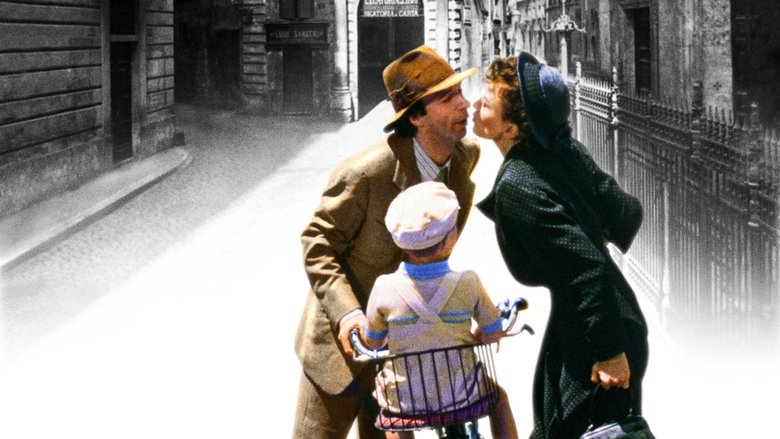
A bittersweet comedic drama where a father's boundless imagination becomes a shield against the grim reality of a concentration camp, painting hope in the darkest of places.
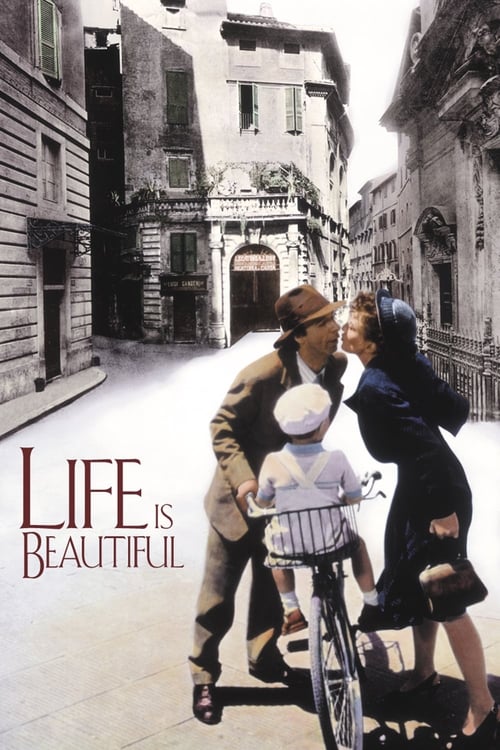
Life Is Beautiful
La vita è bella
"Bongiorno Principessa!"
20 December 1997
Italy
116 min
8.4
(13,562)
Director: Roberto Benigni
Cast: Roberto Benigni, Nicoletta Braschi, Giorgio Cantarini, Giustino Durano, Sergio Bini Bustric
Drama
Comedy
Love and Sacrifice
Imagination and Hope as a Defense Mechanism
The Preservation of Innocence
Bravery and Resilience
Budget:
$20,000,000
Box Office:
$230,098,753
Life Is Beautiful — Symbolism & Philosophy
Symbols & Motifs
The Tank
Meaning:
The tank symbolizes the ultimate prize in the game Guido creates, representing freedom, victory, and the fulfillment of a child's dream. It is the tangible goal that keeps Giosuè focused and hopeful throughout his ordeal in the concentration camp.
Context:
Giosuè is fascinated by tanks. Guido cleverly makes a real tank the grand prize for winning the 'game' of the concentration camp. In the film's final moments, after Guido's death and the liberation of the camp, an American tank appears, which Giosuè believes he has won, solidifying his father's story and preserving his innocence.
Riddles
Meaning:
The riddles represent both Guido's cleverness and the absurd, twisted logic of the Nazi ideology. Dr. Lessing's obsession with riddles, even within the horrific context of the camp, symbolizes a profound moral detachment and the sickness of the Nazi state of mind.
Context:
Guido and Dr. Lessing share a love for riddles in the first half of the film. Later, in the camp, Guido hopes Dr. Lessing will help him, but the doctor is only concerned with solving a riddle, highlighting his complete disregard for Guido's suffering. One notable riddle, "If you say my name, I'm no longer there. What am I?" with the answer being "Silence," is particularly poignant within the film's context of unspoken horrors.
The Schopenhauer Method
Meaning:
Guido's comical interpretation of Schopenhauer's philosophy on 'will' symbolizes the power of positive thinking and the ability to shape one's own reality through sheer force of will and optimism, even if it is a misinterpretation of the original philosophy.
Context:
Guido comically claims to use the "Schopenhauer Method" to make things happen, such as getting Dora to look at him. He later uses it in the camp to will his son to stay hidden and silent. This represents his belief in the power of the mind to overcome external circumstances.
Philosophical Questions
Can perception shape reality?
The film deeply explores the idea that one's perception can fundamentally alter their experience of reality. Guido doesn't change the physical reality of the concentration camp, but he completely transforms its meaning for his son. By imposing a narrative of a game onto the horrific events, he shields Giosuè from terror and despair. This raises the question of whether reality is purely objective or if it is filtered through the lens of individual consciousness, hope, and imagination. The film seems to argue that for the individual, especially a child, the perceived reality is the only one that matters.
Is it morally permissible to use humor when depicting historical tragedies?
"Life Is Beautiful" is at the center of this very debate. The film explores this by making Guido a clown whose only weapon is comedy. His humor is not aimed at the Holocaust itself, but is used as a shield against it. The film forces the audience to consider the function of humor. Is it to trivialize, or can it be a tool for resilience, resistance, and survival? The heated critical reception shows there is no easy answer, questioning where the ethical lines are in artistic representation of suffering.
What is the nature of sacrifice?
The film presents sacrifice not as a single, grand gesture, but as a continuous, moment-to-moment act of love. Guido constantly sacrifices his own fear, hunger, and exhaustion to maintain a cheerful and convincing performance for Giosuè. His ultimate sacrifice is his life, given to ensure his son's survival and the integrity of the 'game'. The film posits that the greatest sacrifices are those made to preserve the hope and humanity of others.
Core Meaning
Explore More About This Movie
Dive deeper into specific aspects of the movie with our detailed analysis pages