"He's not the messiah...he's just a naughty boy."
Life of Brian - Symbolism & Philosophy
Symbols & Motifs
The Gourd and the Shoe
These objects symbolize how religious relics and dogmas are created from mundane, meaningless items. They represent the human need to attach sacred significance to the trivial to validate their faith.
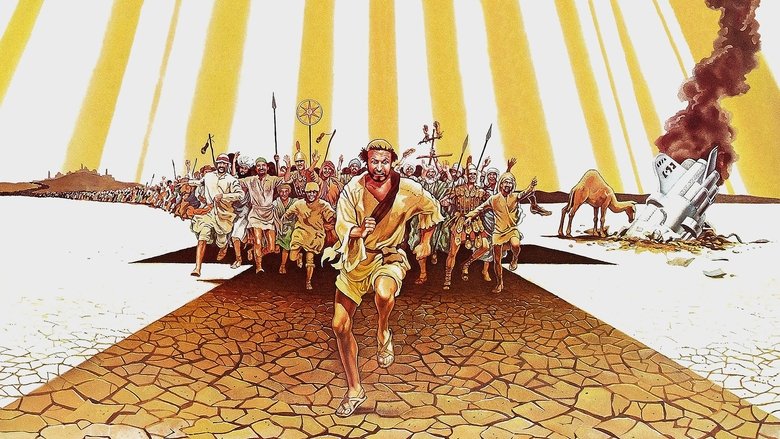
When Brian flees the crowd, he loses a shoe and accidentally drops a gourd. The crowd immediately debates the theological significance of these items, creating instant religious schisms.
The Graffiti (Romanes Eunt Domus)
This symbolizes the intersection of rebellion and bureaucratic education. It highlights the absurdity of the Romans enforcing their grammatical rules even on those trying to overthrow them.
A Centurion catches Brian writing "Romans Go Home" in incorrect Latin. Instead of arresting him, the Centurion corrects Brian's grammar and forces him to write it out 100 times like a school punishment.
The Cross
Traditionally a symbol of suffering and sacrifice, here it is subverted into a stage for a musical number. It symbolizes the ultimate existential defiance—laughing in the face of death.
The final scene where the crucified men perform a synchronized whistle and song routine, turning a method of execution into a Broadway-style finale.
Philosophical Questions
Does the individual exist without the group?
The film explores the tension between the desire for individual identity and the psychological need for group belonging. Brian's plea for individuality is instantly converted into a group chant, raising the question of whether true individuality is possible in a society desperate for conformity.
How is meaning constructed?
Through the gourd and shoe sequence, the film demonstrates semiotics in action—how arbitrary objects are imbued with profound meaning by observers. It questions the validity of all religious symbols, suggesting meaning is projected by the believer rather than inherent in the object.
Is faith a virtue or a failure of critical thinking?
The film presents faith largely as a misunderstanding or a desperate grasp for answers. It challenges the virtue of 'believing without seeing' by showing how easily such belief can be manipulated or mistaken, advocating instead for skepticism and reason.
Core Meaning
The central message of Life of Brian is a critique of groupthink and the human tendency to blindly follow authority—whether religious or political—rather than thinking for oneself. The film posits that dogmatism leads to absurdity and violence, and that individuals often create their own chains by seeking easy answers from charismatic leaders.
Ultimately, the film champions intellectual independence and existential resilience. By showing how easily a "Messiah" can be manufactured by a desperate crowd, it challenges the validity of organized religion while suggesting that the only true salvation lies in one's own attitude toward life's inevitable suffering.