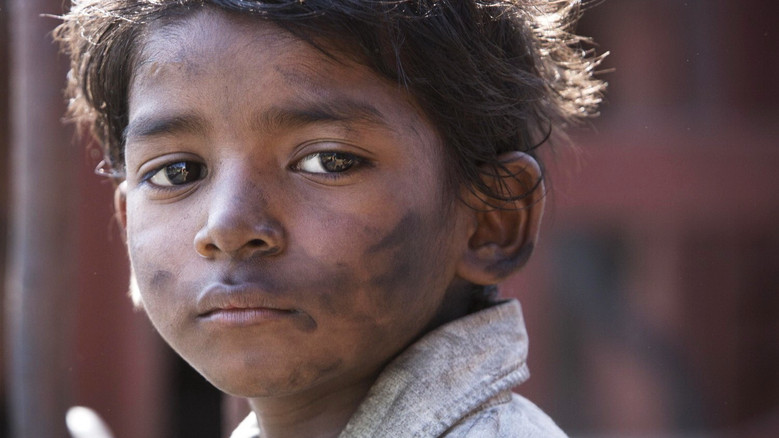
Lion
A heart-wrenching biographical drama that traces a lost boy's epic journey, painting a poignant visual map of memory, identity, and the unyielding pull of home.
Lion
Lion

"The search begins"

24 November 2016 Australia 118 min ⭐ 8.0 (6,772)
Director: Garth Davis
Cast: Dev Patel, Rooney Mara, David Wenham, Nicole Kidman, Abhishek Bharate
Drama
Identity and Belonging The Unbreakable Bond of Family and Motherhood Memory, Trauma, and the Past Poverty, Privilege, and Technology
Budget: $12,000,000
Box Office: $140,312,928

Lion - Ending Explained

⚠️ Spoiler Analysis

The central plot twist of "Lion" is not a twist of events, but a gradual revelation of memory and truth. The entire second act is a painstaking process of Saroo using Google Earth to find his home. The breakthrough comes when he finally recalls the correct, though phonetically similar, name of his hometown: he remembered "Ganesh Talai," and upon finding a location called Ganesh Talai near a landmark he recognized (rock formations where his mother worked), he is able to trace his way back.

Upon returning to Ganesh Talai, Saroo finds his childhood home is now a goat pen. However, an older man recognizes him from a photo and leads him to his mother, Kamla, resulting in a profoundly emotional, nearly wordless reunion. The most heartbreaking revelation comes next: Saroo learns that his beloved older brother, Guddu, died the very night they were separated. Guddu was hit by a train while walking along the tracks, which is why he never returned for Saroo at the station. This discovery re-contextualizes Saroo's entire journey, infusing the joy of his reunion with the deep sorrow of this permanent loss. The final piece of the puzzle of his identity is the revelation that his name isn't Saroo; he had mispronounced it as a child. His real name is Sheru, which means "Lion," giving the film its powerful, titular meaning and bringing his quest for self-discovery full circle.

Alternative Interpretations

While the film is largely received as an uplifting true story, some alternative readings focus on the complexities of its narrative. One interpretation views the film as a subtle critique of cultural displacement. While Saroo's adoption saved him from a dangerous situation, it also severed him from his culture, language, and family, creating an identity wound that festered for two decades. His obsessive search can be seen not just as a quest for family, but as a desperate attempt to reclaim a stolen part of his cultural identity.

Another perspective examines the character of Mantosh, Saroo's adoptive brother. While Saroo's story is one of successful adaptation and eventual integration, Mantosh's struggles with rage and self-harm highlight that not all stories of international adoption have a straightforward, happy ending. Mantosh serves as a foil to Saroo, representing a more traumatic and difficult path of adjustment, suggesting that the love of adoptive parents, while crucial, cannot always erase the deep scars of early childhood trauma. This adds a layer of bittersweet reality to the film's otherwise triumphant narrative.