Lion
"The search begins"
Overview
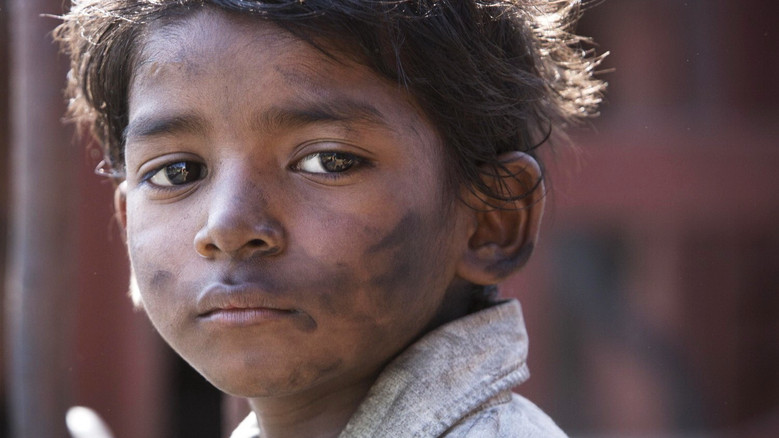
Based on the incredible true story of Saroo Brierley, "Lion" is a deeply moving film that chronicles a remarkable journey of loss and reunion. The film is split into two distinct halves. The first part follows a precocious five-year-old Saroo who lives in a poor, rural village in India. One night, he gets separated from his beloved older brother, Guddu, and accidentally falls asleep on a decommissioned train that carries him nearly 1,600 kilometers away to the chaotic city of Calcutta.
Alone, unable to speak the local language, and with only a mispronounced name of his hometown, Saroo must navigate the dangerous streets as a lost child. After surviving numerous challenges, he ends up in an orphanage and is eventually adopted by a loving Australian couple, Sue and John Brierley. The second half of the film jumps forward twenty-five years. Saroo, now a young man living in Australia, is haunted by fragmented memories of his past. A chance encounter with a nostalgic Indian sweet, jalebi, reawakens his deep-seated desire to find his lost family, setting him on an obsessive, near-impossible search using the new technology of Google Earth.
Core Meaning
At its core, "Lion" is a profound exploration of identity, the enduring power of hope, and the unbreakable bonds of family. Director Garth Davis crafts a narrative that questions the very definition of 'home'—is it the place of one's birth and blood ties, or the place where one is nurtured and loved? The film suggests that both are integral parts of a person's identity and can coexist. It powerfully conveys the message that one cannot escape their origins and that reconnecting with one's past is essential for achieving a sense of spiritual wholeness and resolving inner conflict. Furthermore, "Lion" is a testament to the resilience of the human spirit and the extraordinary love between mothers and their children, transcending continents and decades of separation.
Thematic DNA
Identity and Belonging
The central theme is Saroo's struggle with his dual identity. Raised in Australia, he feels a deep connection to his adoptive family, yet is haunted by the ghost of his Indian past. This internal conflict is highlighted when he tells friends, "I'm adopted, I'm not really Indian," revealing his confusion. The quest to find his birthplace is a journey to reconcile these two halves of himself, to understand where he truly belongs without invalidating the life and love he has known in Australia. The film explores how geography, memory, and family shape who we are.
The Unbreakable Bond of Family and Motherhood
"Lion" is a powerful ode to the love of family, particularly the profound connection between a mother and child. This is explored through two powerful maternal figures: his biological mother, Kamla, who never gives up hope and remains in their village for 25 years, and his adoptive mother, Sue, whose love is selfless and unconditional. A pivotal scene reveals Sue chose to adopt not because of infertility, but from a profound desire to give a chance to children in need. The film beautifully illustrates that family is defined by love, not just blood ties.
Memory, Trauma, and the Past
Saroo's journey is driven by fragmented, sensory memories of his childhood: the taste of jalebi, the sight of a water tower, the feel of carrying rocks with his mother. These memories are both a source of comfort and deep pain. His obsessive search using Google Earth is an attempt to piece together these fragments into a coherent map of his past. The film delves into the trauma of being lost and separated from loved ones, and the lasting psychological impact it has, even decades later. His guilt over the comfortable life he has while his family may be suffering is a heavy burden he carries.
Poverty, Privilege, and Technology
The film starkly contrasts the extreme poverty of Saroo's childhood in Khandwa and the streets of Calcutta with the comfortable, middle-class life he has in Tasmania. This juxtaposition highlights the vast inequalities in the world and the role of chance in determining a person's fate. Technology, specifically Google Earth, serves as the bridge between these two worlds. It becomes the modern tool that allows Saroo to overcome insurmountable geographical and bureaucratic barriers, empowering an individual to reclaim a past that was seemingly lost forever.
Character Analysis
Saroo Brierley
Dev Patel / Sunny Pawar
Motivation
His primary motivation is to find his biological mother and brother to quell his own guilt and their presumed decades of suffering. He is haunted by the thought of them endlessly searching for him and needs to let them know he is alive and safe. This evolves into a deeper need to understand his own origins and complete his sense of self.
Character Arc
Saroo begins as a resourceful and resilient five-year-old survivor. After being adopted, he assimilates into Australian culture, suppressing the trauma of his past. As a young adult, the resurfacing of his memories plunges him into an identity crisis. His obsessive search alienates him from his loved ones, but ultimately leads him to a place of wholeness where he can embrace both his Australian upbringing and his Indian roots, unifying the two halves of his life.
Sue Brierley
Nicole Kidman
Motivation
Her motivation is a profound and selfless maternal love. She is driven by a deeply held belief, formed in her youth, that her purpose was to provide a safe and loving home for children who were suffering. Her happiness is intrinsically tied to the well-being and completeness of her sons.
Character Arc
Sue is presented as an endlessly loving and supportive mother. Her character deepens significantly when she reveals her true motivation for adoption: a conscious choice to help children in need, born from a vision she had as a child and her own traumatic upbringing. She suffers silently through the difficulties with her other adopted son, Mantosh, and through Saroo's emotional withdrawal. Her arc is one of quiet strength, culminating in her wholehearted support for Saroo's quest, proving her love is selfless and without ego.
Lucy
Rooney Mara
Motivation
Lucy's motivation is her love for Saroo and her desire for a healthy, present relationship with him. She tries to ground him and pull him back from his all-consuming quest, not out of malice, but because she sees him hurting himself and their relationship.
Character Arc
Lucy is introduced as Saroo's supportive girlfriend. Her character serves as a mirror to Saroo's emotional state. As his obsession with the search deepens, their relationship becomes strained, and she struggles to understand the depth of his internal conflict. She represents his present life and the connections he risks losing. Though they separate due to the strain, she returns to support him once he has made his discovery, showing her enduring care for him.
John Brierley
David Wenham
Motivation
John is motivated by a simple, profound love for his family and a shared conviction with Sue that they could make a difference by adopting. He wants to see his sons happy and secure and supports them without question.
Character Arc
John is a steady, kind, and supportive presence throughout Saroo's life. He shares Sue's philosophy on adoption and provides a stable, loving foundation for their family. While less central than Sue, his unwavering support for his wife and sons is constant. His arc is not one of change, but of steadfastness, representing the quiet strength and stability of Saroo's Australian home.
Symbols & Motifs
Jalebi
The sweet Indian pastry, jalebi, symbolizes Saroo's suppressed childhood memories and the catalyst for his search. It represents a direct, sensory link to his past, his brother Guddu, and a life he had forgotten.
During a party with Indian friends in Melbourne, the sight and taste of jalebi trigger a powerful flashback, reawakening his dormant memories and initiating his obsessive quest to find his home. It's the moment his past breaks through into his present.
The Train
Trains are a dual symbol of both tragic separation and eventual connection. Initially, the train is the terrifying vessel that rips a young Saroo from his home and family, representing the uncontrollable forces that alter his life's trajectory. Later, his search involves meticulously tracing train lines on Google Earth, turning the symbol of his trauma into the map that leads him back home.
As a five-year-old, Saroo falls asleep on a decommissioned train that carries him to Calcutta, symbolizing his descent into being lost. As an adult, he spends countless hours on Google Earth following thousands of kilometers of railway tracks radiating from Calcutta, using the very thing that took him away to find his way back.
Google Earth
Google Earth symbolizes hope, the power of modern technology to connect humanity, and the relentless pursuit of memory. It represents the near-impossible made possible, a digital key to unlocking a forgotten past and bridging immense geographical and emotional distances.
After his friends suggest it, Saroo uses Google Earth as his primary tool. The film depicts his obsessive, painstaking virtual journey, scrolling across the vast Indian landscape for years, showcasing his determination and the technology's ability to facilitate a modern-day odyssey.
Butterflies
The yellow butterflies represent memory, transformation, and a beacon of hope. They are a specific, beautiful memory that helps Saroo pinpoint his home and symbolize his own metamorphosis from a lost boy to a man who has integrated both his past and present.
At the beginning of the film, young Saroo is shown in a field surrounded by a swarm of yellow butterflies. This vivid memory becomes a crucial landmark in his adult search, helping him locate his village on the map.
Lion
The title itself symbolizes Saroo's true identity and inner strength. It represents bravery, resilience, and the dignity he maintained even as a lost child. The discovery of his name's meaning is the final piece of his identity puzzle.
The significance is revealed at the very end of the film. After reuniting with his mother, Saroo learns that he had been mispronouncing his own name; his real name is "Sheru," which means "Lion." This revelation brings his journey of self-discovery to a powerful and fitting conclusion.
Memorable Quotes
I'm not from Calcutta... I'm lost.
— Saroo Brierley
Context:
Saroo says this to his friends at a dinner party after tasting jalebi, which has triggered his childhood memories. It is the first time he articulates the fundamental truth of his childhood that he has long suppressed.
Meaning:
This is a pivotal moment of self-realization for the adult Saroo. For twenty years, he has accepted Calcutta as his origin because it's where his documented life began. This declaration signifies the conscious start of his journey to reclaim his true past and acknowledge the deep-seated feeling of being disconnected from his roots.
I could have had kids... We chose not to. We wanted the two of you.
— Sue Brierley
Context:
Sue says this to Saroo after he apologizes for the difficulties he and his brother have caused her, assuming she adopted because she was infertile. Her honest, emotional confession clarifies her lifelong motivations and unconditional love.
Meaning:
This quote profoundly redefines Saroo's understanding of his adoption and his mother's love. He had always assumed he and Mantosh were a substitute for biological children, a source of guilt for him. Sue's revelation transforms her actions from a necessity to a deliberate, selfless choice, deepening their bond and absolving Saroo of his misplaced guilt.
Do you have any idea what it's like knowing my real brother and mother spend every day of their lives looking for me?
— Saroo Brierley
Context:
Saroo says this to Lucy during an argument when his obsession is pushing her away. He is trying to make her understand that his search is not a hobby, but a deeply felt moral and emotional imperative.
Meaning:
This quote captures the immense emotional weight and guilt that drives Saroo's obsessive search. It's not just about his own need to know, but about his profound empathy for the unimaginable pain his family must have endured for decades. It articulates the core reason his quest is so urgent and all-consuming.
I found her, but that doesn't change who you are.
— Saroo Brierley
Context:
Saroo leaves this emotional voicemail for Sue and John from India after he has successfully reunited with his biological mother, Kamla. It is his way of reassuring them of their place as his parents and sharing the joyful resolution of his search.
Meaning:
This line, left in a message for his adoptive parents, is the beautiful culmination of his journey. It expresses his ultimate realization that finding his birth mother doesn't diminish or replace the love he has for Sue and John. He has successfully integrated both families into his heart, achieving the wholeness he was seeking.
Philosophical Questions
What defines 'family' and 'home'?
The film constantly explores whether family is defined by blood (nature) or by upbringing and love (nurture). Saroo has two distinct families and homes. His journey is not about choosing one over the other, but about integrating both. The film's conclusion—that he can love both his biological and adoptive mothers without conflict—suggests that home is not a single place, but a complex emotional landscape built from both origin and experience.
Can one ever truly overcome the trauma of their past?
"Lion" suggests that while the past can be suppressed, it can never be erased. Saroo's seemingly happy and well-adjusted life in Australia is built on a foundation of unresolved trauma that eventually surfaces and demands to be addressed. His emotional turmoil during his search shows that confronting the past is painful but necessary for healing. The film proposes that overcoming trauma is not about forgetting, but about understanding and integrating one's history into their present identity to achieve wholeness.
How does technology reshape our relationship with memory and geography?
The film positions Google Earth as a revolutionary tool that changes the human experience of searching and remembering. Before such technology, Saroo's quest would have been impossible. The film shows technology acting as an extension of human memory, allowing Saroo to visually traverse the landscape of his mind and match it to the real world. It raises questions about how digital tools can help us reclaim lost histories and redefine our connection to places we can no longer physically access.
Alternative Interpretations
While the film is largely received as an uplifting true story, some alternative readings focus on the complexities of its narrative. One interpretation views the film as a subtle critique of cultural displacement. While Saroo's adoption saved him from a dangerous situation, it also severed him from his culture, language, and family, creating an identity wound that festered for two decades. His obsessive search can be seen not just as a quest for family, but as a desperate attempt to reclaim a stolen part of his cultural identity.
Another perspective examines the character of Mantosh, Saroo's adoptive brother. While Saroo's story is one of successful adaptation and eventual integration, Mantosh's struggles with rage and self-harm highlight that not all stories of international adoption have a straightforward, happy ending. Mantosh serves as a foil to Saroo, representing a more traumatic and difficult path of adjustment, suggesting that the love of adoptive parents, while crucial, cannot always erase the deep scars of early childhood trauma. This adds a layer of bittersweet reality to the film's otherwise triumphant narrative.
Cultural Impact
"Lion" was met with widespread critical acclaim and became a significant box office success, resonating with audiences globally. Its greatest cultural impact was raising mainstream awareness about the issue of lost and missing children in India, a crisis of staggering proportions. The film's end credits note that over 80,000 children go missing in India each year and provide information for charities working to solve this problem.
The film also served as a powerful, real-world advertisement for the capabilities of Google Earth, showcasing how technology can be used for profound human connection and to solve deeply personal mysteries. It highlighted the positive potential of technology to bridge geographical and temporal divides. Critically, "Lion" was praised for its powerful storytelling and emotional depth, earning six Academy Award nominations, including for Best Picture, Best Adapted Screenplay, Best Supporting Actor (Patel), and Best Supporting Actress (Kidman). It contributed to a broader conversation about international adoption, identity, and the meaning of family in a globalized world, presenting a nuanced and moving portrayal that avoided common clichés.
Audience Reception
Audiences responded overwhelmingly positively to "Lion," frequently describing it as a powerful, emotional, and uplifting cinematic experience. Review aggregator sites show high audience scores, with viewers praising the phenomenal performances, particularly from newcomer Sunny Pawar as young Saroo and Dev Patel in what many considered a career-best role. Nicole Kidman's portrayal of Sue Brierley was also widely lauded as deeply moving. The main points of praise centered on the film's incredible true story, its emotional authenticity, and its ability to evoke a profound sense of empathy and hope without feeling overly sentimental. Many viewers admitted to being moved to tears by the film's climax and its heartwarming resolution. There was very little criticism from audiences, as most were captivated by the incredible journey and the raw emotional power of the story.
Interesting Facts
- The film is based on the non-fiction book "A Long Way Home" by the real Saroo Brierley.
- Dev Patel spent eight months preparing for the role, which included developing a convincing Australian accent, growing a beard, and visiting the real Saroo Brierley and his family.
- The first half of the film, focusing on young Saroo, is almost entirely in Hindi.
- Newcomer Sunny Pawar, who played young Saroo, did not speak English and was chosen from thousands of children in India.
- Principal photography began in Kolkata, India, before moving to various locations in Melbourne and Tasmania, Australia.
- The character of Lucy, played by Rooney Mara, is a composite character inspired by Saroo's real-life girlfriend at the time, Lisa Williams.
- Nicole Kidman, an adoptive mother herself, has stated that the theme of motherhood and the connection between an adoptive mother and a birth mother was a key reason she was drawn to the role.
⚠️ Spoiler Analysis
Click to reveal detailed analysis with spoilers
Frequently Asked Questions
Explore More About This Movie
Dive deeper into specific aspects of the movie with our detailed analysis pages
Comments (0)
No comments yet. Be the first to share your thoughts!