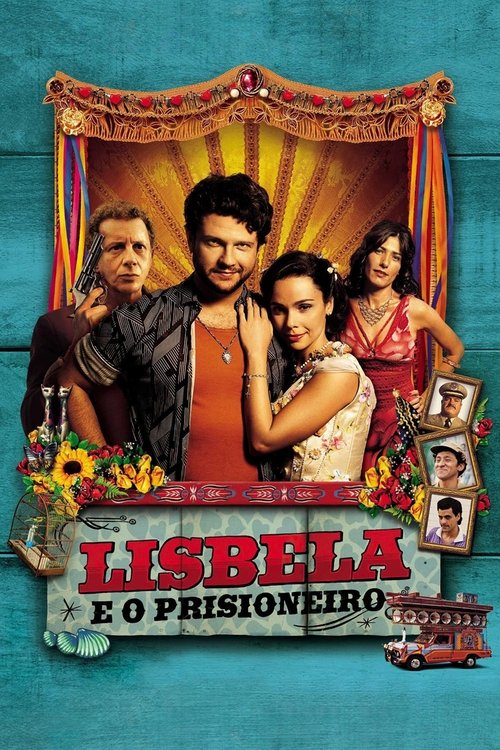
Lisbela and the Prisoner
A vibrant, sun-drenched romantic comedy unfolds like a classic Hollywood film, blending whimsical love with the perilous adventures of Brazil's Northeast.
Lisbela and the Prisoner

Lisbela e o Prisioneiro

22 August 2003 Brazil 106 min ⭐ 7.8 (397)
Director: Guel Arraes
Cast: Selton Mello, Débora Falabella, Virginia Cavendish, Bruno Garcia, Tadeu Mello
Comedy Romance
The Blurring of Art and Life Love vs. Convention Celebration of Northeastern Brazilian Culture Freedom and Imprisonment

Lisbela and the Prisoner - Ending Explained

⚠️ Spoiler Analysis

The climax of "Lisbela and the Prisoner" reveals the film's meta-narrative conceit in full. As Lisbela is about to be married to Douglas, Leléu interrupts the wedding. However, Frederico Evandro finally corners him, ready to exact his revenge. In a masterful twist, it's revealed that Leléu once saved Frederico's life, creating a conflict of honor for the hitman. At the same time, it turns out Douglas had also hired Frederico to kill Leléu.

The entire standoff is resolved not through violence, but through performance. Leléu, Lisbela, Frederico, and the other characters essentially stage a fake shootout and escape for the benefit of the onlooking townspeople. They use the language of cinema—dramatic pronouncements, fake deaths, and a grand escape—to resolve their intertwined conflicts. Frederico, bound by his debt to Leléu, helps him fake his death so he can escape with Lisbela, thus satisfying both his honor and his contract with Douglas. Lisbela abandons her wedding and joyfully joins Leléu, becoming the hero of her own movie. The ending reveals that the line between their lives and the movies Lisbela loves has completely dissolved. They don't just escape; they create a legendary story, transforming a real-life threat into a piece of public theater. This confirms the film's central theme: the ultimate triumph is to live life with the passion and artistry of cinema.

Alternative Interpretations

While on the surface "Lisbela and the Prisoner" is a straightforward romantic comedy, it can also be interpreted as a deeper commentary on the nature of fiction itself. One interpretation is that the entire film is a story being willed into existence by Lisbela. Her deep understanding of narrative structure isn't just a character quirk; she is effectively the author of her own adventure. She predicts the arrival of a hero, the obstacles, and the romantic conclusion, and the film's universe complies. In this reading, Leléu isn't just a charming rogue; he is the embodiment of the cinematic hero she has been waiting for, and he must learn to play the part she has written for him.

Another perspective focuses on the film as a critique of simplistic genre definitions. By constantly having Lisbela point out the clichés of romantic comedies, the film both embraces and subverts them. It's a story that knows it's a story, and this self-awareness invites the audience to think about why these narrative formulas are so powerful and persistent in our culture. The ending, which is both a real escape and a staged performance for the town, can be seen as the ultimate statement that life doesn't just imitate art—it becomes indistinguishable from it when pursued with enough passion and flair.