"A family on the verge of a breakdown."
Little Miss Sunshine - Symbolism & Philosophy
Symbols & Motifs
The Yellow VW Bus
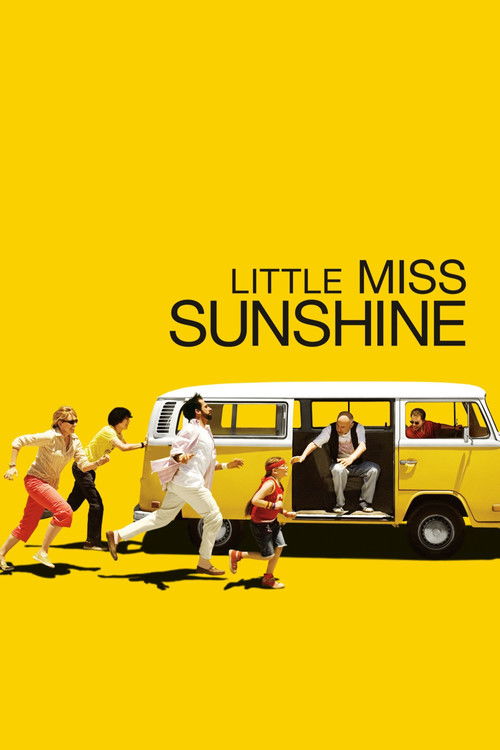
It symbolizes the family itself: bright and optimistic on the outside, but broken and barely functioning on the inside. It requires collective effort (pushing) to start, representing how the family must collaborate to survive.
Used throughout the journey; the broken clutch forces the family to run and jump in one by one, a physical manifestation of their bonding.
The Beauty Pageant
Represents the hollowness of societal judgment and the absurdity of seeking validation from strangers. It is the "hell" that Dwayne predicts, a place of superficial judgment.
The destination of the trip, serving as the stark backdrop for the family's final act of rebellion.
Ice Cream
Symbolizes simple joy and the rejection of Richard's rigid self-denial. It highlights the conflict between living fully and striving for an unattainable ideal.
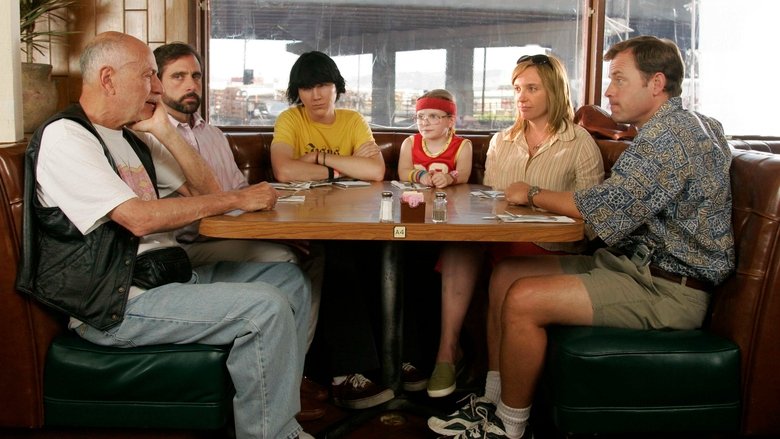
During a diner scene, Richard tries to shame Olive into not eating it by saying it will make her fat, but the rest of the family joyfully indulges to support her.
Friedrich Nietzsche
Represents Dwayne's teenage angst, feeling of superiority, and desire to transcend the "herd" mentality of his family and society.
Seen on posters in Dwayne's room and referenced in his vow of silence, until he realizes he cannot detach himself from humanity.
Philosophical Questions
Is suffering necessary for a meaningful life?
Through Frank's dialogue about Proust, the film suggests that the years of suffering are the ones that forge character, while happiness teaches us nothing. This challenges the American pursuit of constant happiness and comfort.
What defines a winner?
Richard defines winning as external validation (money, #1 status). The film redefines winning as the internal courage to be oneself and the loyalty to stick by one's family, even when it results in public humiliation.
Core Meaning
At its heart, Little Miss Sunshine is a fierce critique of the binary American obsession with "winners" and "losers." Director Jonathan Dayton and Valerie Faris, along with screenwriter Michael Arndt, deconstruct the myth of the self-made success story.
The film argues that life is not a meritocracy where positive thinking guarantees triumph, but a messy, unpredictable journey where failure is inevitable. The core message is that true success isn't found in a crown or a book deal, but in the resilience to "do what you love and fuck the rest," and in the unconditional acceptance of one's family, flaws and all.