Little Miss Sunshine
"A family on the verge of a breakdown."
Overview
The Hoover family is a study in dysfunction, residing in Albuquerque, New Mexico. Richard, the father, is a struggling motivational speaker obsessed with his 9-step "Refuse to Lose" program, while his wife Sheryl acts as the stressed peacemaker. The household also includes Olive, their bespectacled seven-year-old daughter who dreams of being a beauty queen; Dwayne, a Nietzsche-reading teenager who has taken a vow of silence until he becomes a test pilot; Grandpa Edwin, a foul-mouthed heroin addict who was kicked out of his retirement home; and Frank, Sheryl's brother, a Proust scholar recovering from a suicide attempt.
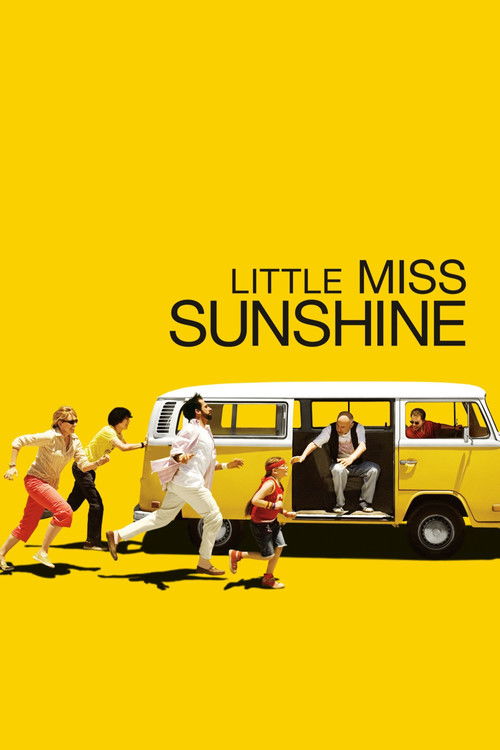
When Olive unexpectedly qualifies for the "Little Miss Sunshine" beauty pageant in California, the entire family piles into a dilapidated yellow Volkswagen T2 Microbus for an 800-mile road trip. What follows is a series of disasters—mechanical breakdowns requiring the family to push-start the van, emotional meltdowns, and a tragic death—that test their patience and sanity. As they barrel toward the superficial world of child beauty pageants, the Hoovers are forced to confront their own insecurities and learn that supporting each other is the only victory that matters.

Core Meaning
At its heart, Little Miss Sunshine is a fierce critique of the binary American obsession with "winners" and "losers." Director Jonathan Dayton and Valerie Faris, along with screenwriter Michael Arndt, deconstruct the myth of the self-made success story.
The film argues that life is not a meritocracy where positive thinking guarantees triumph, but a messy, unpredictable journey where failure is inevitable. The core message is that true success isn't found in a crown or a book deal, but in the resilience to "do what you love and fuck the rest," and in the unconditional acceptance of one's family, flaws and all.
Thematic DNA
The Myth of Winning and Losing
Richard's worldview divides humanity into two camps, a toxic philosophy that makes him miserable and alienates his family. The film systematically dismantles this, showing that the so-called "losers" (Frank, Dwayne, Grandpa) possess more wisdom and depth than the "winners" Richard idolizes.
Family Dysfunction as Strength
The Hoovers are initially isolated in their own silos of problems. However, the shared trauma and absurdity of the road trip force them to function as a unit. Their collective effort to push the broken VW bus becomes a metaphor for their relationship: they only move forward when they work together.
Beauty Standards and Conformity
The climax at the beauty pageant starkly contrasts Olive's innocent, pot-bellied authentic joy with the hyper-sexualized, spray-tanned conformity of the other contestants. The film critiques the objectification of children and the grotesque standards of societal beauty.
The Value of Suffering
Through the character of Frank, the film posits a Proustian view that suffering is essential for character growth. While Richard avoids negative emotion, Frank (and eventually Dwayne) acknowledges that the "years I suffered" were the ones that formed who they are, whereas happy years were wasted time.
Character Analysis
Olive Hoover
Abigail Breslin
Motivation
To win the Little Miss Sunshine pageant and make her daddy proud.
Character Arc
She starts as a hopeful dreamer mimicking TV beauty queens. Through the journey, she maintains her authenticity despite her father's pressure. In the end, she performs her unique dance, oblivious to the mockery, becoming the unifying force for her family.
Richard Hoover
Greg Kinnear
Motivation
To become a successful motivational speaker and prove he is a "winner."
Character Arc
Begins as an insufferable control freak obsessed with his 9-step program. After losing his book deal and seeing his father die, he slowly realizes his program is a sham. His arc completes when he jumps on stage to dance with Olive, finally choosing his daughter's happiness over social status.
Dwayne Hoover
Paul Dano
Motivation
To join the Air Force Academy and escape his family.
Character Arc
Maintains a vow of silence to focus on his goal of being a pilot. His arc shatters when he discovers he is colorblind. After a breakdown, he learns to accept his family's love and re-engages with the world.
Frank Ginsberg
Steve Carell
Motivation
To recover from his suicide attempt and find a reason to exist.
Character Arc
Starts as a suicidal depressive who has "lost" everything. Through the trip, he finds a new role as a mentor to Dwayne and Olive, realizing that his suffering has given him a perspective the others lack.
Symbols & Motifs
The Yellow VW Bus
It symbolizes the family itself: bright and optimistic on the outside, but broken and barely functioning on the inside. It requires collective effort (pushing) to start, representing how the family must collaborate to survive.
Used throughout the journey; the broken clutch forces the family to run and jump in one by one, a physical manifestation of their bonding.
The Beauty Pageant
Represents the hollowness of societal judgment and the absurdity of seeking validation from strangers. It is the "hell" that Dwayne predicts, a place of superficial judgment.
The destination of the trip, serving as the stark backdrop for the family's final act of rebellion.
Ice Cream
Symbolizes simple joy and the rejection of Richard's rigid self-denial. It highlights the conflict between living fully and striving for an unattainable ideal.
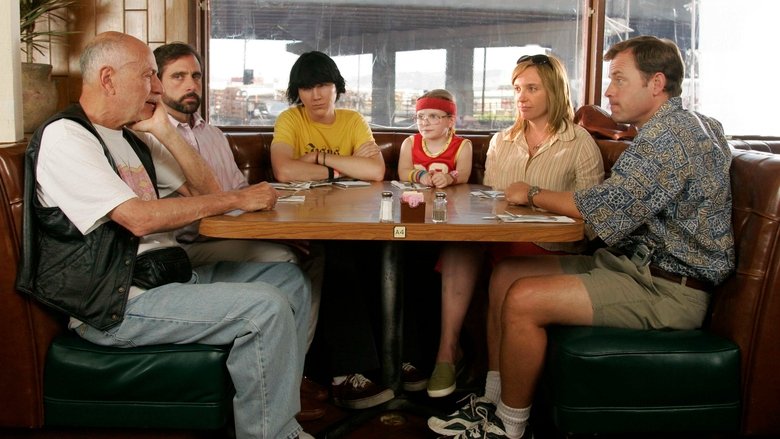
During a diner scene, Richard tries to shame Olive into not eating it by saying it will make her fat, but the rest of the family joyfully indulges to support her.
Friedrich Nietzsche
Represents Dwayne's teenage angst, feeling of superiority, and desire to transcend the "herd" mentality of his family and society.
Seen on posters in Dwayne's room and referenced in his vow of silence, until he realizes he cannot detach himself from humanity.
Memorable Quotes
A real loser is someone who's so afraid of not winning, they don't even try.
— Grandpa Edwin
Context:
Spoken to Olive the night before the pageant when she cries about being afraid to lose.
Meaning:
This redefines the film's central conflict. It refutes Richard's definition of a loser (someone who fails) and offers a healthier perspective on effort and courage.
Do what you love, and fuck the rest.
— Dwayne Hoover
Context:
Spoken to Frank on the pier outside the pageant after they agree that the contest is hell.
Meaning:
Marks the conclusion of Dwayne's arc. He abandons his rigid future goals and nihilism for a philosophy of authentic present-moment living.
Everyone, just pretend to be normal.
— Richard Hoover
Context:
When the family is pulled over by a police officer, hiding the fact that they are smuggling Grandpa's body in the trunk.
Meaning:
Irony at its finest. Richard tries to project an image of a standard happy family to the police, highlighting how desperately they are trying to hide their chaos.
Oh my God, I'm getting pulled over by the police. I'm getting pulled over by the police!
— Sheryl Hoover
Context:
Driving the bus with a broken horn that won't stop honking, drawing police attention.
Meaning:
Showcases the escalating tension and the sheer absurdity of their situation, balancing panic with dark comedy.
Philosophical Questions
Is suffering necessary for a meaningful life?
Through Frank's dialogue about Proust, the film suggests that the years of suffering are the ones that forge character, while happiness teaches us nothing. This challenges the American pursuit of constant happiness and comfort.
What defines a winner?
Richard defines winning as external validation (money, #1 status). The film redefines winning as the internal courage to be oneself and the loyalty to stick by one's family, even when it results in public humiliation.
Alternative Interpretations
The Nihilistic Reading: Some critics argue that despite the happy ending, the family is doomed. Richard is bankrupt, Grandpa is dead, Dwayne has no future career, and Frank is still unemployed. The dance is just a temporary distraction from a bleak reality.
The Feminist Critique: The film can be seen as a harsh satire of the sexualization of young girls. Olive's burlesque dance, taught by her grandfather, exposes the pedophilic undertones of child beauty pageants by making the audience (and the judges) uncomfortable, forcing them to confront what they are actually watching.
Cultural Impact
Little Miss Sunshine became the defining indie film of the mid-2000s, proving that low-budget dramas could achieve massive mainstream success (grossing over $100 million). It revitalized the "road trip" genre and set a template for the "quirky family dramedy" that would dominate Sundance for years.
Critically, it launched Abigail Breslin's career and proved Steve Carell's dramatic range beyond comedy. It won two Academy Awards: Best Original Screenplay for Michael Arndt and Best Supporting Actor for Alan Arkin. Culturally, the film's ending—dancing to "Super Freak"—became an iconic moment of cinematic rebellion against perfectionism.
Audience Reception
The film received near-universal acclaim from audiences and critics alike, holding high ratings on Rotten Tomatoes and Metacritic. Viewers praised the authentic chemistry of the ensemble cast and the perfect balance of humor and heartbreak.
Praised: The emotional depth, the "Super Freak" dance sequence, and Alan Arkin's hilarious performance.
Criticized: Some minority voices felt the character of Dwayne was too angsty or that the ending was too farcical compared to the grounded tone of the first half.
Interesting Facts
- The "heroin" snorted by Grandpa Edwin was actually crushed-up B vitamins, which actor Alan Arkin had to snuff up his nose.
- Abigail Breslin wore a "fat suit" during filming to give Olive her slightly plump appearance, emphasizing her contrast with the other pageant contestants.
- Five different VW Microbuses were used during production to accommodate different camera angles and mechanical stunts.
- Steve Carell was not the first choice for Frank; the role was reportedly written with Bill Murray or Robin Williams in mind.
- The film was shot over just 30 days, primarily in Arizona and Southern California.
- Greg Kinnear, Steve Carell, and the directors held a special screening for VW bus owners at a drive-in, where 65 buses showed up.
- The script was written by Michael Arndt, who was formerly Matthew Broderick's assistant; he quit his job to write the screenplay.
- During the scene where the family pushes the bus, the actors were genuinely pushing the vehicle, which wasn't always easy to start.
Easter Eggs
Dwayne's T-shirt Face
Dwayne wears a T-shirt with a stylized face that resembles Jesus or a generic guru, but many fans interpret it as a nod to his philosophical idol, Nietzsche, or simply a symbol of his silent observation of the world.
Continuity of the Popsicle
In the dinner scene, the box of popsicles in front of Steve Carell changes position and angles repeatedly between cuts, a famous continuity error noticed by eagle-eyed viewers.
Production Company Credit
The film was produced by "Big Beach Films," a subtle nod to the destination of the road trip (Redondo Beach), though likely a coincidence of the production company's name.
⚠️ Spoiler Analysis
Click to reveal detailed analysis with spoilers
Frequently Asked Questions
Explore More About This Movie
Dive deeper into specific aspects of the movie with our detailed analysis pages
Comments (0)
No comments yet. Be the first to share your thoughts!