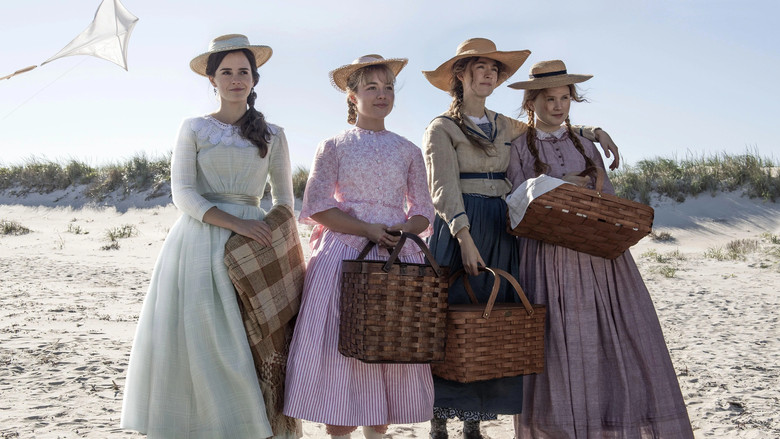

Greta Gerwig's "Little Women" uses a non-linear timeline to tell its story, cross-cutting between the March sisters' idyllic childhood in Concord (distinguished by a warm, golden color palette) and their more complicated lives seven years later (shot with a colder, bluer light). The central tragedy of the film is the death of Beth. She contracts scarlet fever in the childhood timeline after a charitable visit to the poor Hummel family and recovers. However, the illness permanently weakens her heart, and in the adult timeline, she suffers a relapse and passes away peacefully at home, a moment that devastates the family, particularly Jo.
A major plot point revolves around the romantic lives of Jo, Amy, and their childhood friend, Laurie. In the past, Laurie proposes to Jo, but she tearfully rejects him, believing they are too similar and that she would lose her freedom. A heartbroken Laurie travels to Europe, where he reconnects with Amy, who is there as a companion to Aunt March. They fall in love and eventually marry, a union revealed to Jo upon their return to Concord. This revelation is a significant blow to Jo, who, in her loneliness after Beth's death, had begun to reconsider her refusal of Laurie.
The film's most significant departure and spoiler is its meta-ending. As Jo writes her novel based on her family, she struggles with the ending. Her publisher, Mr. Dashwood, insists that the main character must be married by the end for the book to sell. The film then shows the viewer the traditional romantic ending: Jo's friend from New York, Professor Friedrich Bhaer, comes to Concord, and after a classic chase-in-the-rain scene, they declare their love and get married. However, this romantic climax is intercut with scenes of Jo negotiating with Mr. Dashwood. She coolly agrees to marry off her heroine as a commercial compromise, but in return, she demands a higher percentage of the royalties and, crucially, that she retain the copyright to her work. The film's true final scene is not a wedding, but Jo watching with pride as her book, "Little Women," is printed and bound. This strongly implies that the romantic ending with Bhaer may be the fiction Jo wrote, while her real triumph and true love is the creation of her art and the securing of her own economic freedom.