
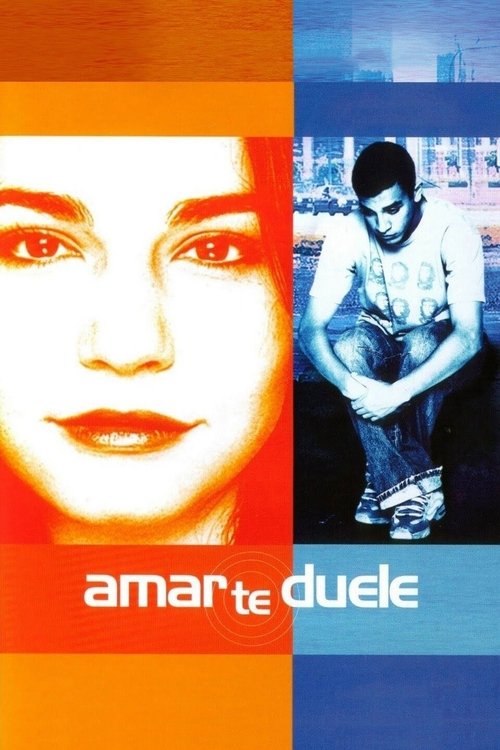
Amar te duele
"Who says money isn't important?"
Love Hurts - Symbolism & Philosophy
Symbols & Motifs
Graffiti
The graffiti Ulises creates symbolizes his voice, identity, and love for Renata. In a world where he is marginalized, his art is a powerful, visible, and permanent way to express himself. It represents the beauty and creativity that exists within his working-class world, a direct contradiction to the negative stereotypes held by the upper class.
Ulises's talent for graffiti is established early on. He uses it as a grand romantic gesture, painting large murals for Renata, including one in front of her school. These acts transform his art from a personal passion into a public declaration of their forbidden love, claiming space and challenging the social barriers between them.
The Santa Fe Shopping Mall
The mall represents the intersection and collision of Mexico's disparate social classes. It is a space of consumerism and privilege, Renata's natural habitat, but also a place where different worlds can momentarily meet. It symbolizes a fragile, contested middle ground where the film's central conflict is ignited.
Ulises and Renata meet for the first time at the Santa Fe mall. It is where their initial attraction sparks, but it is also the site of their first violent confrontation with Renata's ex-boyfriend, Francisco. The mall serves as the catalyst for both their love and their tragic conflict.
Zihuatanejo
The coastal town of Zihuatanejo represents a dream of escape, a paradise where love can exist without the constraints of social class and prejudice. For Ulises, who has never seen the sea, it is a symbol of freedom and a life beyond the oppressive confines of Mexico City.
After facing insurmountable opposition from their families, Ulises and Renata decide to run away together to Zihuatanejo. This plan represents their ultimate hope for a future together. Their journey to the bus station for Zihuatanejo is the setting for the film's tragic climax.
Philosophical Questions
Can love truly conquer all, or are societal structures inherently more powerful than individual connections?
The film poses this classic question through the tragic romance of Ulises and Renata. Their love is portrayed as pure, intense, and genuine. They are willing to sacrifice everything for it, suggesting a belief in love's transcendent power. However, the narrative relentlessly demonstrates how forces of classism, prejudice, and family pressure conspire to crush their bond. The tragic ending serves as a bleak answer, suggesting that in a society with such deeply entrenched divisions, love is not enough to overcome the structural barriers designed to keep people apart.
Is identity shaped more by personal character or by social class?
"Amar te duele" constantly explores the tension between who the characters are and how society perceives them based on their socioeconomic status. Ulises is a talented artist and a loving person, but to Renata's world, he is simply a "naco." Renata is defiant and passionate, but her family sees her only as an extension of their social standing. The film suggests that while personal character is intrinsic, social class acts as a powerful, often inescapable, external force that imposes an identity on individuals, influencing their opportunities, relationships, and ultimate fate.
Core Meaning
Director Fernando Sariñana presents "Amar te duele" as a modern Mexican adaptation of Shakespeare's Romeo and Juliet, aiming to reflect the everyday life of the country's youth. The core message of the film is a potent critique of the profound social and class discrimination that plagues Mexican society. It explores how intolerance, prejudice, and socioeconomic status can create insurmountable barriers to love and human connection. The film poignantly argues that love, in its purest form, should transcend social constructs, yet it tragically demonstrates how deeply ingrained societal divisions can lead to devastating consequences. It highlights the pain inflicted not just by loving someone from a different world, but by a society that refuses to let such worlds meet.