Love Hurts
A raw, urban-romantic tragedy portraying star-crossed lovers divided by social class, painted with the vibrant, chaotic strokes of Mexico City's conflicting worlds and echoing the bittersweet ache of first love.
Love Hurts

Love Hurts

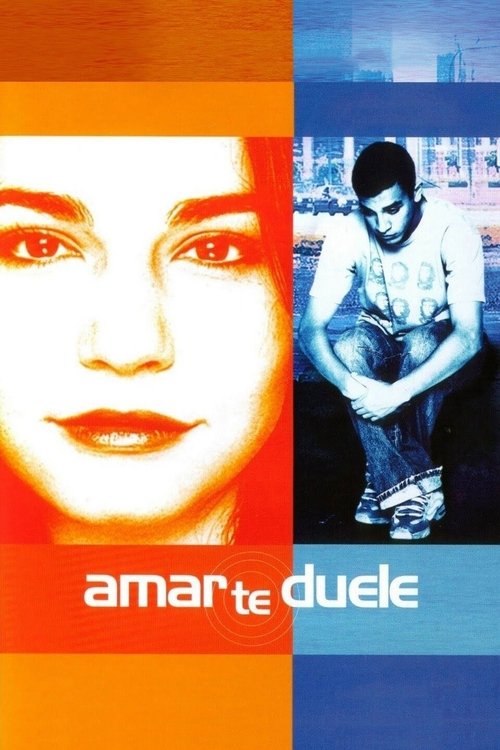
Amar te duele

"Who says money isn't important?"

08 November 2002 Mexico 104 min ⭐ 8.0 (339)
Director: Fernando Sariñana
Cast: Luis Fernando Peña, Martha Higareda, Ximena Sariñana, Alfonso Herrera, Armando Hernández
Drama Romance
Social Class and Inequality Love and Forbidden Romance Prejudice and Discrimination Youth Rebellion and Identity
Budget: $10,000,000

Overview

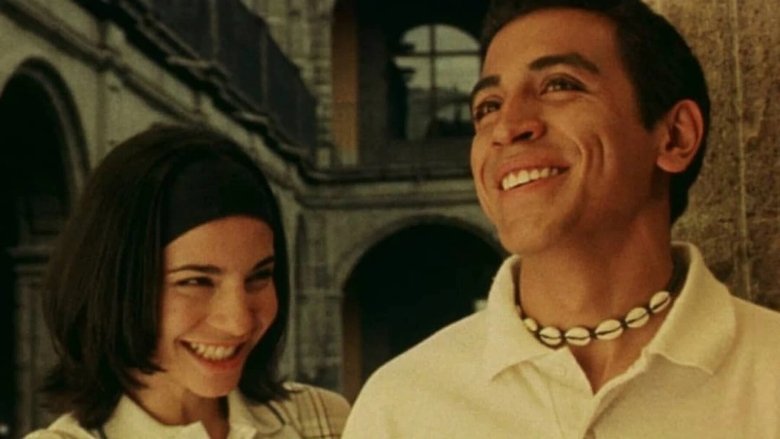
"Love Hurts" (original title: "Amar te duele") is a 2002 Mexican film that captures a turbulent romance between two teenagers from starkly different socioeconomic backgrounds in Mexico City. Ulises, a creative and humble young man from a working-class neighborhood, meets Renata, a spirited girl from a wealthy, privileged family, at a shopping mall. An impulsive dare leads to a kiss, sparking an intense and passionate connection between them.

Their burgeoning love is immediately met with fierce opposition from their families and friends, who represent the deep-seated classism and prejudice prevalent in their society. Ulises is labeled a "naco" by Renata's affluent circle, while his friends view her with suspicion. Despite the constant pressure and violent confrontations instigated by Renata's jealous ex-boyfriend, Francisco, the two lovers carve out a world of their own, finding solace in their shared moments and Ulises's graffiti art, which becomes a testament to their love.

As their relationship deepens, the societal forces against them escalate, pushing their love to a critical breaking point. Their parents forbid them from seeing each other, leading the couple to make a desperate plan to escape together, hoping to find a place where their love can exist freely, away from the judgment and hostility of their worlds.

Core Meaning

Director Fernando Sariñana presents "Amar te duele" as a modern Mexican adaptation of Shakespeare's Romeo and Juliet, aiming to reflect the everyday life of the country's youth. The core message of the film is a potent critique of the profound social and class discrimination that plagues Mexican society. It explores how intolerance, prejudice, and socioeconomic status can create insurmountable barriers to love and human connection. The film poignantly argues that love, in its purest form, should transcend social constructs, yet it tragically demonstrates how deeply ingrained societal divisions can lead to devastating consequences. It highlights the pain inflicted not just by loving someone from a different world, but by a society that refuses to let such worlds meet.

Thematic DNA

Social Class and Inequality 40%
Love and Forbidden Romance 35%
Prejudice and Discrimination 15%
Youth Rebellion and Identity 10%

Social Class and Inequality

This is the central theme of the film. The narrative is driven by the conflict arising from the socioeconomic chasm between Ulises and Renata. Renata's wealthy family and friends exhibit overt classism, using derogatory terms like "naco" to describe Ulises and his community. Their worlds are visually and culturally contrasted: Renata's life of private schools, malls, and privilege against Ulises's world of street markets, graffiti, and working-class struggles. The film shows how this inequality dictates their interactions, opportunities, and ultimately, their tragic fate.

Love and Forbidden Romance

At its heart, "Amar te duele" is a story of a passionate, all-consuming first love. It portrays the idealism and intensity of adolescent romance, where the protagonists are willing to defy their families, friends, and societal norms to be together. Their relationship is a direct challenge to the established social order, making it a forbidden love in the classic vein of Romeo and Juliet. Their clandestine meetings and the personal world they build are acts of rebellion against the prejudice that seeks to keep them apart.

Prejudice and Discrimination

The film directly confronts the themes of racism and prejudice tied to social status. The conflict isn't just about wealth but also about appearance and cultural background. Ulises and his friends are immediately judged and treated with hostility in the upper-class environments they enter. This prejudice fuels the story's primary antagonism, particularly from Renata's family and her ex-boyfriend, Francisco, who cannot see beyond Ulises's social standing. The film argues that this discrimination is a destructive force that poisons relationships and communities.

Youth Rebellion and Identity

Ulises and Renata's love is an act of rebellion. They are fighting for their right to choose whom they love, independent of the expectations and prejudices of their parents and peers. The film explores their journey of self-discovery as they navigate their feelings and the harsh realities of their society. Ulises's graffiti art, initially a form of self-expression, becomes a symbol of his love and defiance, a public declaration of his identity and his relationship with Renata.

Character Analysis

Ulises

Luis Fernando Peña

Archetype: The Star-Crossed Lover
Key Trait: Passionate

Motivation

His primary motivation is his all-consuming love for Renata. He is driven by the desire to be with her and to build a life where their different backgrounds do not matter. His artistic expression, particularly his graffiti, becomes intertwined with this motivation, serving as a testament to his love.

Character Arc

Ulises begins as a humble, artistically inclined young man rooted in his working-class environment. Meeting Renata awakens a passionate and defiant side of him. His journey is one of fighting for a love that society deems impossible. He evolves from a quiet teenager into a courageous lover who is willing to risk everything, ultimately facing the tragic consequences of a prejudiced world.

Renata

Martha Higareda

Archetype: The Rebellious Ingénue
Key Trait: Defiant

Motivation

Renata is motivated by her deep, genuine love for Ulises and a growing desire for a life more authentic than the superficial world she was born into. She is driven to break free from the expectations and bigotry of her family to be with the person she truly loves.

Character Arc

Renata starts as a privileged, somewhat sheltered upper-class girl. Falling for Ulises forces her to confront the ugly prejudices of her own social circle and family. She transforms from a girl who follows the rules into a determined young woman who defies her parents and risks her comfortable life for love, demonstrating a strength and conviction she didn't know she had.

Francisco

Alfonso Herrera

Archetype: The Antagonist / The Rival
Key Trait: Arrogant

Motivation

Francisco is motivated by jealousy, pride, and a deep-seated belief in his social superiority. He cannot accept that Renata would choose someone like Ulises over him. His actions are driven by a desperate need to reclaim his perceived property (Renata) and punish Ulises for crossing social boundaries.

Character Arc

Francisco is Renata's wealthy, arrogant, and possessive ex-boyfriend. He serves as the primary antagonist, embodying the classism and prejudice that Ulises and Renata must face. His character does not evolve; instead, his jealousy and sense of entitlement escalate throughout the film, leading him from bullying to orchestrating violence and ultimately to the tragic final act.

Mariana

Ximena Sariñana

Archetype: The Catalyst / The Saboteur
Key Trait: Resentful

Motivation

Mariana's motivations are complex, stemming from a mix of jealousy towards her sister, her own insecurities, and perhaps a misguided attempt to enforce her family's social rules. Her betrayal is fueled by overhearing the couple's plan to elope, leading her to alert Francisco.

Character Arc

Mariana is Renata's younger, alcoholic, and often resentful sister. Initially, she seems to be a troubled but peripheral character. However, her jealousy and bitterness grow, and she becomes a key instrument in the story's tragedy. Her arc is a descent into betrayal, as her actions directly lead to the film's devastating climax. She later shows remorse, but the damage is done.

Symbols & Motifs

Graffiti

Meaning:

The graffiti Ulises creates symbolizes his voice, identity, and love for Renata. In a world where he is marginalized, his art is a powerful, visible, and permanent way to express himself. It represents the beauty and creativity that exists within his working-class world, a direct contradiction to the negative stereotypes held by the upper class.

Context:

Ulises's talent for graffiti is established early on. He uses it as a grand romantic gesture, painting large murals for Renata, including one in front of her school. These acts transform his art from a personal passion into a public declaration of their forbidden love, claiming space and challenging the social barriers between them.

The Santa Fe Shopping Mall

Meaning:

The mall represents the intersection and collision of Mexico's disparate social classes. It is a space of consumerism and privilege, Renata's natural habitat, but also a place where different worlds can momentarily meet. It symbolizes a fragile, contested middle ground where the film's central conflict is ignited.

Context:

Ulises and Renata meet for the first time at the Santa Fe mall. It is where their initial attraction sparks, but it is also the site of their first violent confrontation with Renata's ex-boyfriend, Francisco. The mall serves as the catalyst for both their love and their tragic conflict.

Zihuatanejo

Meaning:

The coastal town of Zihuatanejo represents a dream of escape, a paradise where love can exist without the constraints of social class and prejudice. For Ulises, who has never seen the sea, it is a symbol of freedom and a life beyond the oppressive confines of Mexico City.

Context:

After facing insurmountable opposition from their families, Ulises and Renata decide to run away together to Zihuatanejo. This plan represents their ultimate hope for a future together. Their journey to the bus station for Zihuatanejo is the setting for the film's tragic climax.

Memorable Quotes

Si te gusta el frijol, pues vas.

— La Güera (Renata's friend)

Context:

This line is spoken by Renata's friend, "La Güera," when Renata is hesitant about her feelings for Ulises due to their social differences. It serves as the push she needs to ignore the social stigma and follow her heart, setting the romance in motion.

Meaning:

Literally "If you like beans, then go for it." This is a colloquial and somewhat classist Mexican phrase used to encourage Renata to pursue Ulises. "Frijol" (bean) can be used as a slightly derogatory slang for someone of a lower, more indigenous background. The quote's meaning is double-edged: it's a friend's encouragement but simultaneously acknowledges and makes light of the social taboo she is about to break.

Yo no conozco el mar... en tus ojos me imagino el mar.

— Ulises

Context:

Ulises says this to Renata during one of their romantic dates in a rowboat at Chapultepec Park. It's a moment of pure, intimate connection where they are temporarily free from the judgmental eyes of society, and he expresses how she has expanded his world.

Meaning:

"I don't know the sea... in your eyes I imagine the sea." This poetic line reveals Ulises's vulnerability and the depth of his feelings for Renata. The sea symbolizes a world of freedom and beauty he has never experienced, and he finds that world within her. It highlights the sincerity and idealism of their love.

Te amo.

— Renata

Context:

Renata says this to Ulises after being accidentally shot by Francisco at the bus station as they are about to escape to Zihuatanejo. She dies in his arms immediately after, making this the heartbreaking culmination of their story.

Meaning:

"I love you." These are Renata's final words. Their placement at the moment of her death transforms them from a simple declaration into the ultimate tragic affirmation of their love. It signifies that, despite everything, their love was real and was the most important thing to her in her final moment, cementing the film's tragic core.

Philosophical Questions

Can love truly conquer all, or are societal structures inherently more powerful than individual connections?

The film poses this classic question through the tragic romance of Ulises and Renata. Their love is portrayed as pure, intense, and genuine. They are willing to sacrifice everything for it, suggesting a belief in love's transcendent power. However, the narrative relentlessly demonstrates how forces of classism, prejudice, and family pressure conspire to crush their bond. The tragic ending serves as a bleak answer, suggesting that in a society with such deeply entrenched divisions, love is not enough to overcome the structural barriers designed to keep people apart.

Is identity shaped more by personal character or by social class?

"Amar te duele" constantly explores the tension between who the characters are and how society perceives them based on their socioeconomic status. Ulises is a talented artist and a loving person, but to Renata's world, he is simply a "naco." Renata is defiant and passionate, but her family sees her only as an extension of their social standing. The film suggests that while personal character is intrinsic, social class acts as a powerful, often inescapable, external force that imposes an identity on individuals, influencing their opportunities, relationships, and ultimate fate.

Alternative Interpretations

While the film is largely seen as a straightforward social critique, some interpretations question the portrayal of its characters and social dynamics. One perspective is that the film, despite its critique of the upper class, inadvertently romanticizes poverty through the character of Ulises. His world, though filled with hardship, is depicted as more authentic, creative, and emotionally rich than Renata's sterile, superficial environment, which can border on a stereotypical "noble savage" trope.

Another interpretation focuses on the film's gender dynamics. Some critics have argued that the narrative ultimately fails its female protagonist. Renata's rebellion is almost entirely defined by her love for a man, and her tragic end can be seen as a punishment for her transgression against social and patriarchal norms. Her death serves the melodrama of the male protagonist's pain, potentially undermining her agency and reinforcing the idea that women cannot successfully defy societal structures.

Finally, a more cynical reading might suggest that the film's social commentary is secondary to its commercial appeal. Director Fernando Sariñana was criticized for using a "paper-thin" social analysis as a backdrop for a visually flashy teen movie designed to sell tickets and soundtracks. From this viewpoint, the film exploits social issues for dramatic effect rather than offering a deep, nuanced exploration, packaging a complex problem into a digestible, and profitable, melodramatic format for a middle-class youth audience.

Cultural Impact

"Amar te duele" became a cultural phenomenon in Mexico, particularly among young audiences, and is now considered a classic of modern Mexican cinema. Released in 2002, during a period of resurgence in Mexican filmmaking, it stood out for its direct and raw portrayal of classism and racism, issues deeply embedded in Mexican society but not always confronted so explicitly in mainstream teen films. The film resonated because it used the familiar, universal trope of a tragic teen romance to hold up a mirror to the country's stark social divisions.

Critics' reception was mixed, with some praising its social commentary and emotional power, while others found its formal tricks (split screens, filters) to be excessive and its narrative to be melodramatic, comparing it to a telenovela or music video. However, audiences embraced it enthusiastically. It became iconic for its realistic slang, its portrayal of urban youth cultures, and its hugely successful soundtrack, which featured prominent Mexican artists of the time like Natalia Lafourcade, Zoé, and Kinky. The title track by Lafourcade became an anthem for a generation.

The film's influence persists two decades after its release. It has been lauded for bringing a story centered on a working-class, darker-skinned protagonist to a mainstream commercial audience, subverting the telenovela trope where the poor character is usually a fair-skinned woman aspiring to marry a rich man. Phrases from the film have entered the popular lexicon, and the characters of Ulises and Renata remain iconic symbols of star-crossed love in Mexican pop culture. It sparked conversations about discrimination in Mexico and remains a significant reference point for its examination of youth, love, and social inequality in the neoliberal era.

Audience Reception

Audience reception for "Amar te duele" has been overwhelmingly positive since its release, cementing its status as a beloved cult classic in Mexico. Viewers were particularly captivated by the powerful and relatable love story, the raw chemistry between Luis Fernando Peña and Martha Higareda, and the film's unflinching look at the social divisions that many experience in their daily lives. The film's use of authentic, colloquial language and its iconic soundtrack were frequently praised for capturing the essence of Mexican youth culture at the time.

The primary points of criticism from some viewers echo those of professional critics, focusing on the film's melodramatic tendencies, which at times feel reminiscent of a telenovela. Some found the characters to be archetypal and the plot's tragic trajectory somewhat predictable. The character of Mariana, Renata's sister, is often a point of controversy; for years after the film's release, the actress Ximena Sariñana has been jokingly (and sometimes seriously) blamed by the public for Renata's death. Despite these criticisms, the overall verdict from the audience is that "Amar te duele" is an emotional, impactful, and important piece of Mexican cinema that left a lasting mark on a generation.

Interesting Facts

  • The film marked the official acting debuts of both Martha Higareda and Alfonso Herrera, who would both go on to have successful careers.
  • Director Fernando Sariñana cast his own daughter, Ximena Sariñana (who played Mariana), who is now a famous singer-songwriter. She also contributed a song, "Cuento", to the film's popular soundtrack.
  • The title "Amar te duele" is a wordplay in Spanish. It can be interpreted as "Amarte duele" (Loving you hurts) or "Amar te duele" (Loving hurts you), reflecting the dual pain felt by the characters and those who care for them.
  • The film is considered a modern Mexican retelling of William Shakespeare's "Romeo and Juliet".
  • The drawings and comic strips supposedly created by the character Ulises were actually drawn by the actor who played him, Luis Fernando Peña, with the exception of the large graffiti murals.
  • During filming, actors Luis Fernando Peña (Ulises) and Armando Hernández (Genaro) experienced real-life discrimination at the upscale mall where they were shooting, with store staff trying to prevent them from entering due to their appearance before realizing they were part of the film production.

⚠️ Spoiler Analysis

Click to reveal detailed analysis with spoilers

Frequently Asked Questions

Explore More About This Movie

Dive deeper into specific aspects of the movie with our detailed analysis pages

Comments (0)

Leave a comment

No comments yet. Be the first to share your thoughts!