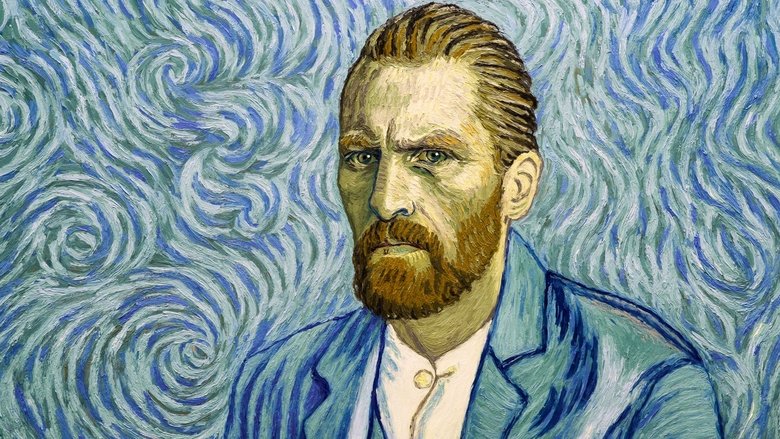
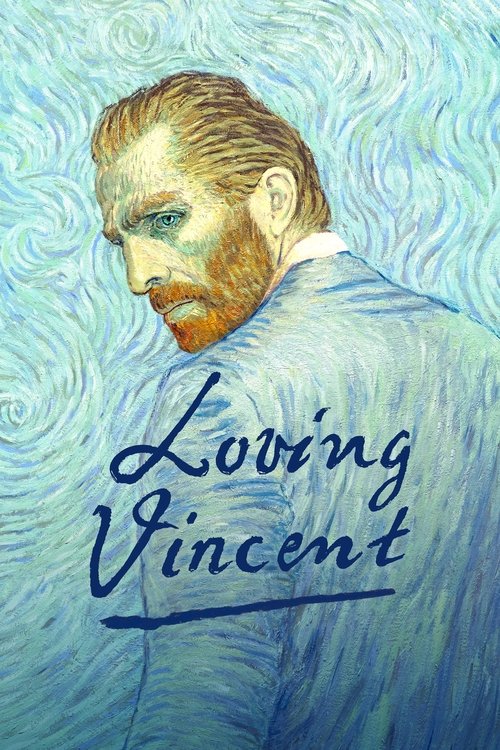
"The truth is, we cannot speak other than by our paintings."
Loving Vincent - Symbolism & Philosophy
Symbols & Motifs
The Last Letter
The undelivered letter symbolizes Vincent's final, unheard words and the lingering questions surrounding his death. It represents the communication that was cut short and the desire for connection that defined much of his life. Its final signature, "Your loving Vincent," becomes a poignant testament to his enduring affection despite his suffering.
The entire plot is driven by Armand Roulin's quest to deliver this letter, first to Theo and then to someone who knew Vincent well. The letter's journey forces a confrontation with Vincent's life and legacy, acting as the catalyst for the entire investigation.
Crows over a Wheatfield
The recurring imagery of crows, particularly in scenes referencing Van Gogh's famous painting "Wheatfield with Crows," symbolizes impending doom, loneliness, and the artist's turbulent state of mind. They represent the dark thoughts and societal pressures that plagued him.
This motif appears during crucial moments of reflection on Vincent's death. The Boatman describes Vincent's strange happiness watching a crow, suggesting a profound loneliness. The final, dramatic scenes of the investigation often cut to the swirling, ominous sky of the painting, linking the landscape directly to his tragic end.
Color vs. Black and White
The visual shift between vibrant, full-color sequences (the present) and stark, black-and-white flashbacks (the past) symbolizes the contrast between life and memory, and perhaps between Van Gogh's vibrant artistic perception and the grim reality of his history. The color scenes, rendered in Van Gogh's style, represent the world as seen through his art, while the black-and-white sequences provide a more somber, factual-feeling account of events.
The main narrative, Armand's investigation in 1891, is depicted in the vivid, swirling colors of Van Gogh's paintings. When characters recount specific events from Vincent's past, such as his arguments or moments of despair, the film shifts to a more realistic, yet haunting, black-and-white animated style based on photographs from the era.
The Yellow Jacket
Armand Roulin's distinctive yellow jacket, taken directly from his portrait by Van Gogh, symbolizes his initial brashness and his eventual immersion into Vincent's world. As he wears the jacket throughout his journey, he metaphorically steps into the painting, becoming a character in Vincent's story and seeing the world through a lens colored by the artist's life.
Armand wears the jacket from the beginning of his quest. It makes him instantly recognizable as a figure from a Van Gogh painting, visually connecting him to the artist he is investigating and setting him apart from the more somberly dressed characters in Auvers-sur-Oise.
Philosophical Questions
Can we ever truly know another person, especially after they are gone?
The film explores this question through its quasi-detective structure. Armand's quest for a definitive truth about Vincent's death is ultimately futile. He discovers that every person holds a different piece of Vincent, a different memory or interpretation. The film suggests that a person's identity is not a monolith but a composite of the perceptions of those they encountered. It posits that the closest we can come to knowing an artist like Van Gogh is not through piecing together fallible human memories, but through immersing ourselves in the work they left behind—the most direct expression of their soul.
What is the relationship between suffering, mental illness, and artistic genius?
"Loving Vincent" directly confronts the romanticized trope of the "tortured artist." It doesn't shy away from Vincent's immense suffering and mental instability, depicting his breakdowns and the social ostracization he faced. However, it resists the simplistic conclusion that his genius was merely a byproduct of his pain. Instead, it presents a more complex picture: his unique way of seeing the world was both the source of his brilliant art and a cause of his profound alienation. The film asks whether society's failure to understand and support him exacerbated his illness, leaving the viewer to ponder if his tragedy was inevitable or a failure of the community around him.
Where does the value of a life lie if it is not recognized during its time?
The film constantly highlights the tragic irony of Van Gogh's life: he produced over 800 paintings but sold only one while he was alive. Characters in the film dismiss him as a failure, a madman, and a burden. Yet, the entire film is a testament to his posthumous triumph. By animating his works, the film celebrates the enduring power and value of his vision. It raises the philosophical question of whether a life's worth is determined by contemporary success or by its lasting impact, suggesting that true value can often only be appreciated by posterity.
Core Meaning
"Loving Vincent" delves into the profound chasm between artistic genius and societal understanding, suggesting that the true essence of a person, particularly a sensitive artist like Van Gogh, can never be fully grasped by others. The film posits that our perception of an individual is a mosaic of subjective memories and interpretations, often colored by personal biases. Through Armand's investigation, the film challenges the simplistic narrative of the "tortured artist," instead revealing a multifaceted man who, despite his inner turmoil, possessed a deep capacity for love and a profound connection to the world's beauty. The core message is encapsulated in Van Gogh's own words, "We cannot speak other than by our paintings," asserting that his art is the most authentic testament to his life and soul, a truth that transcends the gossip and speculation surrounding his tragic end.