Loving Vincent
"The truth is, we cannot speak other than by our paintings."
Overview
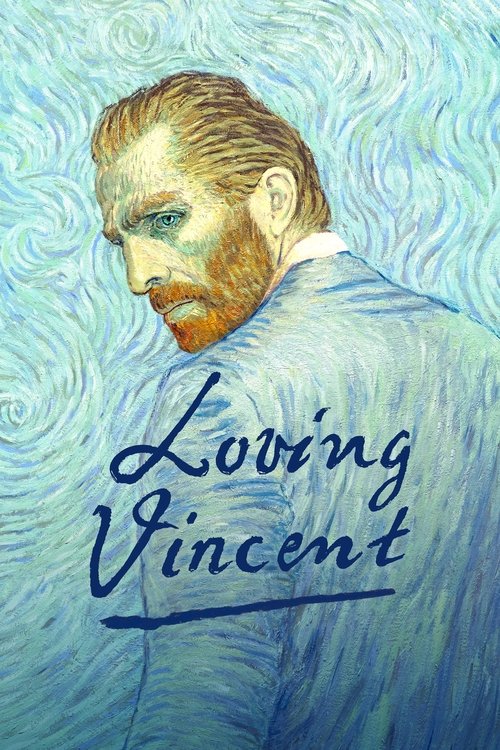
"Loving Vincent" is a 2017 experimental animated biographical drama, renowned as the first fully painted feature film. The story begins one year after the death of the celebrated artist Vincent van Gogh. Postman Joseph Roulin tasks his son, Armand, with delivering Vincent's final letter to his brother, Theo. Initially reluctant, Armand's journey takes him from Paris to the rustic village of Auvers-sur-Oise, where Vincent spent his last days.
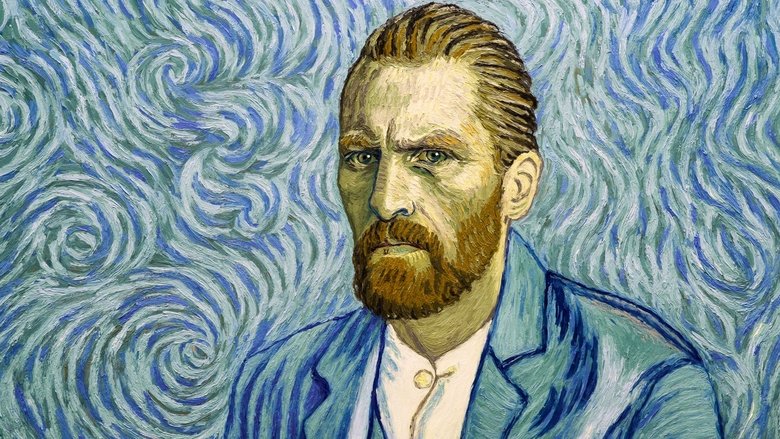
As Armand encounters the various individuals who knew Vincent in his final weeks — including the spirited innkeeper's daughter Adeline Ravoux, and the enigmatic Dr. Gachet and his daughter Marguerite — he becomes increasingly embroiled in the mystery surrounding the artist's death. The conflicting testimonies and shrouded secrets lead Armand to question the official narrative of suicide, transforming his simple errand into a compelling investigation into the complex and tormented soul of a genius. The film uniquely employs a visual style that brings Van Gogh's own paintings to life, with each of the 65,000 frames being an individual oil painting created by a team of over 100 artists.

Core Meaning
"Loving Vincent" delves into the profound chasm between artistic genius and societal understanding, suggesting that the true essence of a person, particularly a sensitive artist like Van Gogh, can never be fully grasped by others. The film posits that our perception of an individual is a mosaic of subjective memories and interpretations, often colored by personal biases. Through Armand's investigation, the film challenges the simplistic narrative of the "tortured artist," instead revealing a multifaceted man who, despite his inner turmoil, possessed a deep capacity for love and a profound connection to the world's beauty. The core message is encapsulated in Van Gogh's own words, "We cannot speak other than by our paintings," asserting that his art is the most authentic testament to his life and soul, a truth that transcends the gossip and speculation surrounding his tragic end.
Thematic DNA
The Enigma of Genius and Madness
The film navigates the fine line between Vincent van Gogh's immense creative genius and his profound mental struggles. Through the conflicting accounts of those who knew him, the narrative questions whether his art was a product of his suffering or a testament to his unique perception of the world. It avoids simple diagnoses, instead presenting his "madness" as an integral, albeit painful, part of his extraordinary vision. Characters debate whether he was a dangerous lunatic or a gentle, misunderstood soul, reflecting society's enduring struggle to comprehend the relationship between mental illness and creativity.
The Subjectivity of Truth
Armand Roulin's investigation serves as a vessel to explore how truth is constructed through memory and perspective. Each character provides a different version of Vincent, shaped by their own experiences and prejudices. Dr. Gachet sees a fellow tortured artist, his housekeeper Louise sees a malevolent force, and Adeline Ravoux remembers a kind, sad man. The film ultimately suggests that an objective, singular truth about Vincent's life and death is unattainable, leaving the audience, like Armand, to piece together their own understanding from these fragmented and often contradictory narratives.
Art as a Means of Connection and Communication
The film powerfully argues that Van Gogh's primary mode of communication was his art. The recurring quote, "We cannot speak other than by our paintings," underscores this theme. The very medium of the film—living paintings—reinforces the idea that his canvases are not static objects but vibrant expressions of his innermost feelings and perceptions. His art was his way of sharing the profound beauty he saw in the world, a form of connection that transcended the social alienation he experienced in life.
The Burden of Empathy and Family
The relationship between Vincent and his brother Theo is a cornerstone of the film, revealed through flashbacks and letters. It highlights the immense financial and emotional burden Vincent's passion placed on Theo, who supported him unconditionally. This exploration of familial duty is mirrored in the Roulin family, as Armand initially resents his father's task but grows to understand the deep empathy that motivated it. The film examines the complex nature of love, sacrifice, and the responsibility we have towards those who struggle.
Character Analysis
Armand Roulin
Douglas Booth
Motivation
Initially, his motivation is purely out of obligation to his father, Postman Joseph Roulin. However, as the mystery deepens and he uncovers the complexities of Vincent's life, his motivation shifts to a personal need to understand the truth behind the artist's death and to honor his memory.
Character Arc
Armand begins his journey as a cynical and resentful young man, viewing his task to deliver Vincent's letter as a pointless chore. He initially holds a disdainful view of the artist. As he interviews those who knew Vincent, his skepticism gradually dissolves, replaced by empathy and a deep-seated respect for the artist's struggles and genius. He transforms from a detached observer into an advocate for Vincent's humanity, profoundly changed by the journey.
Vincent van Gogh
Robert Gulaczyk
Motivation
Vincent's primary motivation was an overwhelming compulsion to capture the world's beauty and emotion on canvas. He sought connection and understanding through his art and his letters, particularly with his brother Theo. His actions were driven by a desire to justify his existence and repay his brother's faith, a pressure that ultimately contributed to his despair.
Character Arc
Vincent's character is revealed entirely through flashbacks and the memories of others. The film presents a non-linear arc, showing him in moments of calm creativity, brotherly affection, intense despair, and social ostracization. The arc is not one of development but of revelation, as the audience pieces together the different facets of his personality, from a gentle soul who loved nature to a man tormented by mental illness and a sense of being a burden.
Dr. Paul Gachet
Jerome Flynn
Motivation
His motivation appears to be a mix of genuine care for Vincent, a fascination with his genius, and a personal frustration with his own perceived artistic failures. He is motivated to protect his reputation and perhaps assuage his own guilt over the argument he had with Vincent shortly before his death.
Character Arc
Dr. Gachet is presented as a complex and enigmatic figure. He is introduced as Vincent's doctor and a fellow art lover, a potential kindred spirit. However, as Armand investigates, Gachet's character becomes more ambiguous. He is portrayed as both a compassionate friend and a man with his own frustrated artistic ambitions and a potentially volatile temper. His final confrontation with Vincent reveals a relationship fraught with professional jealousy and personal guilt, leaving his role in Vincent's final days open to interpretation.
Marguerite Gachet
Saoirse Ronan
Motivation
Her primary motivation is to protect the memory of her relationship with Vincent and to guard her own privacy. She is torn between loyalty to her father and her affection for the artist. Her pivotal quote, "You want to know so much about his death, but what do you know of his life?", reveals her desire for Vincent to be understood as a person, not just a tragic figure.
Character Arc
Marguerite is initially portrayed as withdrawn and secretive, living in the shadow of her domineering father. Her interactions with Armand reveal a deep, though possibly platonic, connection with Vincent. Her arc is one of opening up, as she moves from defensive denial to a quiet, heartfelt defense of Vincent's character and a poignant admission of their bond. She provides a crucial, intimate perspective on the artist, challenging the more sensational rumors surrounding him.
Symbols & Motifs
The Last Letter
The undelivered letter symbolizes Vincent's final, unheard words and the lingering questions surrounding his death. It represents the communication that was cut short and the desire for connection that defined much of his life. Its final signature, "Your loving Vincent," becomes a poignant testament to his enduring affection despite his suffering.
The entire plot is driven by Armand Roulin's quest to deliver this letter, first to Theo and then to someone who knew Vincent well. The letter's journey forces a confrontation with Vincent's life and legacy, acting as the catalyst for the entire investigation.
Crows over a Wheatfield
The recurring imagery of crows, particularly in scenes referencing Van Gogh's famous painting "Wheatfield with Crows," symbolizes impending doom, loneliness, and the artist's turbulent state of mind. They represent the dark thoughts and societal pressures that plagued him.
This motif appears during crucial moments of reflection on Vincent's death. The Boatman describes Vincent's strange happiness watching a crow, suggesting a profound loneliness. The final, dramatic scenes of the investigation often cut to the swirling, ominous sky of the painting, linking the landscape directly to his tragic end.
Color vs. Black and White
The visual shift between vibrant, full-color sequences (the present) and stark, black-and-white flashbacks (the past) symbolizes the contrast between life and memory, and perhaps between Van Gogh's vibrant artistic perception and the grim reality of his history. The color scenes, rendered in Van Gogh's style, represent the world as seen through his art, while the black-and-white sequences provide a more somber, factual-feeling account of events.
The main narrative, Armand's investigation in 1891, is depicted in the vivid, swirling colors of Van Gogh's paintings. When characters recount specific events from Vincent's past, such as his arguments or moments of despair, the film shifts to a more realistic, yet haunting, black-and-white animated style based on photographs from the era.
The Yellow Jacket
Armand Roulin's distinctive yellow jacket, taken directly from his portrait by Van Gogh, symbolizes his initial brashness and his eventual immersion into Vincent's world. As he wears the jacket throughout his journey, he metaphorically steps into the painting, becoming a character in Vincent's story and seeing the world through a lens colored by the artist's life.
Armand wears the jacket from the beginning of his quest. It makes him instantly recognizable as a figure from a Van Gogh painting, visually connecting him to the artist he is investigating and setting him apart from the more somberly dressed characters in Auvers-sur-Oise.
Memorable Quotes
You want to know so much about his death, but what do you know of his life?
— Marguerite Gachet
Context:
Marguerite directs this line at Armand during his persistent questioning about Vincent's final days. Frustrated by his focus on the salacious details of the death, she attempts to redirect his investigation towards a more meaningful appreciation of Vincent's existence.
Meaning:
This quote serves as the film's central thesis, challenging both Armand and the audience to look beyond the sensationalism of Van Gogh's suicide. It urges a deeper, more empathetic understanding of his life, struggles, and humanity, rather than focusing solely on the morbid mystery of his end.
What am I in the eyes of most people? A nobody, a non-entity, an unpleasant person... I should one day like to show by my work what such an eccentric, such a nobody, has in his heart.
— Vincent van Gogh (from his letters)
Context:
This quote is used in voice-over as Vincent's words are read, often accompanying a flashback or a montage of his paintings. It provides direct insight into his feelings of inadequacy and his unwavering faith in the expressive power of his work.
Meaning:
This quote, taken from Van Gogh's actual letters, encapsulates his painful awareness of his social alienation and his profound hope that his art would ultimately communicate his inner world. It is a declaration of his artistic mission: to reveal the depth of feeling within a person dismissed by society.
Live longer, you'll see. Life can bring down even the strong.
— Postman Joseph Roulin
Context:
Joseph Roulin says this to his son Armand early in the film, trying to temper Armand's youthful arrogance and his harsh judgment of Vincent's apparent weakness in committing suicide.
Meaning:
This piece of fatherly wisdom expresses a world-weary understanding of life's hardships. It serves as a caution against judging those who, like Vincent, have seemingly succumbed to despair, suggesting that immense struggle can break anyone, regardless of their inner strength.
We cannot speak other than by our paintings.
— Vincent van Gogh (from his letters)
Context:
The film opens with this quote on screen, setting the thematic stage for the entire story. It is a guiding principle for the filmmakers, who use Van Gogh's art as the primary medium to tell his story.
Meaning:
This powerful statement, which opens the film, argues that the ultimate truth of an artist's life and soul is found within their work. It suggests that language and speculation are inadequate to capture his essence, and that only through his canvases can he be truly understood.
Philosophical Questions
Can we ever truly know another person, especially after they are gone?
The film explores this question through its quasi-detective structure. Armand's quest for a definitive truth about Vincent's death is ultimately futile. He discovers that every person holds a different piece of Vincent, a different memory or interpretation. The film suggests that a person's identity is not a monolith but a composite of the perceptions of those they encountered. It posits that the closest we can come to knowing an artist like Van Gogh is not through piecing together fallible human memories, but through immersing ourselves in the work they left behind—the most direct expression of their soul.
What is the relationship between suffering, mental illness, and artistic genius?
"Loving Vincent" directly confronts the romanticized trope of the "tortured artist." It doesn't shy away from Vincent's immense suffering and mental instability, depicting his breakdowns and the social ostracization he faced. However, it resists the simplistic conclusion that his genius was merely a byproduct of his pain. Instead, it presents a more complex picture: his unique way of seeing the world was both the source of his brilliant art and a cause of his profound alienation. The film asks whether society's failure to understand and support him exacerbated his illness, leaving the viewer to ponder if his tragedy was inevitable or a failure of the community around him.
Where does the value of a life lie if it is not recognized during its time?
The film constantly highlights the tragic irony of Van Gogh's life: he produced over 800 paintings but sold only one while he was alive. Characters in the film dismiss him as a failure, a madman, and a burden. Yet, the entire film is a testament to his posthumous triumph. By animating his works, the film celebrates the enduring power and value of his vision. It raises the philosophical question of whether a life's worth is determined by contemporary success or by its lasting impact, suggesting that true value can often only be appreciated by posterity.
Alternative Interpretations
The Murder/Accidental Homicide Theory
The most significant alternative interpretation presented by the film is the challenge to the long-held belief that Vincent van Gogh died by suicide. Drawing heavily from the theory popularized by biographers Naifeh and Smith, the film introduces compelling evidence and testimony that suggests he was shot by someone else. The film explores the possibility that René Secrétan, a local youth who enjoyed tormenting Vincent, accidentally shot the artist with a malfunctioning pistol. Clues such as the angle of the wound, the absence of the gun, and the fact that Vincent stumbled a long way back to his inn are presented to cast doubt on the suicide narrative. The film doesn't commit to this theory but leaves it as a strong, plausible alternative, suggesting that Vincent, perhaps to protect the boy or simply out of weary resignation, allowed everyone to believe it was self-inflicted.
Armand's Journey as an Internal Allegory
Another way to interpret the film is to view Armand's journey less as a literal investigation and more as an allegorical exploration of how we come to understand art and the artist. Initially, Armand represents the casual, uninformed observer, dismissive of Van Gogh's work and life. His journey through the landscapes and memories of Vincent's world is akin to a deep dive into an artist's oeuvre. The conflicting testimonies he hears represent the varied and often contradictory interpretations a single piece of art can inspire. By the end, Armand has not found a simple "truth" but has developed a profound, personal, and empathetic connection to the artist. In this reading, the film is about the transformative power of engaging with art, moving from surface judgment to deep appreciation.
Cultural Impact
A Landmark in Animation and Artistic Homage
"Loving Vincent" made a significant cultural impact primarily through its groundbreaking animation technique. As the world's first fully painted feature film, it pushed the boundaries of the medium, merging traditional oil painting with modern filmmaking. This laborious, seven-year process, involving 125 artists painting 65,000 frames, was a monumental artistic undertaking that garnered widespread admiration and an Academy Award nomination for Best Animated Feature. It challenged the dominance of CGI and demonstrated a new, deeply personal way to create animated stories.
Reframing Van Gogh's Narrative
Beyond its technical achievements, the film influenced the popular perception of Vincent van Gogh. By structuring the story as a mystery investigating his death, it delved into the 2011 biography by Steven Naifeh and Gregory White Smith, which controversially suggested Van Gogh may have been accidentally killed rather than having died by suicide. While the film doesn't offer a definitive answer, it successfully popularized this alternative theory, prompting a wider public conversation about the artist's final days. More importantly, it shifted the focus from the sensationalized "mad artist" trope to a more nuanced, empathetic portrait of a sensitive and deeply feeling human being, encouraging audiences to see the man behind the myth.
Critical and Audience Reception
Critics were almost universally impressed by the film's visual splendor, calling it "mesmerizing," a "visual triumph," and a "jaw-droppingly awesome piece of art." However, opinions on the narrative were more divided. Some found the detective-story plot to be "thin," "labored," or "clunky," suggesting the visuals overshadowed a weaker script. Audiences, on the other hand, were generally more forgiving of the narrative's perceived flaws, responding overwhelmingly positively to the emotional depth and the sheer beauty of the experience. The film became a commercial success for an independent animated feature, grossing over $42 million worldwide on a $5.5 million budget, proving there is a significant audience for artistically ambitious, adult-oriented animation.
Audience Reception
Audience reception for "Loving Vincent" was overwhelmingly positive, often bordering on ecstatic. Viewers were primarily captivated by the film's revolutionary and breathtaking visual style. Many described it as a deeply moving and emotionally resonant experience, praising the film as a beautiful and fitting tribute to Van Gogh's life and work. The sheer ambition and dedication of the artistic process itself became a major point of praise, with many viewers expressing awe at the labor of love involved in its creation.
Points of criticism, while less common, generally focused on the narrative structure. A minority of viewers echoed some critical reviews, finding the detective-story plot somewhat thin or slow-paced, feeling that the story didn't quite live up to the spectacular visuals. The use of rotoscoping also drew minor criticism from some who felt it created a slightly uncanny effect or detracted from the "purity" of the animation. However, for the vast majority of the audience, the film's visual and emotional power far outweighed any perceived narrative weaknesses, leading to a strong overall verdict that hailed "Loving Vincent" as a unique, unforgettable masterpiece of cinema.
Interesting Facts
- "Loving Vincent" is the world's first fully painted feature film.
- A team of 125 classically trained painters traveled from over 20 countries to the film's studios in Poland and Greece to work on the project.
- Each of the film's 65,000 frames is an individual oil painting on canvas.
- The film was first shot as a live-action movie with actors against green screens or on sets built to look like Van Gogh's paintings. This footage was then used as a reference for the artists who painted over each frame.
- The production process took over seven years, with four years dedicated to developing the painting technique.
- The project was originally conceived by director Dorota Kobiela as a seven-minute short film in 2008.
- To find the artists, the production's recruitment teaser went viral, resulting in over 5,000 applications.
- Because the artists painted over previous frames on the same canvas, only about 1,000 of the 65,000 paintings created for the film survived the production process.
- The film incorporates over 120 of Vincent van Gogh's actual paintings into its scenes.
- The film received a 10-minute standing ovation at its premiere at the 2017 Annecy International Animated Film Festival, where it won the Audience Award.
Easter Eggs
Characters are living portraits
Many of the characters Armand interviews are the subjects of real Van Gogh portraits. The casting was done to reflect the likenesses in the paintings. For viewers familiar with Van Gogh's work, seeing characters like Postman Joseph Roulin, Adeline Ravoux, and Dr. Gachet is like watching the actual portraits come to life and tell their story. The end credits explicitly pair the animated characters with their corresponding paintings.
Recreated Famous Paintings
The film doesn't just mimic Van Gogh's style; it directly recreates many of his most famous paintings as settings for scenes. Locations such as "Café Terrace at Night," "The Starry Night Over the Rhône," and "Bedroom in Arles" are not just referenced but serve as the actual, living backdrops for the narrative, allowing the audience to literally step inside the masterpieces.
⚠️ Spoiler Analysis
Click to reveal detailed analysis with spoilers
Frequently Asked Questions
Explore More About This Movie
Dive deeper into specific aspects of the movie with our detailed analysis pages
Comments (0)
No comments yet. Be the first to share your thoughts!