Lucky and Zorba
A heartfelt animated fable where a poisoned seagull's final gift transforms a port cat into an unlikely father, blending environmental caution with a tender tale of found family and the courage to take flight.
Lucky and Zorba
Lucky and Zorba

La gabbianella e il gatto

"Together they learn the true meaning of friendship."

22 December 1998 Italy 75 min ⭐ 7.7 (631)
Director: Enzo D'Alò
Cast: Carlo Verdone, Luis Sepúlveda, Antonio Albanese, Melba Ruffo, Sofia Baratta
Animation Family
Embracing Differences & Found Family Environmental Conservation Courage and Self-Discovery Solidarity and Community

Lucky and Zorba - Ending Explained

⚠️ Spoiler Analysis

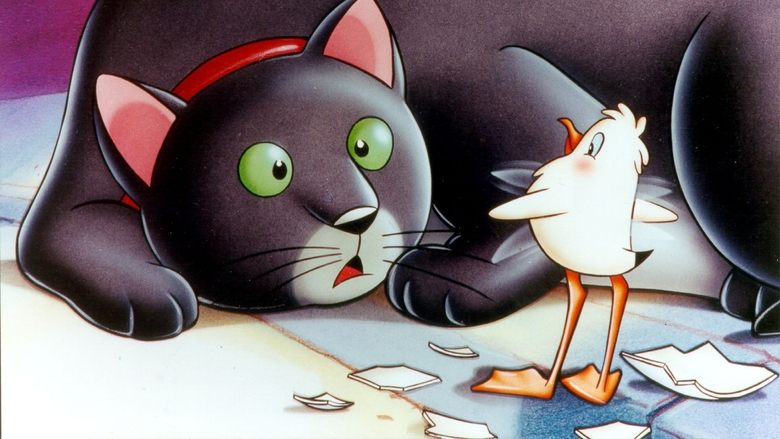
The film's emotional weight hinges on its inevitabilities and fulfilled promises. Early on, the tragic death of Kengah due to an oil spill sets a somber tone, establishing the high stakes. Zorba's commitment to his three promises drives the narrative forward through comedic and perilous situations alike.

A major emotional twist occurs when Pallino, a jealous kitten, cruelly reveals to Lucky that she is a bird and claims Zorba is only fattening her up to eat her. This shatters Lucky's illusion of being a cat and leads her to run away in distress, resulting in her capture by the sinister Big Rat. The climax involves a thrilling rescue mission where the cats use a 'Trojan Cheese' to infiltrate the sewers and save her.

The ultimate hidden meaning of parenthood is revealed in the final act. Zorba realizes that to fulfill his final promise—teaching Lucky to fly—he must break the sacred feline taboo of never speaking to humans. He seeks out the Poet. The climax takes place on a rainy night atop a tall bell tower. Zorba's act of letting Lucky go is the ultimate sacrifice of parenthood: preparing a child for a world you cannot follow them into. As Lucky leaps and finally catches the wind, realizing her true nature, Zorba watches with tearful pride. The ending signifies that true love is selfless, culminating in letting go so the loved one can soar.

Alternative Interpretations

While primarily viewed as a heartwarming family film, critics and audiences have explored several deeper allegorical interpretations.

  • Political and Social Resistance: The conflict between the civilized, community-oriented cats and the fascist-like army of sewer rats led by Big Rat can be interpreted as an allegory for political resistance. The rats, operating in the shadows and plotting a forceful takeover, represent corrupt or dictatorial forces, while the diverse group of cats represents the solidarity of the working class and marginalized groups.
  • The Transnational Adoption Metaphor: Lucky's journey is frequently analyzed as a metaphor for trans-racial or cross-cultural adoption. Raised by a 'parent' of a different species, she initially rejects her biological heritage to blend in. Her ultimate flight is not a rejection of her adoptive father, but a healthy integration of her biological identity with the love and support of her found family.
  • Coming Out and True Identity: Some modern readings view Lucky's realization of her identity as a parallel to the 'coming out' experience. She has to overcome the societal expectations of her immediate environment to embrace her true, authentic self, supported by allies who love her unconditionally.