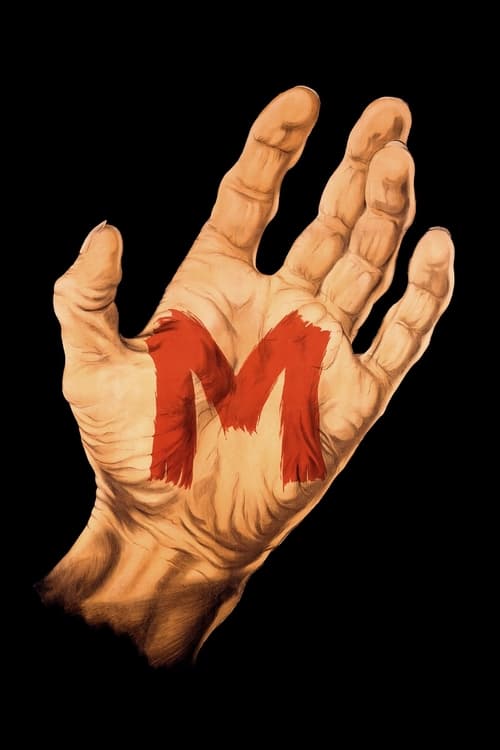
M - Eine Stadt sucht einen Mörder
"Who is the murderer?"
Director: Fritz Lang
Cast: Peter Lorre, Ellen Widmann, Inge Landgut, Otto Wernicke, Theodor Loos
M — Characters & Cast
Character Analysis
Hans Beckert
Peter Lorre
Motivation
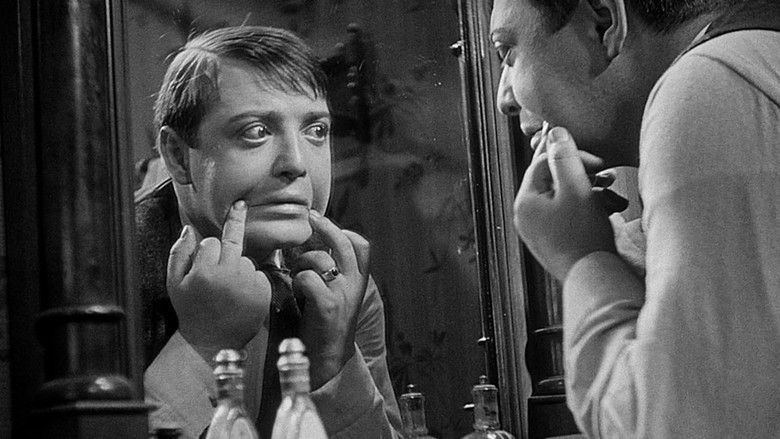
Beckert's motivation is not rational but pathological. He is driven by an overwhelming and uncontrollable compulsion to murder children. In his climactic monologue, he describes this force as an evil thing inside him, a constant presence that pursues him: "It's me, pursuing myself!" He does not kill for gain or pleasure in the conventional sense, but out of a dark, internal necessity that horrifies even himself.
Character Arc
Hans Beckert does not have a traditional character arc of change, but rather one of revelation. He begins as a shadowy, unseen menace defined by his actions and his whistling. As the film progresses, he is gradually brought into the light, first as a face in the crowd, then as a terrified fugitive. His arc culminates in the kangaroo court, where he is stripped of all anonymity and forced to confront his inner demons. Here, he transforms from a monstrous symbol of evil into a pathetic, tormented human being, crying out that he is compelled by a force he cannot control. He doesn't change, but our understanding of his psychological torment is profoundly deepened.
Inspector Karl Lohmann
Otto Wernicke
Motivation
Lohmann is motivated by his professional duty to restore order and catch the killer who has paralyzed the city with fear. He is under immense pressure from his superiors and the public to solve the case. His approach is based on logic, evidence, and systematic investigation, representing the rational efforts of a society trying to contain an irrational evil.
Character Arc
Inspector Lohmann represents the official, state-sanctioned system of justice. He is portrayed as a shrewd, intelligent, and determined detective, but also as a bureaucrat bound by procedure. His arc is one of frustration, as his methodical police work struggles to produce results in the face of a seemingly random killer. While he maintains his belief in the system, the film shows the limitations of his power when contrasted with the swift, lawless actions of the underworld. He ultimately reasserts the state's authority by intervening in the kangaroo court, but the question of which system is more effective is left unanswered.
Der Schränker (The Safecracker)
Gustaf Gründgens
Motivation
Character Arc
Schränker is the charismatic and ruthless leader of the city's criminal syndicate. He enters the story as an antagonist to the police but quickly pivots to become the leader of an alternative, and arguably more effective, manhunt. His arc sees him transform from a mere criminal into a chilling figure of extra-legal authority, organizing the underworld with military precision and presiding over the kangaroo court. He embodies the film's theme that in a vacuum of official power, a darker, more authoritarian order can easily rise to take its place. He represents a cold, pragmatic form of justice untethered by law or morality.
Cast
Explore More About This Movie
Dive deeper into specific aspects of the movie with our detailed analysis pages