M
A German Expressionist thriller that plunges into the shadowy depths of a city's hysteria, painting a haunting portrait of a man tormented by his own darkness.
M

M

M - Eine Stadt sucht einen Mörder

"Who is the murderer?"

11 May 1931 Germany 111 min ⭐ 8.1 (2,330)
Director: Fritz Lang
Cast: Peter Lorre, Ellen Widmann, Inge Landgut, Otto Wernicke, Theodor Loos
Drama Crime Thriller
The Nature of Justice and Order Mass Hysteria and Social Paranoia Madness and Compulsion The Power of Surveillance
Box Office: $35,274

Overview

Fritz Lang's first sound film, "M," is a chilling psychological thriller set in 1930s Berlin. The city is thrown into a state of panic and paranoia by a serial child murderer, Hans Beckert (portrayed by Peter Lorre), whose crimes are disrupting daily life. The police, led by the methodical Inspector Lohmann, launch an intensive investigation, conducting widespread raids that inadvertently disrupt the city's criminal underworld.

Frustrated by the constant police presence impacting their illegal activities, the city's organized crime leaders, under the command of the formidable Schränker, decide to take matters into their own hands. They organize their own manhunt, utilizing a network of beggars to keep the city under constant surveillance. This creates a tense, dual pursuit where both the upholders of the law and its breakers are hunting the same man, blurring the lines between justice and criminality.

The film masterfully builds suspense not through graphic depictions of violence, but through suggestion and psychological tension. The killer's presence is often signaled only by the haunting tune of "In the Hall of the Mountain King," which he whistles. As both manhunts close in, the film culminates in a powerful confrontation that questions the very nature of justice, guilt, and societal responsibility.
Core Meaning

At its core, "M" is a profound exploration of societal decay, justice, and the nature of evil, set against the backdrop of the failing Weimar Republic. Director Fritz Lang uses the hunt for a child murderer to critique a society on the brink of collapse, where the distinction between law and criminality becomes dangerously blurred. The film poses critical questions about who has the right to dispense justice when official institutions are perceived as ineffective.

Furthermore, "M" delves into the psychology of a killer, not to elicit sympathy, but to question the origins of his compulsions and whether he is a product of his own tormented mind or a symptom of a sick society. Lang stated he made the film "to warn mothers about neglecting children," but its message transcends this simple warning. The film ultimately holds a mirror to society, exposing the hysteria of mob rule and the dark, vengeful impulses that lie beneath a veneer of civilization, leaving the audience to grapple with unsettling questions about collective guilt and the very definition of humanity.

Thematic DNA

The Nature of Justice and Order 35%
Mass Hysteria and Social Paranoia 30%
Madness and Compulsion 25%
The Power of Surveillance 10%

The Nature of Justice and Order

"M" masterfully juxtaposes two forms of justice: the methodical, bureaucratic process of the police and the ruthlessly efficient, extra-legal pursuit by the criminal underworld. The film blurs the lines between these two factions, showing them using similar methods and rhetoric in their parallel hunts for Beckert. This theme culminates in the kangaroo court, where criminals sit in judgment, forcing the audience to question the legitimacy of their justice versus the state's. Lang exposes the fragility of societal order and critiques the potential for any group, lawful or not, to descend into mob rule when driven by fear and a desire for retribution.

Mass Hysteria and Social Paranoia

The film is a powerful depiction of how a city can be consumed by fear. The unseen killer's actions breed a pervasive paranoia that turns citizens against each other. Innocent men are accosted on the street simply for speaking to a child, and a general atmosphere of suspicion reigns. Lang portrays the public not as a source of strength, but as a volatile, easily manipulated mob. This reflects the social anxieties of the late Weimar Republic, a society losing faith in its institutions and susceptible to the kind of mass hysteria that would soon allow the rise of the Nazi party.

Madness and Compulsion

Through Peter Lorre's iconic performance, the film explores the psyche of its antagonist, Hans Beckert. He is not depicted as a one-dimensional monster but as a man tormented by an internal evil he cannot control. His famous monologue reveals his self-loathing and his desperate struggle against his own compulsions, crying out, "I can't help myself!" This portrayal forces a complex discussion about free will, mental illness, and criminal responsibility. The film questions whether Beckert is solely responsible for his actions or if he is a diseased product of a larger societal sickness.

The Power of Surveillance

"M" presciently explores the theme of total surveillance. In their hunt for Beckert, both the police and the criminals attempt to create a complete surveillance network. The criminals are ironically more successful, organizing the city's beggars into a comprehensive grid of informants. This creates a sense that no one is unwatched. The chalk "M" marked on Beckert's back becomes a brand, a symbol of being identified and singled out by an omnipresent, observing society.

Character Analysis

Hans Beckert

Peter Lorre

Archetype: The Tormented Anti-Villain
Key Trait: Pathological Compulsion

Motivation

Beckert's motivation is not rational but pathological. He is driven by an overwhelming and uncontrollable compulsion to murder children. In his climactic monologue, he describes this force as an evil thing inside him, a constant presence that pursues him: "It's me, pursuing myself!" He does not kill for gain or pleasure in the conventional sense, but out of a dark, internal necessity that horrifies even himself.

Character Arc

Hans Beckert does not have a traditional character arc of change, but rather one of revelation. He begins as a shadowy, unseen menace defined by his actions and his whistling. As the film progresses, he is gradually brought into the light, first as a face in the crowd, then as a terrified fugitive. His arc culminates in the kangaroo court, where he is stripped of all anonymity and forced to confront his inner demons. Here, he transforms from a monstrous symbol of evil into a pathetic, tormented human being, crying out that he is compelled by a force he cannot control. He doesn't change, but our understanding of his psychological torment is profoundly deepened.

Inspector Karl Lohmann

Otto Wernicke

Archetype: The Pragmatic Authority Figure
Key Trait: Methodical

Motivation

Lohmann is motivated by his professional duty to restore order and catch the killer who has paralyzed the city with fear. He is under immense pressure from his superiors and the public to solve the case. His approach is based on logic, evidence, and systematic investigation, representing the rational efforts of a society trying to contain an irrational evil.

Character Arc

Inspector Lohmann represents the official, state-sanctioned system of justice. He is portrayed as a shrewd, intelligent, and determined detective, but also as a bureaucrat bound by procedure. His arc is one of frustration, as his methodical police work struggles to produce results in the face of a seemingly random killer. While he maintains his belief in the system, the film shows the limitations of his power when contrasted with the swift, lawless actions of the underworld. He ultimately reasserts the state's authority by intervening in the kangaroo court, but the question of which system is more effective is left unanswered.

Der Schränker (The Safecracker)

Gustaf Gründgens

Archetype: The Shadow Leader

Motivation

Pragmatic Self-Interest

Character Arc

Schränker is the charismatic and ruthless leader of the city's criminal syndicate. He enters the story as an antagonist to the police but quickly pivots to become the leader of an alternative, and arguably more effective, manhunt. His arc sees him transform from a mere criminal into a chilling figure of extra-legal authority, organizing the underworld with military precision and presiding over the kangaroo court. He embodies the film's theme that in a vacuum of official power, a darker, more authoritarian order can easily rise to take its place. He represents a cold, pragmatic form of justice untethered by law or morality.

Symbols & Motifs

The Chalk 'M'

Meaning:

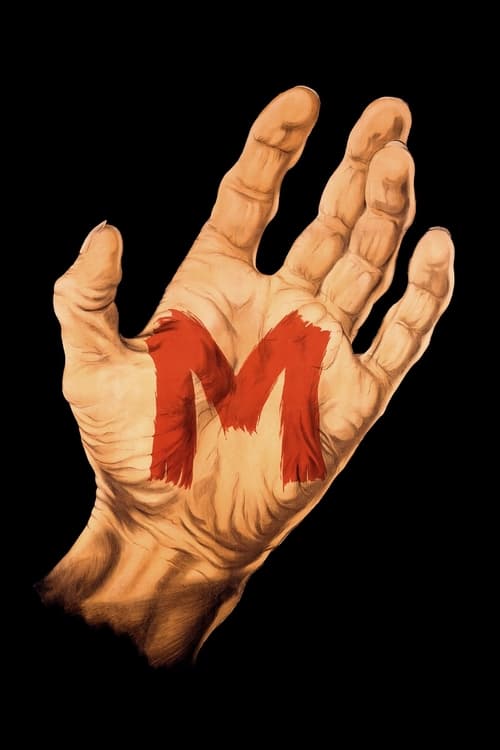
The letter 'M,' chalked on Hans Beckert's back, stands for "Mörder" (murderer). It is the film's most iconic symbol, representing the branding and public condemnation of an individual. Once marked, Beckert can no longer hide within the anonymity of the crowd; his guilt is made visible for all to see, leading directly to his capture by the underworld. It signifies the moment his private torment becomes a public identity.

Context:

After the blind balloon vendor identifies Beckert's whistling, the criminal underworld assigns a man to follow him. To keep track of him, the man chalks an 'M' on his palm and pretends to stumble, pressing it onto the back of Beckert's overcoat. A little girl later points out the mark, alerting Beckert that he has been discovered and triggering the frantic chase that leads to him being cornered.

Whistling 'In the Hall of the Mountain King'

Meaning:

This recurring musical leitmotif is inextricably linked to the killer's presence and his murderous compulsion. The cheerful, almost manic tune creates a chilling irony, signaling impending doom and the loss of innocence. It functions as an auditory signature for the off-screen threat, building immense psychological tension for the audience whenever it is heard. Eventually, the tune that represents his murderous impulse becomes the very thing that betrays him.

Context:

Hans Beckert whistles this Edvard Grieg piece before and during his pursuit of his victims. As Peter Lorre could not whistle, Fritz Lang himself dubbed the haunting melody. The blind balloon vendor recognizes the tune from his encounter with Beckert when he was with Elsie Beckmann, which allows him to identify the killer and set the criminal network on his trail.

Balloons and Balls

Meaning:

These children's toys symbolize the innocence of Beckert's victims and the fragility of their lives. The simple image of a ball rolling away unattended or a balloon caught in telephone wires becomes a powerful and haunting metaphor for a child's murder, allowing Lang to convey the horror without showing any violence. The balloon, in particular, with its fleeting, ephemeral nature, represents a life cut short.

Context:

After Beckert lures Elsie Beckmann away, the film cuts to shots of her empty chair at the dinner table, her ball rolling to a stop in the grass, and the balloon he bought her tangled in power lines before floating away. These images confirm her death to the audience in a purely symbolic and deeply affecting manner.

Reflections and Windows

Meaning:

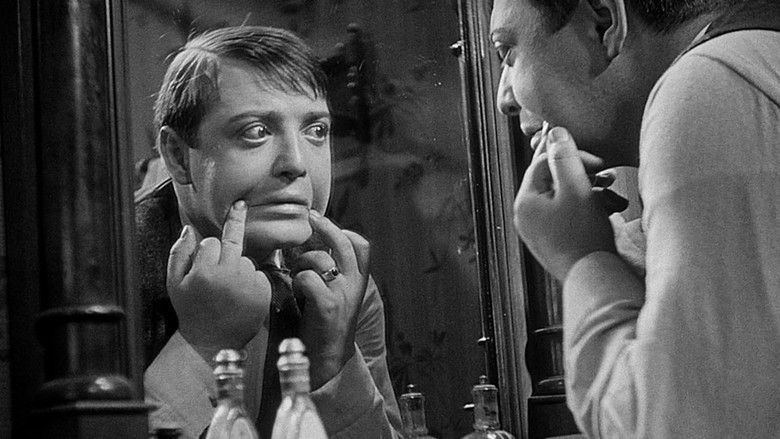
Lang frequently uses reflections in mirrors and shop windows to explore the theme of duality and Beckert's fractured psyche. Beckert seeing his own distorted reflection signifies his monstrous other self—the compulsive killer that exists behind his mild-mannered facade. The shop window where he sees a potential victim reflected among a display of knives visually traps him with his violent urges, externalizing his internal struggle.

Context:

Early in the film, Beckert is seen making distorted faces in a mirror, hinting at the monster within. Later, in a pivotal scene, he is staring into a shop window filled with cutlery when he sees the reflection of a young girl. The framing, which places both their reflections among the knives, powerfully visualizes his murderous impulse taking over.

Memorable Quotes

Ich kann nicht... Ich kann nichts dafür!

— Hans Beckert

Context:

This is the emotional climax of Beckert's monologue during the kangaroo court. Surrounded by a mob of criminals baying for his blood, he breaks down, his face a mask of terror and anguish, and confesses the torment of his compulsion. It is a seminal moment in film history, brilliantly performed by Peter Lorre.

Meaning:

English: "I can't... I can't help myself!" This is the desperate, agonizing cry at the heart of Beckert's character and one of the central questions of the film. It is his plea of insanity, the claim that he is not a willing agent of evil but a victim of an uncontrollable internal force. The quote encapsulates the film's complex exploration of madness, free will, and moral responsibility, leaving the audience to debate the sincerity and implications of his claim.

Wer bist du denn? Wer seid ihr denn alle? Verbrecher!

— Hans Beckert

Context:

Spoken during his 'trial' in the abandoned distillery, Beckert confronts the mob of criminals who have captured him. He scoffs at their self-righteousness, contrasting their chosen criminality with his own pathological state, thereby exposing the dubious nature of their vigilante justice.

Meaning:

English: "Who are you anyway? Who are you all? Criminals!" With this line, Beckert turns the tables on his accusers. He points out the hypocrisy of criminals, who break the law by choice, sitting in moral judgment of him, who he claims cannot control his actions. It's a powerful moment that blurs the moral lines, challenging the authority of the kangaroo court and questioning who truly has the right to judge another.

Dieser Bestie hat kein Recht zu existieren! Der muss ausgerottet werden! Ohne Gnade, ohne Erbarmen!

— Der Schränker

Context:

Schränker delivers this line as he presides over the kangaroo court, acting as both prosecutor and judge. He articulates the mob's collective rage and their decision that Beckert is subhuman and therefore deserves not justice, but extermination.

Meaning:

English: "This beast has no right to exist! He must be exterminated! Without pity, without mercy!" This quote powerfully expresses the film's theme of mob justice and the desire for vengeance over due process. Schränker's words are chillingly similar to the rhetoric that would soon be employed by the Nazi regime, advocating for the eradication of those deemed undesirable. It highlights the danger of dehumanizing an opponent to justify any action against them.

Das wird uns unsere Kinder nicht wieder lebendig machen. Man muss eben noch besser auf die Kinder achtgeben!

— Frau Beckmann

Context:

After the police have intervened and Beckert is presumably facing a state trial, the film cuts to a shot of three grieving mothers. Frau Beckmann, Elsie's mother, speaks these lines, not in a courtroom, but in a space of pure mourning, as the film fades to black.

Meaning:

English: "This will not bring our children back to life. One has to keep closer watch over the children!" These are the final lines of dialogue in the film, delivering a somber and ambiguous conclusion. On one level, it's a direct, practical warning to parents. On another, it suggests that no form of justice—legal or vigilante—can ever truly mend the loss. It shifts the responsibility from the institutions back to the individuals within society, ending the film on a note of unresolved grief and lingering social unease.

Philosophical Questions

What is the true nature of justice, and who has the right to administer it?

The film relentlessly explores this question by pitting the state's legal apparatus against the underworld's vigilante mob. Both groups seek the same outcome but for different reasons and with different methods. The police are slow and bureaucratic, while the criminals are swift and brutal. The kangaroo court scene is the climax of this exploration, presenting a grotesque parody of a legal trial where the verdict is predetermined by vengeance. By showing the criminals' actions as both effective and horrifying, Lang forces the audience to consider whether justice is about due process and rehabilitation or about retribution and societal cleansing. The film provides no easy answers, suggesting that the line between justice and vengeance is terrifyingly thin.

To what extent are individuals responsible for actions driven by compulsion?

Hans Beckert's character is the embodiment of this question. His monologue forces a confrontation with the concepts of free will and determinism. Is he a monster who chooses to do evil, or is he a sick man, a slave to a pathology he cannot control? The film provides evidence for both sides: his cunning in evading capture suggests rational thought, yet his visible torment and panicked actions suggest a man genuinely battling an internal demon. By refusing to give a clear diagnosis, Lang leaves the audience in the uncomfortable position of the judge, forced to weigh the horrific nature of the crimes against the possibility that the perpetrator is not fully culpable.

Is societal hysteria as dangerous as the evil it purports to fight?

Lang paints a terrifying picture of a society consumed by fear. The manhunt creates an atmosphere where reason is abandoned, and any man can be accused. The public, whipped into a frenzy by the media, becomes a lynch mob in waiting. The film argues that this collective madness is a monstrous force in itself, potentially as destructive as the killer it hunts. The criminals' kangaroo court is the ultimate expression of this societal hysteria, where the desire for a scapegoat overrides any principle of justice. This theme serves as a powerful allegory for the political climate of 1930s Germany, warning how easily a frightened populace can embrace brutal, authoritarian solutions.

Alternative Interpretations

While the film is most commonly seen as a critique of societal decay and a commentary on justice, several alternative interpretations exist, particularly concerning Hans Beckert's final monologue and the film's ending.

Beckert's Monologue as Manipulation: One interpretation posits that Beckert's impassioned plea of insanity is not a genuine confession of torment but a desperate, calculated act of self-preservation. Proponents of this view point to his earlier cunning, such as writing taunting letters to the press and police. In this reading, his performance in the kangaroo court is his final, desperate attempt to manipulate his audience—both the criminals and the film's viewers—into seeing him as a victim rather than a predator. He may be exaggerating his lack of control to escape the mob's death sentence.

A Critique of Capital Punishment: Fritz Lang was a known opponent of the death penalty. Therefore, the film can be interpreted as a direct argument against it. By making the killer a mentally ill man who claims he cannot control his actions, Lang presents the most challenging case possible. The film forces the audience to question if it is just to execute an insane person, regardless of the horror of their crimes. The criminals' bloodlust is portrayed as barbaric, suggesting that state-sanctioned execution is no more civilized.

The Ending as a Warning Against Complacency: The final line, "One has to keep closer watch over the children," can be read in multiple ways. While it is a literal warning, it can also be interpreted as a broader statement about societal responsibility. It suggests that the institutions of justice and the dramatic manhunts are ultimately insufficient. The real solution, Lang may be arguing, lies in the vigilance and moral fabric of the community itself. It's a critique of a society that becomes fascinated by crime stories but fails in its fundamental duty to protect its most vulnerable members.

Cultural Impact

"M" was released in 1931 during the final, turbulent years of Germany's Weimar Republic, a period of immense social, economic, and political instability. The film captured the pervasive anxiety of a society losing faith in its government and legal institutions, a sentiment that paved the way for the rise of Nazism. Its depiction of mass hysteria, mob justice, and a charismatic, authoritarian figure (Schränker) organizing a parallel form of order has been retrospectively seen as a chilling allegory for the impending Nazi takeover.

Its influence on cinema is immeasurable. "M" is considered a masterpiece of German Expressionism, utilizing stark shadows, unsettling camera angles, and psychological tension to create its world. It is widely regarded as a foundational film for both the police procedural and the psychological thriller genres, setting a blueprint for countless films to follow. Its innovative use of sound, particularly the leitmotif, was revolutionary and became a staple of cinematic storytelling. Alfred Hitchcock was greatly influenced by Lang's work. The film's dark tone, morally ambiguous characters, and urban paranoia were direct precursors to the American film noir movement of the 1940s and 50s, a genre in which both Lang and star Peter Lorre would later become key figures after fleeing Germany.

Initially met with mixed reviews, "M" is now almost universally hailed by critics as one of the greatest films ever made. In 1994, it was voted the most important German film of all time by a poll of German film professionals. Its central performance by Peter Lorre defined his career, typecasting him as a sinister yet compelling villain and making him an international star.

Audience Reception

Upon its initial release in 1931, "M" received a mixed reception from audiences and critics. However, over time, its reputation has grown immensely, and it is now widely regarded by audiences and cinephiles as a timeless masterpiece and one of the most important films ever made. Viewers consistently praise Peter Lorre's haunting and complex performance as Hans Beckert, often citing his final monologue as one of the most powerful moments in cinema history. The film's suspenseful atmosphere, innovative use of sound, and chilling psychological depth are also frequent points of acclaim.

A common point of discussion among audiences is the film's moral ambiguity. Some viewers are critical of the way the film appears to humanize a child murderer, finding it difficult to feel anything but revulsion for the character. Others appreciate this complexity, arguing that the film doesn't ask for sympathy but for a deeper understanding of the nature of compulsion and evil, which makes it more thought-provoking than a simple monster movie. The film's ending is also a subject of frequent debate, with some finding it abrupt or unsatisfying, while others see its ambiguity as a powerful statement on the unresolved nature of justice and grief.

Interesting Facts

  • Fritz Lang's first sound film, it is considered a landmark for its innovative use of audio, particularly the use of a leitmotif to represent the killer.
  • The haunting tune whistled by the killer, "In the Hall of the Mountain King," was dubbed by director Fritz Lang himself because actor Peter Lorre could not whistle.
  • To achieve authenticity, Lang cast several real-life criminals as extras in the film. During the production, 25 of them were arrested.
  • The film was inspired by several real German serial killers of the era, including Peter Kürten, the "Vampire of Düsseldorf," though Lang denied focusing on any single case.
  • During pre-production, the Nazi Party suspected the film's original working title, "Mörder unter uns" (Murderer Among Us), was a reference to them and tried to shut down the production.
  • Peter Lorre, who was primarily a comedic stage actor before this role, was reportedly thrown down a flight of stairs over a dozen times by the notoriously demanding Fritz Lang to get the right shot.
  • Lang considered "M" to be his personal favorite among all the films he directed.
  • The film was banned by the Nazis in 1934 and was not widely available to be seen again in Germany until the 1960s.
  • Inspector Lohmann is based on the real-life Ernst Gennat, who was the director of the Berlin criminal police and is credited with coining the term "serial killer."

⚠️ Spoiler Analysis

Click to reveal detailed analysis with spoilers

Frequently Asked Questions

Explore More About This Movie

Dive deeper into specific aspects of the movie with our detailed analysis pages

Comments (0)

Leave a comment

No comments yet. Be the first to share your thoughts!