M - Eine Stadt sucht einen Mörder
"Who is the murderer?"
M - Symbolism & Philosophy
Symbols & Motifs
The Chalk 'M'
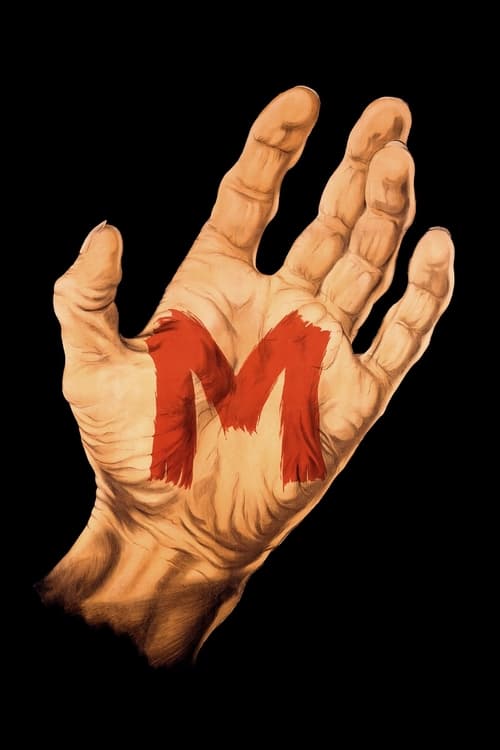
The letter 'M,' chalked on Hans Beckert's back, stands for "Mörder" (murderer). It is the film's most iconic symbol, representing the branding and public condemnation of an individual. Once marked, Beckert can no longer hide within the anonymity of the crowd; his guilt is made visible for all to see, leading directly to his capture by the underworld. It signifies the moment his private torment becomes a public identity.
After the blind balloon vendor identifies Beckert's whistling, the criminal underworld assigns a man to follow him. To keep track of him, the man chalks an 'M' on his palm and pretends to stumble, pressing it onto the back of Beckert's overcoat. A little girl later points out the mark, alerting Beckert that he has been discovered and triggering the frantic chase that leads to him being cornered.
Whistling 'In the Hall of the Mountain King'
This recurring musical leitmotif is inextricably linked to the killer's presence and his murderous compulsion. The cheerful, almost manic tune creates a chilling irony, signaling impending doom and the loss of innocence. It functions as an auditory signature for the off-screen threat, building immense psychological tension for the audience whenever it is heard. Eventually, the tune that represents his murderous impulse becomes the very thing that betrays him.
Hans Beckert whistles this Edvard Grieg piece before and during his pursuit of his victims. As Peter Lorre could not whistle, Fritz Lang himself dubbed the haunting melody. The blind balloon vendor recognizes the tune from his encounter with Beckert when he was with Elsie Beckmann, which allows him to identify the killer and set the criminal network on his trail.
Balloons and Balls
These children's toys symbolize the innocence of Beckert's victims and the fragility of their lives. The simple image of a ball rolling away unattended or a balloon caught in telephone wires becomes a powerful and haunting metaphor for a child's murder, allowing Lang to convey the horror without showing any violence. The balloon, in particular, with its fleeting, ephemeral nature, represents a life cut short.
After Beckert lures Elsie Beckmann away, the film cuts to shots of her empty chair at the dinner table, her ball rolling to a stop in the grass, and the balloon he bought her tangled in power lines before floating away. These images confirm her death to the audience in a purely symbolic and deeply affecting manner.
Reflections and Windows
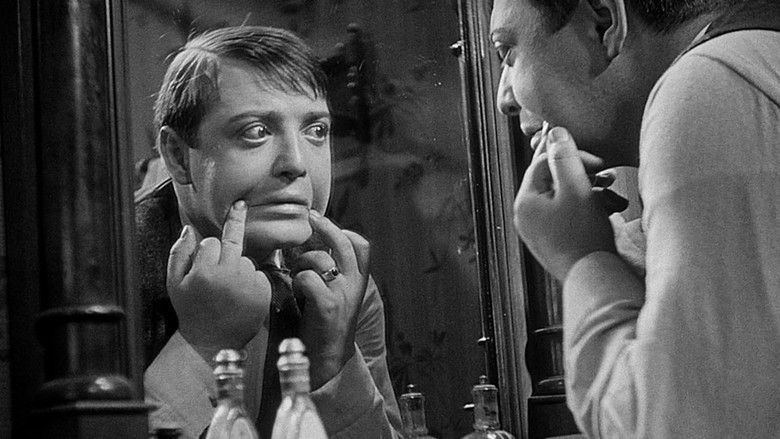
Lang frequently uses reflections in mirrors and shop windows to explore the theme of duality and Beckert's fractured psyche. Beckert seeing his own distorted reflection signifies his monstrous other self—the compulsive killer that exists behind his mild-mannered facade. The shop window where he sees a potential victim reflected among a display of knives visually traps him with his violent urges, externalizing his internal struggle.
Early in the film, Beckert is seen making distorted faces in a mirror, hinting at the monster within. Later, in a pivotal scene, he is staring into a shop window filled with cutlery when he sees the reflection of a young girl. The framing, which places both their reflections among the knives, powerfully visualizes his murderous impulse taking over.
Philosophical Questions
What is the true nature of justice, and who has the right to administer it?
The film relentlessly explores this question by pitting the state's legal apparatus against the underworld's vigilante mob. Both groups seek the same outcome but for different reasons and with different methods. The police are slow and bureaucratic, while the criminals are swift and brutal. The kangaroo court scene is the climax of this exploration, presenting a grotesque parody of a legal trial where the verdict is predetermined by vengeance. By showing the criminals' actions as both effective and horrifying, Lang forces the audience to consider whether justice is about due process and rehabilitation or about retribution and societal cleansing. The film provides no easy answers, suggesting that the line between justice and vengeance is terrifyingly thin.
To what extent are individuals responsible for actions driven by compulsion?
Hans Beckert's character is the embodiment of this question. His monologue forces a confrontation with the concepts of free will and determinism. Is he a monster who chooses to do evil, or is he a sick man, a slave to a pathology he cannot control? The film provides evidence for both sides: his cunning in evading capture suggests rational thought, yet his visible torment and panicked actions suggest a man genuinely battling an internal demon. By refusing to give a clear diagnosis, Lang leaves the audience in the uncomfortable position of the judge, forced to weigh the horrific nature of the crimes against the possibility that the perpetrator is not fully culpable.
Is societal hysteria as dangerous as the evil it purports to fight?
Lang paints a terrifying picture of a society consumed by fear. The manhunt creates an atmosphere where reason is abandoned, and any man can be accused. The public, whipped into a frenzy by the media, becomes a lynch mob in waiting. The film argues that this collective madness is a monstrous force in itself, potentially as destructive as the killer it hunts. The criminals' kangaroo court is the ultimate expression of this societal hysteria, where the desire for a scapegoat overrides any principle of justice. This theme serves as a powerful allegory for the political climate of 1930s Germany, warning how easily a frightened populace can embrace brutal, authoritarian solutions.
Core Meaning
At its core, "M" is a profound exploration of societal decay, justice, and the nature of evil, set against the backdrop of the failing Weimar Republic. Director Fritz Lang uses the hunt for a child murderer to critique a society on the brink of collapse, where the distinction between law and criminality becomes dangerously blurred. The film poses critical questions about who has the right to dispense justice when official institutions are perceived as ineffective.
Furthermore, "M" delves into the psychology of a killer, not to elicit sympathy, but to question the origins of his compulsions and whether he is a product of his own tormented mind or a symptom of a sick society. Lang stated he made the film "to warn mothers about neglecting children," but its message transcends this simple warning. The film ultimately holds a mirror to society, exposing the hysteria of mob rule and the dark, vengeful impulses that lie beneath a veneer of civilization, leaving the audience to grapple with unsettling questions about collective guilt and the very definition of humanity.