M - Eine Stadt sucht einen Mörder
"Who is the murderer?"
Director: Fritz Lang
Cast: Peter Lorre, Ellen Widmann, Inge Landgut, Otto Wernicke, Theodor Loos
M — Movie Quotes
Memorable Quotes
Ich kann nicht... Ich kann nichts dafür!
Context
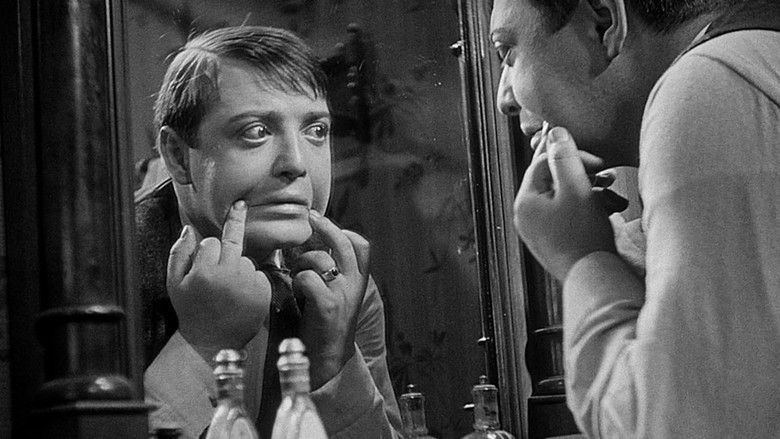
This is the emotional climax of Beckert's monologue during the kangaroo court. Surrounded by a mob of criminals baying for his blood, he breaks down, his face a mask of terror and anguish, and confesses the torment of his compulsion. It is a seminal moment in film history, brilliantly performed by Peter Lorre.
Meaning
English: "I can't... I can't help myself!" This is the desperate, agonizing cry at the heart of Beckert's character and one of the central questions of the film. It is his plea of insanity, the claim that he is not a willing agent of evil but a victim of an uncontrollable internal force. The quote encapsulates the film's complex exploration of madness, free will, and moral responsibility, leaving the audience to debate the sincerity and implications of his claim.
Wer bist du denn? Wer seid ihr denn alle? Verbrecher!
Context
Spoken during his 'trial' in the abandoned distillery, Beckert confronts the mob of criminals who have captured him. He scoffs at their self-righteousness, contrasting their chosen criminality with his own pathological state, thereby exposing the dubious nature of their vigilante justice.
Meaning
English: "Who are you anyway? Who are you all? Criminals!" With this line, Beckert turns the tables on his accusers. He points out the hypocrisy of criminals, who break the law by choice, sitting in moral judgment of him, who he claims cannot control his actions. It's a powerful moment that blurs the moral lines, challenging the authority of the kangaroo court and questioning who truly has the right to judge another.
Dieser Bestie hat kein Recht zu existieren! Der muss ausgerottet werden! Ohne Gnade, ohne Erbarmen!
Context
Schränker delivers this line as he presides over the kangaroo court, acting as both prosecutor and judge. He articulates the mob's collective rage and their decision that Beckert is subhuman and therefore deserves not justice, but extermination.
Meaning
English: "This beast has no right to exist! He must be exterminated! Without pity, without mercy!" This quote powerfully expresses the film's theme of mob justice and the desire for vengeance over due process. Schränker's words are chillingly similar to the rhetoric that would soon be employed by the Nazi regime, advocating for the eradication of those deemed undesirable. It highlights the danger of dehumanizing an opponent to justify any action against them.
Das wird uns unsere Kinder nicht wieder lebendig machen. Man muss eben noch besser auf die Kinder achtgeben!
Context
After the police have intervened and Beckert is presumably facing a state trial, the film cuts to a shot of three grieving mothers. Frau Beckmann, Elsie's mother, speaks these lines, not in a courtroom, but in a space of pure mourning, as the film fades to black.
Meaning
English: "This will not bring our children back to life. One has to keep closer watch over the children!" These are the final lines of dialogue in the film, delivering a somber and ambiguous conclusion. On one level, it's a direct, practical warning to parents. On another, it suggests that no form of justice—legal or vigilante—can ever truly mend the loss. It shifts the responsibility from the institutions back to the individuals within society, ending the film on a note of unresolved grief and lingering social unease.
Explore More About This Movie
Dive deeper into specific aspects of the movie with our detailed analysis pages