"The future belongs to the mad."
Director: George Miller
Cast: Tom Hardy, Charlize Theron, Nicholas Hoult, Hugh Keays-Byrne, Josh Helman
Mad Max: Fury Road — Movie Quotes
Memorable Quotes
Oh, what a day... what a lovely day!
Context
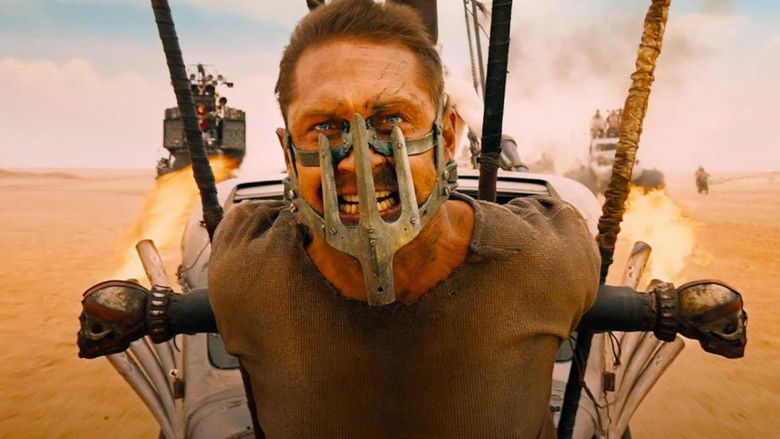
Shouted by Nux while driving straight into a massive, apocalyptic sandstorm, ecstatic at the prospect of dying in combat.
Meaning
It perfectly captures the twisted, adrenaline-fueled zealotry of the War Boys, who view violent death in a massive sandstorm not as a tragedy, but as a glorious celebration.
Witness me!
Context
Yelled by the War Boys right before committing a suicidal attack to destroy an enemy vehicle.
Meaning
This phrase encapsulates the cult-like ideology of the War Boys. It signifies that for them, death is only meaningful if it is observed and validated by their peers and their god.
If you can't fix what's broken, you'll, uh... you'll go insane.
Context
Max mutters this to himself and Furiosa after a tense encounter, reflecting on his failure to save people in his past.
Meaning
A reflection of Max's deep internal trauma. It speaks to the psychological toll of surviving in a broken world and the necessity of finding purpose to avoid losing one's mind.
Where must we go, we who wander this wasteland, in search of our better selves?
Context
This is the final text card displayed on screen right before the end credits roll.
Meaning
This quote frames the entire film as a mythological fable. It asks the central philosophical question of the narrative: how does humanity reclaim its morality and soul after the end of the world?
Explore More About This Movie
Dive deeper into specific aspects of the movie with our detailed analysis pages