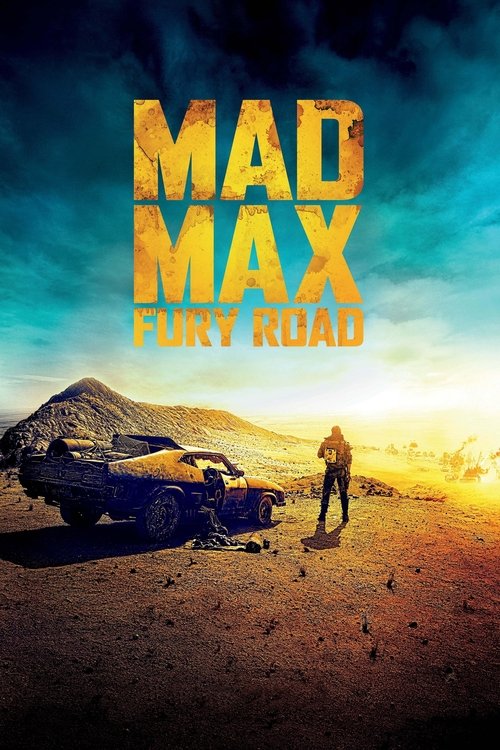
Mad Max: Fury Road
"The future belongs to the mad."
Overview
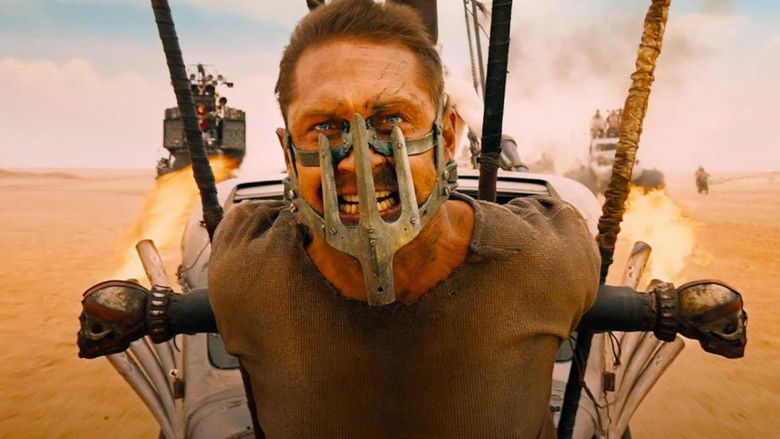
Set in a stark, desert wasteland where humanity is broken and resources like water and gasoline are fiercely hoarded by warlords, Mad Max: Fury Road follows a desperate, high-speed chase across the barren earth. The story centers on Max Rockatansky, a haunted drifter who is captured by the tyrannical Immortan Joe's army, known as the War Boys. Max's fight for mere survival is soon entangled with a much larger rebellion.
Imperator Furiosa, one of Joe's most trusted lieutenants, stages a daring betrayal by smuggling his five prized wives—women kept purely for breeding—in a heavily armored War Rig. Her goal is to transport them to the Green Place, a mythical sanctuary from her childhood. Thrown together by circumstance, the laconic Max and the fiercely determined Furiosa must form an uneasy alliance to survive the relentless pursuit of Immortan Joe's armada.
The film plays out as an almost continuous, breathless road battle, propelled by practical stunts and roaring engines. As the fugitives hurtle through treacherous terrains and colossal sandstorms, they are forced to confront their past traumas, battling not just the literal monsters on their tail, but the ghosts of those they could not save.
Core Meaning
At its core, Mad Max: Fury Road challenges the myth of inescapable scarcity and the patriarchal structures that use it to maintain power. Director George Miller presents a world where a tyrant hoards water and life, turning humans into commodities—blood bags, breeders, and cannon fodder. The film's profound message is that salvation cannot be found by simply running away to an idealized, mythical utopia. True liberation and redemption require turning back to confront the oppressive system directly, overthrowing the tyrant, and equitably sharing the resources that sustain life. It is a powerful feminist and ecological allegory about dismantling toxic power structures to rebuild a humane society.
Thematic DNA
Feminism and Dismantling Patriarchy
The film is fundamentally a feminist text. Immortan Joe represents a toxic patriarchy that literally objectifies women as property (breeders) and men as disposable fuel for war (War Boys). Furiosa's rebellion, aided by the Wives and eventually the Many Mothers, represents feminine power and agency destroying a system of exploitation. Max does not act as a traditional white knight; instead, he serves as an ally to the women leading their own liberation.
Survival vs. Living
Early in the film, characters are solely focused on survival. Max's singular goal is self-preservation, operating almost like a feral animal. However, the film asks what it means to truly live. The transition from merely surviving to fighting for a righteous cause—hope, freedom, and a better future—is central to the arcs of Max, Furiosa, and Nux.
Environmental Collapse and Scarcity
The wasteland setting reflects extreme ecological degradation. Resources like water (Aqua Cola), gasoline (Guzzoline), and seeds are treated as divine relics. The film serves as a cautionary tale about environmental destruction and the artificial hoarding of resources by the wealthy and powerful to control the masses.
Redemption and Sacrifice
Many characters seek to atone for their pasts. Furiosa is searching for redemption for her time serving Immortan Joe. Max seeks to silence the ghosts of those he failed to protect. Nux transitions from seeking a selfish, vain sacrifice for a tyrant to making a selfless, meaningful sacrifice out of love and belief in a better future.
Character Analysis
Max Rockatansky
Tom Hardy
Motivation
Initially pure survival; ultimately, redemption and helping others find the peace he cannot achieve for himself.
Character Arc
Max begins the film reduced to a feral state, focused entirely on his own survival and haunted by traumatic hallucinations. Through his journey with Furiosa, he regains his humanity, learns to trust, and voluntarily risks his life to help the women achieve their freedom before quietly disappearing into the crowd.
Imperator Furiosa
Charlize Theron
Motivation
Redemption and the liberation of the oppressed Wives.
Character Arc
Furiosa transitions from an obedient, high-ranking enforcer for a tyrant to a revolutionary. When her dream of escaping to the Green Place is shattered, she chooses to stop running, returning to conquer her former prison and establish a new, equitable society.
Nux
Nicholas Hoult
Motivation
Initially, seeking Valhalla; later, love and protecting his new found family.
Character Arc
Nux starts as an indoctrinated, terminally ill War Boy desperate to die a glorious death for Immortan Joe. After failing and being shown unexpected compassion by one of the Wives (Capable), he realizes the emptiness of Joe's religion and chooses to sacrifice himself for a genuine cause.
Immortan Joe
Hugh Keays-Byrne
Motivation
Absolute power, legacy, and control over resources and reproduction.
Character Arc
Joe begins with absolute, god-like control over the Citadel. His obsession with his property (the Wives) leads him to abandon his fortress's defenses, ultimately resulting in the destruction of his armada and his brutal death.
Symbols & Motifs
Water and Greenery
They symbolize hope, life, and renewal in a dead world. Immortan Joe's control over the water equates to his control over the people, positioning him as a false god.
Water is released sparingly by Immortan Joe to keep the citizens dependent. The Vuvalini (Many Mothers) carry seeds, representing the fragile but enduring hope of restoring the earth.
Steering Wheels
The steering wheel is treated as a sacred religious artifact. It represents power, status, and the toxic religious devotion to machinery and war.
War Boys carry steering wheels into battle, constructing an altar for them. Furiosa's control of the massive War Rig wheel underscores her immense power and threat to the hierarchy.
Chrome / Silver Spray
The chrome spray represents the delusion of a glorious, eternal afterlife (Valhalla) and the complete loss of individuality to a cult of personality.
War Boys spray their mouths with chrome right before executing suicide missions, believing it will make them shiny and chrome in the afterlife.
Skulls and Bones
These represent death, brutality, and the violent nature of the Wasteland.
Immortan Joe wears a grotesque skull mask to project intimidation and hide his physical decay. The War Boys brand themselves with skull insignias.
Memorable Quotes
Oh, what a day... what a lovely day!
— Nux
Context:
Shouted by Nux while driving straight into a massive, apocalyptic sandstorm, ecstatic at the prospect of dying in combat.
Meaning:
It perfectly captures the twisted, adrenaline-fueled zealotry of the War Boys, who view violent death in a massive sandstorm not as a tragedy, but as a glorious celebration.
Witness me!
— Nux / War Boys
Context:
Yelled by the War Boys right before committing a suicidal attack to destroy an enemy vehicle.
Meaning:
This phrase encapsulates the cult-like ideology of the War Boys. It signifies that for them, death is only meaningful if it is observed and validated by their peers and their god.
If you can't fix what's broken, you'll, uh... you'll go insane.
— Max Rockatansky
Context:
Max mutters this to himself and Furiosa after a tense encounter, reflecting on his failure to save people in his past.
Meaning:
A reflection of Max's deep internal trauma. It speaks to the psychological toll of surviving in a broken world and the necessity of finding purpose to avoid losing one's mind.
Where must we go, we who wander this wasteland, in search of our better selves?
— The First History Man
Context:
This is the final text card displayed on screen right before the end credits roll.
Meaning:
This quote frames the entire film as a mythological fable. It asks the central philosophical question of the narrative: how does humanity reclaim its morality and soul after the end of the world?
Philosophical Questions
What distinguishes mere survival from truly living?
The film argues that biological survival without autonomy, hope, or compassion is meaningless. Max survives as a blood bag, but he is not truly alive until he chooses to risk his life for the Wives' freedom. The film suggests that humanity requires moral purpose, not just a pulse.
Does escaping a corrupt system solve the problem, or must it be dismantled?
Furiosa initially believes the answer is to flee across the wasteland to the utopian Green Place. When she discovers it is ruined, the characters realize that running away from tyranny is futile. They must turn around, confront the dictator, and claim the resources for the people, arguing that societal change requires confrontation, not escapism.
How is religion weaponized to control the vulnerable?
Immortan Joe invents a synthetic religion combining Norse mythology (Valhalla) with car culture (V8 engines, chrome) to manipulate the young, sickly War Boys into gladly sacrificing their lives for him. The film heavily critiques how dictators use blind faith and the promise of an afterlife to maintain earthly power.
Alternative Interpretations
The Feral Myth / Campfire Story: Because the film is framed by the quote from the First History Man, many interpret the entire movie not as literal events, but as a legendary myth passed down by wasteland survivors. This explains the heightened reality, the hyper-saturated colors, the bizarrely themed villains (The Bullet Farmer, The People Eater), and Max's almost supernatural ability to survive extreme injuries. In this view, Max is less a historical figure and more a folk hero archetype whose deeds are exaggerated with each retelling.
Max as a Ghost / Valhalla Theory: Another interpretation suggests that Max is actually a spirit haunting the wasteland, acting as an angel of death or guardian angel. He only appears when humanity is at a tipping point. Some viewers extend this to the idea that the entire journey is a form of purgatory, tying into the War Boys' obsession with Valhalla. Max's quiet disappearance into the crowd at the end, without taking credit or power, supports the idea that he is a phantom catalyst rather than a permanent resident of the living world.
Cultural Impact
Mad Max: Fury Road had a profound impact on contemporary cinema, instantly being hailed as one of the greatest action films ever made. It defied the growing trend of CGI-heavy blockbusters by proving that practical effects, intricate stunt work, and meticulous production design could create a far more visceral and immersive experience. The film won six Academy Awards, highly unusual for a summer action movie, cementing its status as high art.
Culturally, the film sparked massive discussions regarding its feminist undertones. Imperator Furiosa became a modern cinematic icon, praised for her complexity, physical capability, and emotional depth, entirely avoiding traditional male-gaze tropes. The film's aesthetic—hyper-saturated oranges and teals, grotesque character designs, and chaotic post-apocalyptic vehicular warfare—deeply influenced subsequent video games, films, and fashion. The phrase Witness me! entered the pop-culture lexicon as an internet meme denoting an imminent, often reckless, action.
Audience Reception
Audience reception for Mad Max: Fury Road was overwhelmingly positive, with viewers and critics alike praising it as a breathtaking masterpiece. Audiences were captivated by the relentless pacing, the jaw-dropping practical stunts, and the vibrant, artistic cinematography that sharply contrasted with the drab grays of typical dystopian films.
The character of Furiosa was universally acclaimed, with many viewers appreciating that the film was essentially her story, with Max acting as the crucial supporting ally. However, this dynamic also sparked a minor, yet vocal, backlash from a small subset of viewers who felt misled by the title and criticized the film's prominent feminist themes. Despite this, the overwhelming majority celebrated the movie for its rich visual storytelling, sparse but effective world-building, and profound emotional core, leading to a massive and enduring cult following.
Interesting Facts
- The film contains over 2,700 cuts, averaging about 22.5 cuts per minute. To keep the action legible, director George Miller used 'center-framing,' ensuring the audience's eyes rarely had to move to follow the focal point.
- Over 80% of the film's effects were practical. CGI was primarily used to enhance landscapes, remove stunt rigging, and replace Charlize Theron's left arm with a mechanical prosthetic.
- The Doof Warrior's flamethrowing guitar was fully functional and weighed nearly 132 pounds. The actor playing him had to be suspended by bungee cords while performing.
- Eve Ensler, the creator of 'The Vagina Monologues', was brought to the set in Namibia to consult with the actresses playing the Five Wives, helping them understand the trauma and psychology of enslaved, abused women.
- Hugh Keays-Byrne, who played the villain Immortan Joe, also played the main antagonist, Toecutter, in the original 1979 'Mad Max' film.
- The film's storyboard was created before the script. George Miller envisioned the movie as a continuous chase and relied heavily on visual storytelling rather than dialogue.
Easter Eggs
Max's Leather Jacket
The jacket Max wears in the film is an exact replica of the one worn by Mel Gibson in The Road Warrior and Beyond Thunderdome, serving as a subtle nod to the character's cinematic history and bridging the gap between the actors.
Furiosa's Dashboard Magazine
There is a hidden gun magazine mounted directly onto the dashboard of Furiosa's War Rig. This highly specific detail allows her to quickly and easily reload a handgun using only her one good hand, showcasing incredible attention to character practicality.
The Music Box
One of the wives plays a tiny music box. This is a direct reference to The Road Warrior (Mad Max 2), where Max gives a nearly identical music box to the Feral Kid.
⚠️ Spoiler Analysis
Click to reveal detailed analysis with spoilers
Frequently Asked Questions
Explore More About This Movie
Dive deeper into specific aspects of the movie with our detailed analysis pages
Comments (0)
No comments yet. Be the first to share your thoughts!