"Things fall down. People look up. And when it rains, it pours."
Magnolia - Symbolism & Philosophy
Symbols & Motifs
Falling Frogs
A biblical reference to Exodus 8:2, symbolizing a divine intervention or a cosmic reset. It serves as a surreal, undeniable force that halts all human triviality, forcing characters to stop their lies and confront reality.
In the film's climax, a torrential rain of frogs pummels the city, saving some characters from suicide, forcing others to reconcile, and physically manifesting the film's theme of inexplicable, higher-power events.
The Number 8 and 2
A recurring motif foreshadowing the climatic Exodus 8:2 event. It represents the omnipresence of fate and the subtle warning signs that the universe provides before a reckoning.
Seen throughout the film: the weather forecast is 82% chance of rain, a gambler needs a 2 but gets an 8, a rope coil forms an 8, the meeting starts at 8:20, and signs in the audience literally read "Exodus 8:2".
The Magnolia Flower
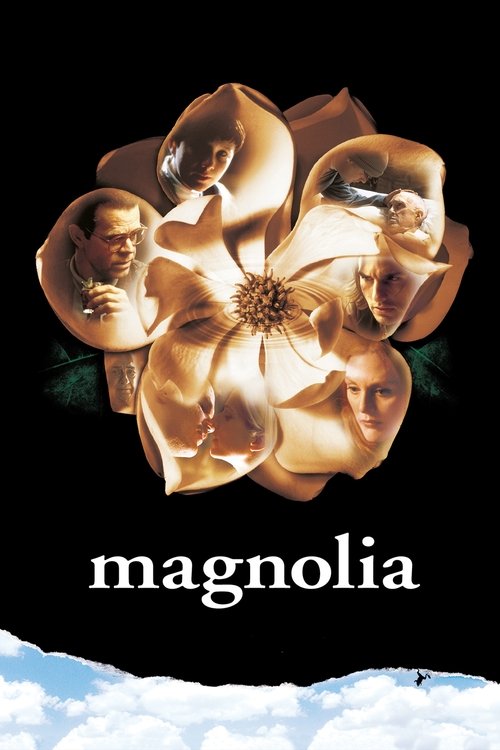
Represents the unfolding layers of the story and the beauty found within complex, messy structures. It also connects to the street name (Magnolia Blvd) and the San Fernando Valley setting.
The film's structure is often compared to the petals of a magnolia, and the image appears in the title design and promotional material, symbolizing the organic connection between the disparate storylines.
Philosophical Questions
Is forgiveness a choice or a necessity?
The film suggests that forgiveness is not just a moral virtue but a survival mechanism. Characters who cannot forgive (or seek it) are physically and mentally destroyed, while those who attempt it find a path forward.
Do we have control over our lives, or are we subject to chance?
Through the prologue and the climax, the film questions agency. It argues that while we cannot control cosmic events (chance/frogs), we can control how we treat one another in the aftermath (compassion).
Can we ever truly escape our parents?
Magnolia presents a grim determinism where children repeat the sins of their fathers, yet it leaves a sliver of hope that conscious awareness (wising up) can break the cycle.
Core Meaning
At its heart, Magnolia is a meditation on the inescapable gravity of the past and the desperate human need for forgiveness. Director Paul Thomas Anderson posits that trauma and parental failure echo through generations, creating a cycle of pain that can only be broken by confronting the truth. The film challenges the notion of mere coincidence, suggesting a cosmic connectedness in our suffering and redemption.