Magnolia
"Things fall down. People look up. And when it rains, it pours."
Overview
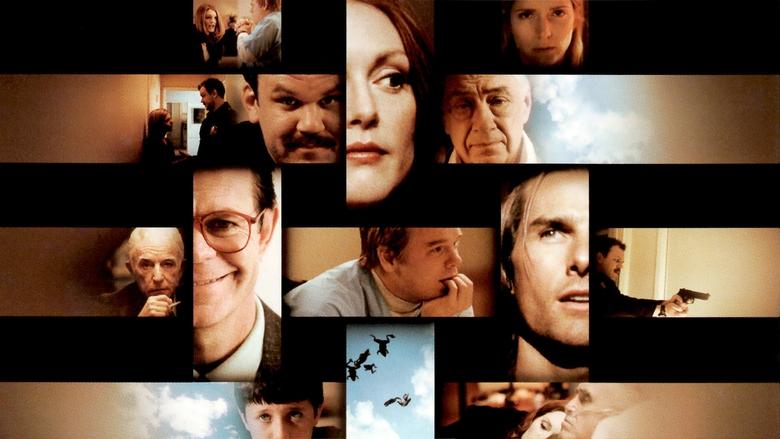
In the San Fernando Valley, a dying television producer, his estranged misogynist son, a drug-addicted daughter, a gentle police officer, a former boy genius, and a current quiz show prodigy find their lives weaving together on a single day of reckoning. As the skies darken over Los Angeles, these isolated souls confront their deepest regrets, traumas, and the parents who failed them.
The narrative unfolds as a complex tapestry of chance and coincidence, building towards a crescendo where the boundaries of reality blur. Through confession, confrontation, and a miraculous meteorological event, the characters are forced to strip away their defenses and face the raw truth of their existence, seeking redemption in a world that often seems governed by random chaos.
Core Meaning
At its heart, Magnolia is a meditation on the inescapable gravity of the past and the desperate human need for forgiveness. Director Paul Thomas Anderson posits that trauma and parental failure echo through generations, creating a cycle of pain that can only be broken by confronting the truth. The film challenges the notion of mere coincidence, suggesting a cosmic connectedness in our suffering and redemption.
Thematic DNA
The Inescapability of the Past
The film's central mantra, "We may be through with the past, but the past ain't through with us," drives every character arc. Whether it's Frank hiding his history, Earl dying with regret, or Claudia medicating her trauma, the characters are haunted by history they cannot suppress.
Fathers and Children
The narrative rigorously examines the toxic legacy of fathers. Almost every plotline involves a failed father figure (Earl, Jimmy, Rick) and a child (Frank, Claudia, Stanley, Donnie) bearing the scars of neglect, abuse, or exploitation, highlighting the profound responsibility of parenthood.
Chance vs. Providence
Opening with a prologue of impossible coincidences, the film asks whether life is a series of random events or guided by a higher power. The intertwining stories and the climactic rain of frogs suggest that what appears random may be a form of divine intervention or cosmic justice.
Loneliness and Connection
Despite the sprawling cast, each character initially suffers in profound isolation. The film visually underscores this with shots of characters alone in frames, singing along to the same Aimee Mann song, emphasizing that their shared pain is the paradoxically unifying force that eventually brings them together.
Character Analysis
Frank T.J. Mackey
Tom Cruise
Motivation
To deny his past and his pain by constructing a hyper-masculine persona that rejects vulnerability and emotional connection.
Character Arc
Introduced as a vile, misogynistic guru teaching men to "tame" women, his armor is stripped away by an interview probing his past. His arc culminates in a tearful, devastating collapse at the deathbed of the father who abandoned him, revealing the hurt boy beneath the bravado.
Earl Partridge
Jason Robards
Motivation
To obtain forgiveness for his "goddamn regret" and acknowledge the destruction he caused to his family before he dies.
Character Arc
A wealthy producer dying of cancer, Earl spends his final hours in a delirium of regret. He seeks to reconnect with the son he abandoned, serving as the catalyst for the film's exploration of repentance and the finality of death.
Claudia Wilson Gator
Melora Walters
Motivation
To numb the pain of incestuous trauma and hide her "brokenness" from anyone who tries to get close.
Character Arc
A cocaine-addicted young woman haunted by her father's abuse. She pushes people away due to shame but tentatively opens her heart to Officer Jim Kurring. Her ending suggests a fragile hope as she looks into the camera and smiles.
Jim Kurring
John C. Reilly
Motivation
To be a "good cop" and find a genuine human connection to cure his loneliness.
Character Arc
An incompetent but well-meaning police officer seeking love and professional respect. He loses his gun (his symbol of authority) but finds something real with Claudia, learning that doing good is more important than following the strict letter of the law.
Quiz Kid Donnie Smith
William H. Macy
Motivation
To recapture the love and validation he felt as a child star ("I have so much love to give, I just don't know where to put it").
Character Arc
A former child genius now washing out of life, desperate for money to get braces he thinks will bring him love. He hits rock bottom stealing from his employer but is given a second chance, mirroring the theme of grace amidst chaos.
Symbols & Motifs
Falling Frogs
A biblical reference to Exodus 8:2, symbolizing a divine intervention or a cosmic reset. It serves as a surreal, undeniable force that halts all human triviality, forcing characters to stop their lies and confront reality.
In the film's climax, a torrential rain of frogs pummels the city, saving some characters from suicide, forcing others to reconcile, and physically manifesting the film's theme of inexplicable, higher-power events.
The Number 8 and 2
A recurring motif foreshadowing the climatic Exodus 8:2 event. It represents the omnipresence of fate and the subtle warning signs that the universe provides before a reckoning.
Seen throughout the film: the weather forecast is 82% chance of rain, a gambler needs a 2 but gets an 8, a rope coil forms an 8, the meeting starts at 8:20, and signs in the audience literally read "Exodus 8:2".
The Magnolia Flower
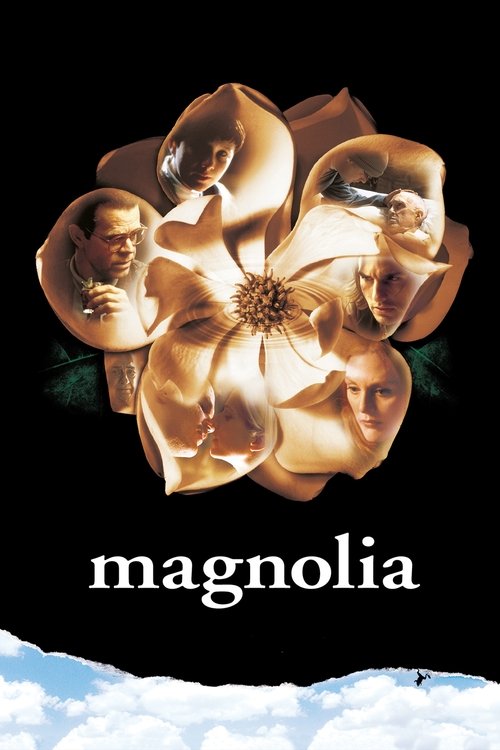
Represents the unfolding layers of the story and the beauty found within complex, messy structures. It also connects to the street name (Magnolia Blvd) and the San Fernando Valley setting.
The film's structure is often compared to the petals of a magnolia, and the image appears in the title design and promotional material, symbolizing the organic connection between the disparate storylines.
Memorable Quotes
I really do have love to give! I just don't know where to put it!
— Quiz Kid Donnie Smith
Context:
Donnie screams this in a bar while drunk, confessing his loneliness to a stranger who barely listens.
Meaning:
Encapsulates the central tragedy of the film's characters: they are capable of love but are structurally unable to connect due to trauma, timing, or social awkwardness.
Respect the cock! And tame the cunt!
— Frank T.J. Mackey
Context:
Frank leads a seminar for lonely men, prowling the stage and inciting the crowd into a frenzy of toxic masculinity.
Meaning:
A shocking, vulgar mantra that highlights Frank's performative misogyny and the aggressive defense mechanism he has built against true intimacy.
We might be through with the past, but the past ain't through with us.
— Narrator / Ricky Jay
Context:
Spoken during the opening prologue sequence that details stories of impossible coincidences and death.
Meaning:
The thesis statement of the film. No matter how fast we run or how much we reinvent ourselves, the consequences of our history remain active forces in our present.
I will not apologize for who I am. I will not apologize for what I need. I will not apologize for what I want.
— Frank T.J. Mackey
Context:
During his interview with the journalist who begins to peel back the layers of his false identity.
Meaning:
Frank's defiance against judgment, which ironically crumbles later when he is forced to confront the source of his pain (his father).
This is something that happens.
— Stanley Spector
Context:
Stanley says this while watching the frogs fall from the sky through the library window.
Meaning:
A child's acceptance of the absurd. While adults panic during the frog rain, the child genius observes it with a calm realization that the universe is stranger than we admit.
Philosophical Questions
Is forgiveness a choice or a necessity?
The film suggests that forgiveness is not just a moral virtue but a survival mechanism. Characters who cannot forgive (or seek it) are physically and mentally destroyed, while those who attempt it find a path forward.
Do we have control over our lives, or are we subject to chance?
Through the prologue and the climax, the film questions agency. It argues that while we cannot control cosmic events (chance/frogs), we can control how we treat one another in the aftermath (compassion).
Can we ever truly escape our parents?
Magnolia presents a grim determinism where children repeat the sins of their fathers, yet it leaves a sliver of hope that conscious awareness (wising up) can break the cycle.
Alternative Interpretations
The Divine vs. The Random: Some critics view the frog rain as a literal act of God (Old Testament wrath/cleansing), forcing repentance. Others interpret it through a Fortean lens as a chaotic, natural anomaly that simply happens, stripping meaning from human suffering.
The Film as a TV Show: Given the heavy focus on television production (the game show, Frank's infomercial), some read the film as a critique of how media packages and exploits human trauma for entertainment, with the 'reality' of the frog rain breaking the 'script' of their lives.
Cultural Impact
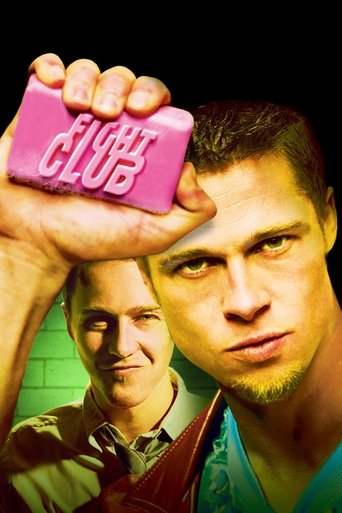
Magnolia is considered a landmark in 1990s American cinema, often cited alongside Pulp Fiction and Fight Club as a defining postmodern work. It popularized 'hyperlink cinema'—complex, multi-narrative structures—influencing films like Crash and Babel.
Critically, it solidified Paul Thomas Anderson's reputation as an auteur capable of balancing emotional intimacy with epic scope. Tom Cruise's performance is widely regarded as one of the best of his career, subverting his leading-man image. The film's bold ending (the frog rain) remains one of the most discussed and polarizing finales in film history, challenging audiences to accept magical realism in a gritty drama.
Audience Reception
Upon release, Magnolia was polarizing. Critics hailed it as a masterpiece of ambition and emotional depth, praising the ensemble cast and Anderson's direction. Audiences were more divided; while many found it profound and moving, others criticized its 3-hour runtime, melodramatic intensity, and the 'bizarre' ending.
Over time, its reputation has grown, with a cult following that reveres its emotional fearlessness and intricate plotting. The soundtrack by Aimee Mann is universally acclaimed as integral to the film's success.
Interesting Facts
- Paul Thomas Anderson wrote the role of Frank T.J. Mackey specifically for Tom Cruise after meeting him on the set of 'Eyes Wide Shut'.
- The film's script was written while listening to Aimee Mann's music, and her songs are integrated into the dialogue; the line 'Now that I've met you, would you object to never seeing me again?' is directly from her song 'Deathly'.
- The rain of frogs is based on the writings of Charles Fort, who documented anomalous phenomena, but Anderson was unaware it was also a biblical plague until later.
- Jason Robards (Earl Partridge) was actually dying of lung cancer during the filming of the movie, mirroring his character's condition.
- The sequence where the characters sing along to 'Wise Up' was filmed without the actors knowing it would be a unified musical number; they were just told to sing along to the track in their individual scenes.
- Orlando Jones filmed scenes as a character named 'The Worm', but his entire storyline was cut to reduce the runtime.
- The phone number for Frank's 'Seduce and Destroy' hotline (1-877-TAME-HER) actually worked for a period after the film's release.
Easter Eggs
Exodus 8:2 References
The numbers 8 and 2 appear constantly to foreshadow the frog plague (Exodus 8:2). Examples: A gambler needs a 2 but gets an 8; the weather forecast is 82% chance of rain; a sign in the audience reads 'Exodus 8:2'; the meeting starts at 8:20; the first two numbers of the Seduce and Destroy hotline are 82.
Masonic Symbols
The narrator and other elements feature Masonic imagery (like rings), hinting at secret knowledge and the hidden architecture of the universe.
Action Painting
The painting in Earl Partridge's house changes throughout the film, reflecting the chaotic emotional state of the household.
⚠️ Spoiler Analysis
Click to reveal detailed analysis with spoilers
Frequently Asked Questions
Explore More About This Movie
Dive deeper into specific aspects of the movie with our detailed analysis pages
Comments (0)
No comments yet. Be the first to share your thoughts!