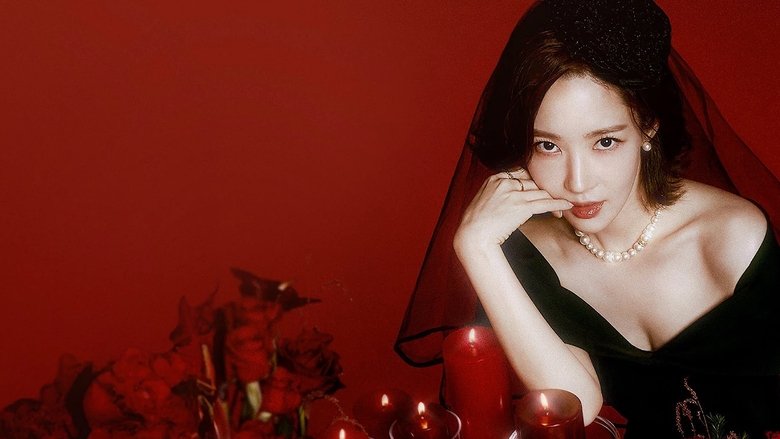

내 남편과 결혼해줘
"A drama about creating a new destiny."
Marry My Husband - Symbolism & Philosophy
Symbols & Motifs
Cherry Blossoms
Cherry blossoms symbolize the fleeting nature of life, beauty, and the concept of a second chance. They represent both the painful end of Ji-won's first life and the beautiful, hopeful beginning of her new one.
In the first episode, a kind taxi driver takes the terminally ill Ji-won to see the cherry blossoms, telling her it shows there are always better paths. This moment occurs right before her death and subsequent regression in time. The motif reappears during key romantic and hopeful moments in her new life, linking back to that initial spark of hope before her second chance began.
Blue Heart
The blue heart on Yoo Ji-hyuk's chest symbolizes his connection to Kang Ji-won and the fate he shares with her. It acts as a physical manifestation of his past death and his journey through time, which was motivated by his love for her. Its disappearance signifies that fate has been successfully altered and their future is now secure.
Yoo Ji-hyuk has a blue heart-shaped mark on his chest, which is later revealed to be a result of his own death in the original timeline before he traveled back. The heart fades and ultimately disappears in the final episode after the villains have met their tragic fates, indicating that the curse or burden of the past has been lifted from both him and Ji-won.
Trash (Recycling)
The act of 'taking out the trash' or recycling is a recurring metaphor for how Ji-won deals with the toxic people from her past. Her revenge plot is framed as cleaning up her life by disposing of those who wronged her and ensuring they are 'recycled' into the miserable fate that was once hers.
Ji-won often uses phrases related to garbage and recycling when discussing her plan for Park Min-hwan and Jeong Su-min. She resolves to make Su-min 'recycle' the 'trash' that is her husband, Min-hwan. This metaphor is consistently used to frame her revenge not just as destruction, but as a necessary and justified cleansing of her life.
Philosophical Questions
Can you truly escape your fate, or can you only pass it on to someone else?
The series operates on a unique rule of time travel: what's meant to happen, will happen. Ji-won cannot simply erase her cancer or her husband's betrayal. Instead, she must find a new 'host' for her misfortune. This raises profound questions about destiny. The show explores this by having Ji-won's colleague, Yang Ju-ran, initially develop stomach cancer, suggesting fate is trying to find a target. Ji-won's success hinges on her ability to make Su-min the most logical recipient of her original life's events—marrying Min-hwan, dealing with his mother, and suffering his infidelity. It suggests that while we have the free will to fight, fate operates like a debt that must be paid by someone.
Is revenge a path to healing or a self-destructive cycle?
"Marry My Husband" largely presents revenge as a cathartic and healing tool. For Ji-won, each successful step of her plan helps her reclaim her confidence and sheds the skin of her former victimized self. However, the series also implicitly shows the toll this takes. Ji-won must remain entangled with the very people who traumatized her and engage in manipulation herself. The ultimate message seems to be that revenge is a necessary means to an end; it clears the path, but true happiness and healing are only found afterward, through building a new life with loving people. The revenge itself is the painful surgery, not the recovery.
Core Meaning
The core meaning of "Marry My Husband" revolves around the themes of second chances, self-empowerment, and the nature of fate. It posits that while destiny may have a predetermined path, individual choices and courage can alter its course. The series is a powerful narrative about reclaiming one's life from the grips of betrayal and victimhood.
Beyond the satisfying revenge plot, the story emphasizes that true victory isn't just about punishing one's enemies, but about building a new life filled with happiness, genuine relationships, and self-worth. Ji-won's journey suggests that one must actively fight for their own happiness and that true strength comes from within, enabling a person to break free from toxic relationships and forge a future they deserve.