Marry My Husband
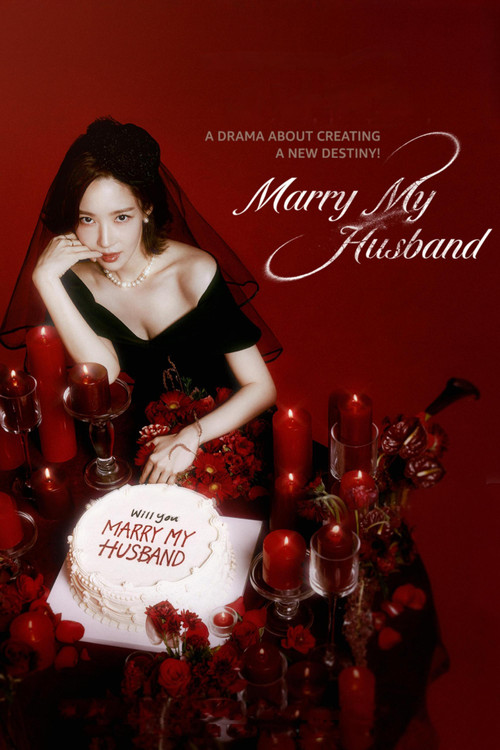
내 남편과 결혼해줘
"A drama about creating a new destiny."
Overview
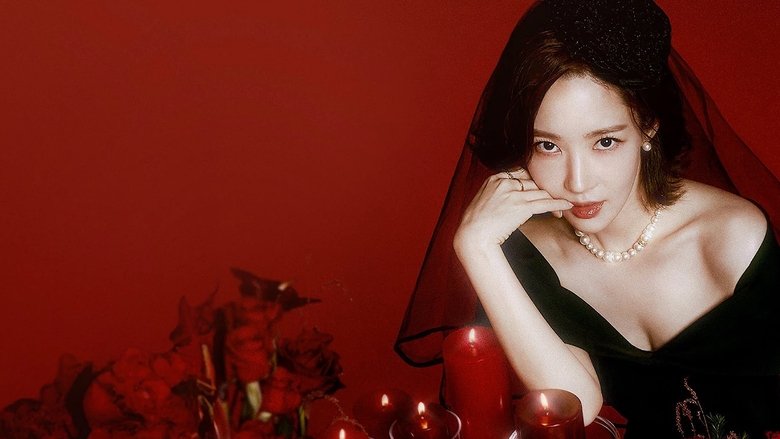
"Marry My Husband" follows the harrowing story of Kang Ji-won, a woman dying of terminal cancer who discovers her husband, Park Min-hwan, is having an affair with her best friend, Jeong Su-min. A physical confrontation ensues, leading to her tragic death at the hands of her husband. Miraculously, she awakens ten years in the past, in 2013, with all her memories intact. Given a second chance at life, Ji-won embarks on a meticulous and empowering journey of revenge.
Her central mission is to alter her cruel fate by ensuring that the two people who betrayed her end up together; she is determined to make Jeong Su-min marry her husband. As she navigates her past, she finds an unexpected and powerful ally in her stoic department chief, Yoo Ji-hyuk. Ji-hyuk, who also harbors a secret connection to the future, becomes her steadfast protector and partner in her quest for justice and a new, happy life. The series chronicles her transformation from a downtrodden victim into a confident woman who reclaims her agency, confronts her past traumas, and finds true love along the way.
Core Meaning
The core meaning of "Marry My Husband" revolves around the themes of second chances, self-empowerment, and the nature of fate. It posits that while destiny may have a predetermined path, individual choices and courage can alter its course. The series is a powerful narrative about reclaiming one's life from the grips of betrayal and victimhood.
Beyond the satisfying revenge plot, the story emphasizes that true victory isn't just about punishing one's enemies, but about building a new life filled with happiness, genuine relationships, and self-worth. Ji-won's journey suggests that one must actively fight for their own happiness and that true strength comes from within, enabling a person to break free from toxic relationships and forge a future they deserve.
Thematic DNA
Revenge and Justice
The primary driving force of the narrative is Ji-won's quest for revenge. However, it's not a simple, destructive vengeance. It's a calculated, strategic plan to pass her miserable fate onto those who wronged her. The series explores the catharsis of seeing villains get their comeuppance, framing Ji-won's actions as a form of karmic justice. Her revenge is intertwined with her journey of self-discovery, where each step in her plan is also a step towards reclaiming her power and confidence.
Fate vs. Free Will
The time-travel element introduces a central conflict between predestination and the ability to choose one's own path. Ji-won learns that major life events, or 'fates,' are bound to happen. However, she discovers she can't simply avoid her fate; she must transfer it to someone else. This creates a moral and philosophical dilemma: to what extent can one manipulate destiny? The series ultimately suggests that while some events are inevitable, one's actions and choices determine who bears the burden and how one's own new future can be forged.
Self-Empowerment and Transformation
In her first life, Kang Ji-won was a passive doormat, enduring mistreatment from her husband, in-laws, and manipulative best friend. Her second chance allows for a complete metamorphosis. She cuts her hair, changes her style, and, most importantly, learns to speak up for herself and fight back. Her journey is a powerful depiction of a woman moving from victimhood to agency, inspiring viewers with her growing confidence and resilience.
True vs. Toxic Relationships
The series starkly contrasts the destructive, parasitic relationships Ji-won had in her past with the supportive, healing connections she builds in her new life. The affair between her husband and best friend epitomizes betrayal and toxicity. In contrast, her budding romance with Yoo Ji-hyuk is built on mutual respect, protection, and genuine care. The drama also highlights the importance of loyal friends like Yang Ju-ran and Yoo Hee-yeon, who form a new, healthy support system for Ji-won.
Character Analysis
Kang Ji-won
Park Min-young
Motivation
Initially, her sole motivation is revenge: to make her husband and best friend pay for their betrayal by having them marry each other. As the series progresses, her motivation evolves. It becomes less about pure vengeance and more about securing her own happiness and protecting the new, loving relationships she has formed. She fights not just to punish the wicked but to build a future she can look forward to.
Character Arc
Kang Ji-won begins as a terminally ill cancer patient who is timid, selfless to a fault, and a victim of constant manipulation. After being murdered and sent back in time, her arc is one of radical transformation. Fueled by a desire for revenge, she evolves from a passive victim into a strategic and assertive woman. She learns to stand up for herself, outmaneuver her enemies, and build her self-worth. Her journey culminates in her not only achieving her revenge but also finding genuine love and happiness, completely rewriting her destiny from a tragedy to a triumph.
Yoo Ji-hyuk
Na In-woo
Motivation
His primary motivation is his deep, unwavering love for Kang Ji-won. Having regretted not being able to protect her in their past lives, he dedicates his second chance entirely to ensuring her safety and happiness. Everything he does, from confronting her abusive husband to revealing corporate secrets, is aimed at steering her away from her tragic fate.
Character Arc
Yoo Ji-hyuk is initially presented as a stern, enigmatic marketing manager. It is soon revealed that he, too, has traveled back in time. In the first timeline, he was in love with Ji-won from afar and died tragically after her funeral. His arc is about moving from a silent observer to an active protector. He uses his knowledge of the future and his resources to guide and shield Ji-won. His journey is one of learning to express his long-held feelings and actively fighting for the woman he loves, becoming the unwavering pillar of support she never had.
Park Min-hwan
Lee Yi-kyung
Motivation
Min-hwan is motivated by pure selfishness, greed, and entitlement. He desires a comfortable life without responsibility, which is why he leeches off Ji-won. His actions are driven by his immediate wants, whether it's money, gratifying his ego, or avoiding accountability. He consistently chooses the path that seems easiest for him, regardless of who it hurts.
Character Arc
Park Min-hwan is a selfish, misogynistic, and immature mama's boy who sees his wife Ji-won as more of a servant than a partner. His character does not have a growth arc; instead, he devolves. As Ji-won slips from his control, his worst traits—greed, cowardice, and violent tendencies—are amplified. He is easily manipulated by both Su-min and later Oh Yu-ra. His path is a downward spiral, leading him to fulfill the tragic fate originally meant for Ji-won, ultimately being killed during a confrontation with Su-min.
Jeong Su-min
Song Ha-yoon
Motivation
Su-min is motivated by a pathological envy of Kang Ji-won. She feels a compulsive need to steal Ji-won's life—her boyfriends, her projects, her happiness—to validate her own existence. Her actions stem from a deep-seated belief that Ji-won's happiness is something that rightfully belongs to her, combined with a desperate need to always appear as the victim.
Character Arc
Jeong Su-min presents herself as Ji-won's sweet and loyal best friend, but is in reality a deeply manipulative and narcissistic individual with a severe inferiority complex. Her arc is one of escalating obsession and villainy. She has always coveted everything Ji-won has. When Ji-won begins to empower herself, Su-min's manipulative tactics become more desperate and dangerous. She succeeds in marrying Min-hwan, only to find the miserable life she unknowingly inherited. Her journey ends in ruin, imprisoned for murder and attempted murder, consumed by a hatred she can't let go of.
Symbols & Motifs
Cherry Blossoms
Cherry blossoms symbolize the fleeting nature of life, beauty, and the concept of a second chance. They represent both the painful end of Ji-won's first life and the beautiful, hopeful beginning of her new one.
In the first episode, a kind taxi driver takes the terminally ill Ji-won to see the cherry blossoms, telling her it shows there are always better paths. This moment occurs right before her death and subsequent regression in time. The motif reappears during key romantic and hopeful moments in her new life, linking back to that initial spark of hope before her second chance began.
Blue Heart
The blue heart on Yoo Ji-hyuk's chest symbolizes his connection to Kang Ji-won and the fate he shares with her. It acts as a physical manifestation of his past death and his journey through time, which was motivated by his love for her. Its disappearance signifies that fate has been successfully altered and their future is now secure.
Yoo Ji-hyuk has a blue heart-shaped mark on his chest, which is later revealed to be a result of his own death in the original timeline before he traveled back. The heart fades and ultimately disappears in the final episode after the villains have met their tragic fates, indicating that the curse or burden of the past has been lifted from both him and Ji-won.
Trash (Recycling)
The act of 'taking out the trash' or recycling is a recurring metaphor for how Ji-won deals with the toxic people from her past. Her revenge plot is framed as cleaning up her life by disposing of those who wronged her and ensuring they are 'recycled' into the miserable fate that was once hers.
Ji-won often uses phrases related to garbage and recycling when discussing her plan for Park Min-hwan and Jeong Su-min. She resolves to make Su-min 'recycle' the 'trash' that is her husband, Min-hwan. This metaphor is consistently used to frame her revenge not just as destruction, but as a necessary and justified cleansing of her life.
Memorable Quotes
쓰레기는 쓰레기통에.
— Kang Ji-won
Context:
Ji-won says this multiple times throughout the series, often to herself or to Ji-hyuk, when steeling her resolve to push Min-hwan and Su-min together. It encapsulates the core of her revenge strategy: cleaning up her life by making the 'trash' take itself out.
Meaning:
Literal translation: "Trash belongs in the trash can." This line becomes Ji-won's mantra for her revenge. It symbolizes her decision to treat the toxic people in her life—namely Min-hwan and Su-min—as garbage that needs to be disposed of, signifying her emotional detachment and firm resolve.
Please use whatever means necessary to marry my husband.
— Kang Ji-won
Context:
This is said during a pivotal confrontation with Jeong Su-min in Episode 8. After orchestrating a scenario to expose Min-hwan's cheating nature, Ji-won feigns heartbreak and delivers this line, manipulating Su-min into believing she is 'winning' by taking Min-hwan.
Meaning:
This quote is the ultimate declaration of Ji-won's revenge plot. By directly telling her nemesis to marry the man who was once her husband, she turns a situation of betrayal into a weapon. It's a moment of empowerment where she takes control of the narrative and sets her intricate plan into motion.
If you don't go, it'll remain a shameful past. But if you go and fix it, it'll become your history!
— Yoo Ji-hyuk
Context:
Ji-hyuk says this to Ji-won in Episode 3, encouraging her to attend the high school reunion where she was previously bullied and humiliated by Su-min. This moment is a turning point, pushing Ji-won to begin actively confronting and changing her past.
Meaning:
This powerful piece of advice encourages Ji-won to face her past trauma head-on rather than avoid it. It reframes the painful memories of her high school reunion not as a source of shame, but as an opportunity for empowerment and rewriting her personal narrative.
Episode Highlights
The Second Chance
This episode masterfully sets up the tragedy of Kang Ji-won's life. Viewers witness her suffering from terminal cancer, the callousness of her husband and mother-in-law, and the ultimate betrayal by her best friend. Her murder and subsequent awakening 10 years in the past provide a gripping and emotionally charged foundation for the entire series.
It establishes the core premise, the emotional stakes, and the motivation for Ji-won's revenge. The stark contrast between her miserable 2023 life and the hopeful possibilities of 2013 immediately hooks the audience.
The High School Reunion
Ji-won, with Ji-hyuk's encouragement and a stunning makeover, confronts her past tormentors at a high school reunion. Instead of being the victim, she expertly turns the tables on Su-min, exposing her lies and demanding an apology. It's the first major, public victory in her new life.
This episode marks Ji-won's first true step towards self-empowerment. It's a cathartic moment that demonstrates she is no longer the timid person she once was and is capable of fighting for herself, setting the tone for her character's transformation.
The Time Travel Reveal
On a rooftop, Ji-won is listening to a BTS song. Ji-hyuk approaches and makes a comment about another BTS song that has not yet been released in 2013. This slip-up leads to the stunning revelation that both of them are time travelers from 2023. This shared secret solidifies their alliance and deepens their bond.
This is a major plot twist that transforms the dynamic between the leads. Ji-won is no longer alone in her fight. Ji-hyuk becomes a true partner who understands the stakes, accelerating their romance and their revenge plot.
The Fateful Engagement
Ji-won masterfully executes her plan for Min-hwan to propose to her, only to orchestrate a public spectacle at the family engagement dinner. She exposes his affair with Su-min in front of everyone, rejects him, and declares, "I'm throwing away the trash you brought into my life." This leads to Min-hwan and Su-min getting together.
This episode is the climax of the first phase of Ji-won's revenge. It's a deeply satisfying and triumphant moment where she publicly humiliates her tormentors and successfully passes her fate of being engaged to Min-hwan onto Su-min.
A New Fate
The series finale wraps up all the storylines. Su-min is arrested after a final confrontation with a prepared and capable Ji-won. The remaining villain, Oh Yu-ra, dies in a car crash, taking Ji-hyuk's fate. The episode culminates in Ji-won and Ji-hyuk's beautiful wedding and a flash-forward to a happy future with their children on the very day she was supposed to die in her original life.
The finale provides a complete and happy resolution. It confirms that fate can be rewritten through courage and love, bringing Ji-won's journey full circle from a day of death to a day of celebration and profound happiness.
Philosophical Questions
Can you truly escape your fate, or can you only pass it on to someone else?
The series operates on a unique rule of time travel: what's meant to happen, will happen. Ji-won cannot simply erase her cancer or her husband's betrayal. Instead, she must find a new 'host' for her misfortune. This raises profound questions about destiny. The show explores this by having Ji-won's colleague, Yang Ju-ran, initially develop stomach cancer, suggesting fate is trying to find a target. Ji-won's success hinges on her ability to make Su-min the most logical recipient of her original life's events—marrying Min-hwan, dealing with his mother, and suffering his infidelity. It suggests that while we have the free will to fight, fate operates like a debt that must be paid by someone.
Is revenge a path to healing or a self-destructive cycle?
"Marry My Husband" largely presents revenge as a cathartic and healing tool. For Ji-won, each successful step of her plan helps her reclaim her confidence and sheds the skin of her former victimized self. However, the series also implicitly shows the toll this takes. Ji-won must remain entangled with the very people who traumatized her and engage in manipulation herself. The ultimate message seems to be that revenge is a necessary means to an end; it clears the path, but true happiness and healing are only found afterward, through building a new life with loving people. The revenge itself is the painful surgery, not the recovery.
Alternative Interpretations
While the series is largely a straightforward revenge fantasy, some critics and viewers have pointed to alternative readings. One interpretation views the story as a critique of patriarchal structures within South Korean society. Ji-won's first life is a direct result of the misogynistic expectations placed upon her by her husband and his family. Her 'revenge' can be seen as a radical act of feminist self-liberation, where she not only punishes her abusers but also rejects the societal roles that suffocated her.
Another interpretation focuses on the morality of Ji-won's actions. While her revenge is framed as justified, the core of her plan involves actively manipulating and consigning another person (Su-min) to a miserable fate. This raises questions about whether her actions are truly heroic or if she adopts a morally gray approach to achieve her happy ending. The show celebrates her victory, but a critical reading might question whether true happiness can be built upon the foundation of another's engineered suffering, even if that person is a villain.
Cultural Impact
"Marry My Husband" became a global phenomenon in early 2024, setting a new standard for the international reach of a network-broadcasted K-drama. It was the first Korean drama to rank #1 on Amazon Prime Video's global daily TV show chart, demonstrating that a series not produced as a streaming-service original could achieve worldwide smash-hit status. The show's domestic ratings were also exceptional, consistently topping its time slot and breaking viewership records for tvN's Monday-Tuesday dramas.
The series revitalized the time-slip revenge genre, blending high-stakes melodrama with satisfying romance and cathartic plot twists that resonated with a massive audience. Park Min-young's dramatic physical transformation for the role garnered significant media attention, highlighting her dedication as an actress. The drama's success sparked widespread online discussion and analysis, with fans dissecting every plot point and celebrating the downfall of its well-acted villains. Its legacy is that of a perfectly executed, highly addictive drama that captured the global zeitgeist and proved the immense power and appeal of the K-drama revenge fantasy formula.
Audience Reception
"Marry My Husband" received overwhelmingly positive reactions from audiences both in South Korea and internationally. It was praised for its addictive, fast-paced plot, the satisfying nature of its revenge storyline, and the strong chemistry between the leads, Park Min-young and Na In-woo. Viewers particularly lauded the performances of Lee Yi-kyung and Song Ha-yoon as the hate-to-watch villains, whose despicable actions made Ji-won's triumphs all the more gratifying.
Points of criticism were relatively minor but consistent. Some viewers felt the introduction of a new villain, Oh Yu-ra, late in the series was unnecessary and detracted from the core conflict between the original four characters. Others found the final few episodes dragged slightly compared to the thrilling pace of the beginning and middle. Despite this, the overall consensus was highly favorable, with many calling it one of the best and most entertaining K-dramas of early 2024. It became a 'guilty pleasure' for many, who enjoyed the over-the-top melodrama and the ultimate happy ending.
Interesting Facts
- The series is based on a popular web novel of the same name by author Sung So-jak, which was also adapted into a successful webtoon.
- Actress Park Min-young underwent a drastic weight loss, weighing only 37kg (approximately 81 lbs) to authentically portray her character as a terminal cancer patient in the beginning of the series.
- The show was a massive success both domestically and internationally. It became the first K-drama to top the global daily TV show rankings on Amazon Prime Video.
- Viewership ratings for the show grew steadily throughout its run, achieving the highest average viewership rating for a tvN Monday-Tuesday drama, leading to the cast and crew being rewarded with a vacation.
- While the drama follows the main plot of the webtoon, it made several changes, such as having Ji-won and Ji-hyuk discover they are both time travelers much earlier in the story, which allowed them to become active partners in the revenge plot sooner.
Easter Eggs
Both Kang Ji-won and Yoo Ji-hyuk realize they are from the future by referencing BTS songs that hadn't been released yet in 2013.
This was a clever and culturally relevant way to execute the reveal. Using the globally famous K-pop group BTS as a shared point of future knowledge grounded the fantasy element in a real-world cultural phenomenon that the audience would instantly recognize, making the moment both significant and fun for viewers.
⚠️ Spoiler Analysis
Click to reveal detailed analysis with spoilers
Frequently Asked Questions
Explore More About This Movie
Dive deeper into specific aspects of the movie with our detailed analysis pages
Comments (0)
No comments yet. Be the first to share your thoughts!