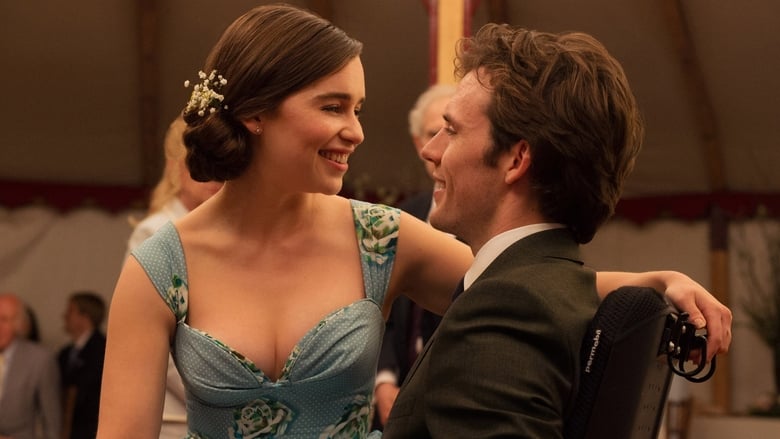

Me Before You
A bittersweet romance where vibrant, quirky optimism collides with cynical despair, painting a poignant portrait of love against the backdrop of life-altering choices.
Me Before You
Me Before You

"Live boldly."

01 June 2016 United States of America 110 min ⭐ 7.9 (12,856)
Director: Thea Sharrock
Cast: Emilia Clarke, Sam Claflin, Janet McTeer, Charles Dance, Brendan Coyle
Drama Romance
Love and Sacrifice Quality of Life vs. Sanctity of Life Personal Growth and Self-Actualization Social Class and Privilege
Budget: $20,000,000
Box Office: $207,945,075

Me Before You - Ending Explained

⚠️ Spoiler Analysis

The central twist of "Me Before You" is the revelation that Will Traynor is resolute in his decision to die by assisted suicide at Dignitas in Switzerland, and that Lou's six-month contract was a final attempt by his parents to change his mind. Despite falling deeply in love with Lou and finding moments of genuine happiness, Will's core belief that his life as a quadriplegic is an unacceptable, diminished existence does not waver. During a trip to Mauritius, a romantic high point for the couple, he confesses that his plan is unchanged. He argues that he cannot be the man she deserves and doesn't want her to lead a 'half-life' tied to his limitations.

Heartbroken, Lou initially leaves, feeling that her love has failed. However, she ultimately chooses to respect his autonomy and travels to Switzerland to be with him in his final moments, a testament to the depth of her love. The film concludes with Lou in Paris, reading a letter from Will. He has left her a substantial inheritance, not as a payment, but as a key to unlock the future he urged her to build. He encourages her to 'live boldly' and 'just live.' This ending solidifies the film's bittersweet theme: their love was real and transformative, but it couldn't change his fundamental decision. His final act is not one of despair alone, but a final act of love—pushing her towards a full life that he felt he could no longer have himself.

Alternative Interpretations

While the dominant interpretation of the film is a tragic romance that explores controversial themes, there are other ways to view its narrative. One alternative reading focuses less on the disability aspect and more on it being a story about profound personal autonomy. From this perspective, Will's decision is not a rejection of life with disability, but the ultimate assertion of control over his own destiny. Having lived a life defined by his own choices, he refuses to live a life where he feels powerless, and his final act is one of self-determination, which he believes is his right.

Another interpretation views the film primarily as a coming-of-age story for Louisa Clark. In this reading, Will Traynor acts as a tragic but necessary catalyst for Lou's transformation. His purpose in the narrative is to awaken her to her own potential and break her out of her self-imposed shell. His death, while heartbreaking, is the final push she needs to truly start living for herself. The story becomes less about his tragedy and more about her journey, with the inheritance he leaves her serving as a literal and metaphorical key to her new life.

A more critical interpretation suggests the film's message is inadvertently classist, arguing that Will's suffering is framed in the context of his lost privilege. His despair is not just about paralysis, but about no longer being the 'Master of the Universe' he once was. His solution—to give Lou the financial means to 'live boldly'—can be seen as reinforcing the idea that true freedom and happiness are attainable only through wealth, subtly undermining the theme that love and experience are what truly matter.