
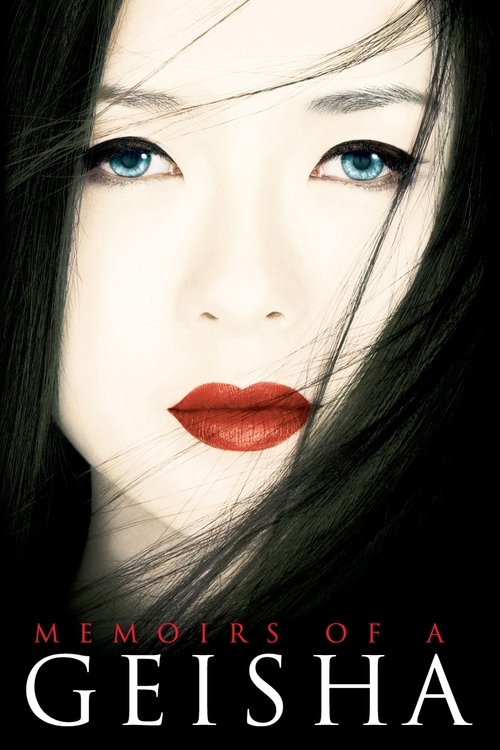
"A story like mine has never been told."
Memoirs of a Geisha - Symbolism & Philosophy
Symbols & Motifs
Water
Adaptability, resilience, hidden strength, and an unavoidable destiny.
Chiyo is told she has "too much water" in her personality [2.5]. Throughout the film, water represents her ability to survive hardships, flow around obstacles, and patiently "carve its way even through stone" to reach her ultimate goal.
The Chairman's Handkerchief
Hope, enduring love, and a tether to humanity.
Given to Chiyo during her lowest moment of despair, she keeps the handkerchief hidden for years. It serves as a physical reminder of the Chairman's kindness and her motivation to succeed in the geisha world.
Kimonos
Status, emotional states, and the "gilded cage" of the geisha.
The elaborate silk garments visually restrict the women while displaying their worth. Hatsumomo wears vibrant, chaotic reds and dark colors reflecting her fiery nature, while Sayuri's evolve into sophisticated, serene tones matching her watery nature.
The Snow Dance
Tragic love, suffering, and emotional suppression.
Sayuri performs a theatrical, highly emotional solo dance involving fake snow. It mirrors her own internal isolation and the agonizing purity of her unrequited love, channeling her private sorrow into a breathtaking public spectacle.
Philosophical Questions
To what extent do we control our own destiny?
The film constantly wrestles with fate. Chiyo is told her life is predetermined by her sale to the okiya. Yet, her identity as "water" suggests that while we may not choose our starting circumstances, we can still carve our own path through sheer will, patience, and adaptability [2.5].
Can true art exist when it is commodified?
Geishas are described as "moving works of art," yet their entire existence is tied to financial transactions and the desires of wealthy patrons. The film questions whether Sayuri's beautiful dances and conversations are genuine expressions of her soul or merely survival mechanisms in a deeply transactional society.
Is it possible to find happiness within an oppressive system without destroying it?
Unlike traditional Western narratives that demand the dismantling of an oppressive system, Sayuri finds her "happiness" by mastering the rules of her gilded cage. The film asks if finding a personal haven within a patriarchal, restrictive world is a victory, or simply a dressed-up form of surrender.
Core Meaning
The film explores the tension between predetermined destiny and self-determination, symbolized by water's ability to carve a path through stone. Director Rob Marshall portrays the geisha not as mere entertainers, but as tragic artists bound by extreme societal constraints, expected to sell their skills while denying their own emotions. Ultimately, the film is a story of resilience and the enduring power of hope, demonstrating how a single act of kindness can ripple through a person's life and give them the strength to survive the harshest of circumstances.