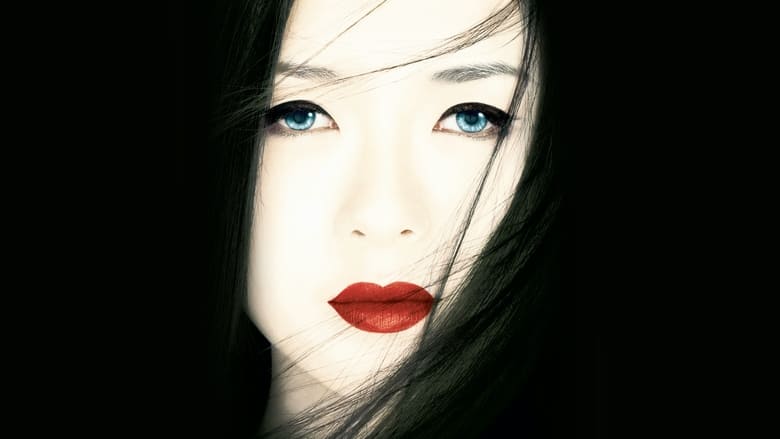
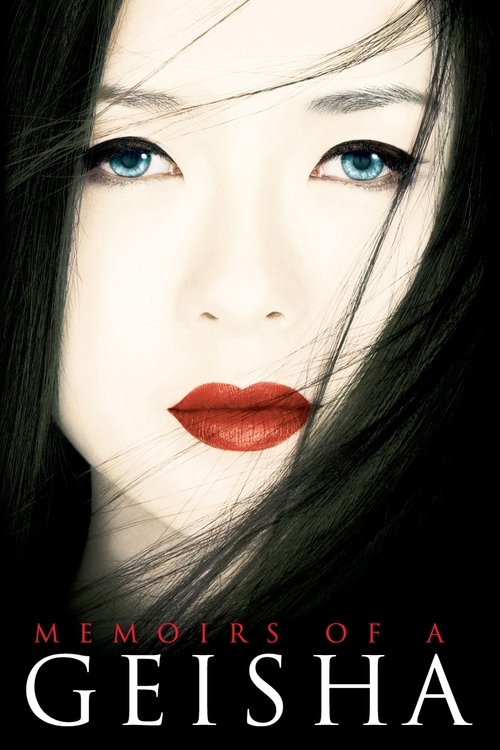
Memoirs of a Geisha
"A story like mine has never been told."
Overview
Set against the shifting landscape of Japan before and during World War II, Memoirs of a Geisha follows the journey of Chiyo, a young girl from an impoverished fishing village who is sold into a Kyoto geisha house. Stripped of her family and forced into servitude, she faces the extreme cruelty of the house's lead geisha, Hatsumomo. However, a chance encounter with a kind, wealthy Chairman ignites a spark of hope and gives her a singular purpose: to become a geisha of such renown that she might one day be a part of his world.
Under the mentorship of the elegant and strategic Mameha, Chiyo transforms into Sayuri, mastering the intricate arts of dance, music, and conversation to become the most celebrated geisha in the hanamachi. As she navigates a treacherous society of wealthy patrons, bitter rivalries, and strict traditions, Sayuri must suppress her own desires, living as a "moving work of art" whose heart remains a closely guarded secret.
The outbreak of World War II shatters the secluded, opulent world of the geisha, forcing Sayuri to flee to the countryside and endure years of hardship. When the war ends and a changed Japan emerges, she is summoned back to her former life, facing a final test of loyalty and the ultimate question of whether her lifelong devotion to the Chairman will finally lead to happiness or remain an impossible dream.
Core Meaning
The film explores the tension between predetermined destiny and self-determination, symbolized by water's ability to carve a path through stone. Director Rob Marshall portrays the geisha not as mere entertainers, but as tragic artists bound by extreme societal constraints, expected to sell their skills while denying their own emotions. Ultimately, the film is a story of resilience and the enduring power of hope, demonstrating how a single act of kindness can ripple through a person's life and give them the strength to survive the harshest of circumstances.
Thematic DNA
Destiny vs. Self-Determination
Chiyo is initially told her life is predetermined by her tragic circumstances, but she learns that her element is "water," which can carve its own path [2.5]. Her entire journey to become Sayuri is an active, determined effort to shape her own fate and reunite with the Chairman, despite the rigid, patriarchal rules of her society.
Beauty, Artifice, and Power
The world of the geisha is built on aesthetic perfection and illusion. Sayuri wields her beauty and artistic mastery as currency to gain influence and survive, yet this same beauty subjects her to intense objectification and control by wealthy male patrons.
Female Rivalry and Mentorship
The film highlights the harsh, competitive environment of the okiya (geisha house). This is vividly contrasted through Hatsumomo's abusive, jealous sabotage of Chiyo, and Mameha's calculated, guiding mentorship that ultimately transforms Chiyo into the legendary Sayuri.
The Impact of Small Acts of Kindness
The Chairman's simple act of buying a young, weeping Chiyo a shaved ice and offering her a handkerchief becomes the defining moment of her life. This singular moment of compassion sustains her through years of abuse, isolation, and war.
Character Analysis
Sayuri Nitta / Chiyo
Zhang Ziyi / Suzuka Ohgo
Motivation
To become successful enough to enter the world of the Chairman and win his love.
Character Arc
Transforms from an impoverished, enslaved young girl who tries to run away, into a compliant but secretly determined woman who masters the geisha arts to control her own destiny, ultimately surviving a world war to find love [2.1].
Hatsumomo
Gong Li
Motivation
To maintain her power, wealth, and status at all costs, driven by a deep bitterness over her own trapped existence.
Character Arc
Starts as the undisputed, tyrannical queen of the okiya. As Sayuri's star rises, Hatsumomo's jealousy and erratic behavior lead to a destructive downfall, ending in her expulsion after accidentally starting a fire.
Mameha
Michelle Yeoh
Motivation
To subtly dethrone Hatsumomo and fulfill a secret request from the Chairman to protect and elevate Sayuri.
Character Arc
Serves as a composed, highly successful geisha who takes Sayuri under her wing. She navigates the politics of the hanamachi expertly but ultimately loses her status during the war, relying on Sayuri's help in the aftermath.
The Chairman (Ken Iwamura)
Ken Watanabe
Motivation
To ensure Sayuri's success and happiness, while honoring his deep debts of loyalty to his friend Nobu.
Character Arc
Remains a distant, benevolent figure of wealth and influence. He secretly orchestrates Sayuri's rise to success through Mameha, suppressing his own feelings out of loyalty to his scarred business partner, Nobu, until the very end.
Nobu
Kōji Yakusho
Motivation
To claim Sayuri for himself, drawn to her straightforwardness and beauty, unaware of her devotion to his closest friend.
Character Arc
A gruff, battle-scarred businessman who despises traditional geisha theatrics but becomes intensely infatuated with Sayuri. He plans to become her danna (patron) until Sayuri intentionally alienates him to avoid the arrangement.
Symbols & Motifs
Water
Adaptability, resilience, hidden strength, and an unavoidable destiny.
Chiyo is told she has "too much water" in her personality [2.5]. Throughout the film, water represents her ability to survive hardships, flow around obstacles, and patiently "carve its way even through stone" to reach her ultimate goal.
The Chairman's Handkerchief
Hope, enduring love, and a tether to humanity.
Given to Chiyo during her lowest moment of despair, she keeps the handkerchief hidden for years. It serves as a physical reminder of the Chairman's kindness and her motivation to succeed in the geisha world.
Kimonos
Status, emotional states, and the "gilded cage" of the geisha.
The elaborate silk garments visually restrict the women while displaying their worth. Hatsumomo wears vibrant, chaotic reds and dark colors reflecting her fiery nature, while Sayuri's evolve into sophisticated, serene tones matching her watery nature.
The Snow Dance
Tragic love, suffering, and emotional suppression.
Sayuri performs a theatrical, highly emotional solo dance involving fake snow. It mirrors her own internal isolation and the agonizing purity of her unrequited love, channeling her private sorrow into a breathtaking public spectacle.
Memorable Quotes
My mother always said my sister Satsu was like wood; as rooted to the earth as a sakura tree. But she told me I was like water. Water can carve its way even through stone... and when trapped, water makes a new path.
— Sayuri (Voiceover)
Context:
Spoken in the opening narration as the young girls are taken from their home and sold in Kyoto.
Meaning:
Establishes the central metaphor of Sayuri's character. She is adaptable, patient, and possesses a quiet, unstoppable strength that will allow her to survive her enslavement [2.5].
Remember Chiyo, geisha are not courtesans, and we're not wives. We sell our skills, not our bodies. We create another secret world, a place only of beauty. The very word 'geisha' means artist, and to be a geisha is to be judged as a moving work of art.
— Mameha
Context:
Mameha explains the reality of their profession to Chiyo as she begins her intensive training.
Meaning:
Defines the true nature and strict boundaries of the geisha profession, contrasting Western misconceptions and establishing the emotional sacrifices required.
Every step I have taken, since I was that child on the bridge, has been to bring myself closer to you.
— Sayuri
Context:
Spoken during the emotional climax when Sayuri finally reunites with the Chairman in the garden and confesses her love.
Meaning:
The culmination of Sayuri's lifelong motivation, finally expressing the hidden truth that dictated her entire existence and every hardship she endured.
The heart dies a slow death, shedding each hope like leaves until one day there are none. No hopes. Nothing remains.
— Sayuri (Voiceover)
Context:
Narrated during the bleak years of World War II when Sayuri is stripped of her geisha status, working in the mountains, and believing she has lost the Chairman forever.
Meaning:
Illustrates the agonizing despair of living a life without agency, where dreams are systematically crushed by the harsh realities of the world.
Philosophical Questions
To what extent do we control our own destiny?
The film constantly wrestles with fate. Chiyo is told her life is predetermined by her sale to the okiya. Yet, her identity as "water" suggests that while we may not choose our starting circumstances, we can still carve our own path through sheer will, patience, and adaptability [2.5].
Can true art exist when it is commodified?
Geishas are described as "moving works of art," yet their entire existence is tied to financial transactions and the desires of wealthy patrons. The film questions whether Sayuri's beautiful dances and conversations are genuine expressions of her soul or merely survival mechanisms in a deeply transactional society.
Is it possible to find happiness within an oppressive system without destroying it?
Unlike traditional Western narratives that demand the dismantling of an oppressive system, Sayuri finds her "happiness" by mastering the rules of her gilded cage. The film asks if finding a personal haven within a patriarchal, restrictive world is a victory, or simply a dressed-up form of surrender.
Alternative Interpretations
A Tale of Grooming vs. Romantic Destiny: While the film presents the relationship between Sayuri and the Chairman as an epic, fated romance, modern critical interpretations often view it through a much darker lens. The Chairman meets Chiyo when she is a vulnerable, crying 9-year-old child. It is later revealed that he secretly orchestrated her entire training to mold her into an elite geisha. From this perspective, the story is less about a woman carving her own destiny, and more about a wealthy, older man grooming an impoverished child to become his idealized mistress.
Hatsumomo as the True Victim: Although Hatsumomo is framed as the film's primary antagonist, an alternative reading views her as the most tragic and honest character in the story. Unlike Mameha, who quietly submits to the rules of the patriarchal system, or Sayuri, who uses it to achieve her singular romantic goal, Hatsumomo actively rebels against her imprisonment. Her madness and cruelty are the direct result of a system that denies her true love and commodifies her body. Her fiery destruction of the okiya can be seen as an act of desperate liberation.
Cultural Impact
Memoirs of a Geisha was a major Hollywood production that brought a highly stylized vision of 1930s Japanese culture to Western audiences. The film achieved significant technical success, winning three Academy Awards for Best Cinematography, Best Art Direction, and Best Costume Design, cementing its legacy as a masterclass in visual storytelling and lush period aesthetics.
However, the film generated intense cultural controversy, primarily regarding its casting. The decision by director Rob Marshall and producer Steven Spielberg to cast Chinese actresses (Zhang Ziyi and Gong Li) and a Malaysian-Chinese actress (Michelle Yeoh) in the lead Japanese roles sparked outrage in both Japan and China. In Japan, critics felt the film presented an orientalist, "chocolate-box" tourist view of their culture that merged disparate Asian elements and misrepresented geisha traditions. In China, lingering historical hostilities over Japanese war crimes during WWII made the sight of beloved Chinese actresses playing Japanese entertainers highly controversial, leading the Chinese government to ban the film.
Despite the backlash, the film influenced global fashion and pop culture, sparking a brief Western fascination with kimonos and Japanese aesthetics. It remains a polarizing work—praised for its breathtaking score by John Williams and its stunning cinematography, but heavily critiqued by scholars for perpetuating Western stereotypes of the East and prioritizing Hollywood melodrama over historical authenticity.
Audience Reception
Audience reception for Memoirs of a Geisha was largely divided between deep appreciation for its aesthetics and frustration with its narrative execution. Audiences universally praised the film's breathtaking visual style. The intricate kimono designs, Dion Beebe's lush cinematography, and John Williams' evocative, haunting score were frequently cited as the film's strongest assets, creating an immersive, dreamlike atmosphere.
However, the film faced significant criticism for its pacing and emotional depth. Many viewers felt it prioritized "style over substance," reducing Arthur Golden's rich novel to a conventional Hollywood soap opera. The casting controversy was a major point of contention for Asian audiences, who felt the interchangeable casting of Asian ethnicities undermined the specific cultural nuances of the story. Furthermore, Western critics often pointed out that the protagonist, Sayuri, felt passive—waiting years to be "rescued" by a wealthy patron—making it difficult for modern audiences to fully invest in her romantic triumph.
Overall, the film holds a 35% Tomatometer score from critics, but a much higher 83% audience score on Rotten Tomatoes, indicating that mainstream viewers generally enjoyed it as an epic, escapist romance, even as cinephiles and cultural critics docked points for its orientalist lens and melodramatic plot.
Interesting Facts
- The three leading actresses (Zhang Ziyi, Gong Li, and Michelle Yeoh) are not Japanese, but Chinese and Malaysian-Chinese. They were put through a rigorous 'geisha boot camp' to learn traditional Japanese music, dance, and tea ceremonies [1.1].
- Due to the casting of Chinese actresses as Japanese geishas, the film sparked significant controversy and was ultimately banned from theatrical release in mainland China.
- The film was actually shot predominantly in California. A massive, highly detailed replica of Kyoto's Gion district was built on a ranch in Ventura County, while some specific scenes were filmed at actual locations in Kyoto.
- Famed composer John Williams wrote the score for the film, utilizing traditional Japanese instruments like the shakuhachi and koto to create an authentic atmosphere.
- Costume designer Colleen Atwood designed the intricate kimonos for the film. She intentionally prioritized visual storytelling and contemporary aesthetics over strict historical accuracy, winning an Academy Award for her work.
Easter Eggs
Yamashiro Restaurant Location
The famous Cal-Asian restaurant Yamashiro in Hollywood was used for two key locations: the spot where young Chiyo takes dancing lessons, and later for the large party celebrating Sayuri's debut. The restaurant has a long history in Hollywood, appearing in other Asia-centric films like Sayonara (1957) [1.10].
The Snow Dance Narrative
The highly theatrical dance Sayuri performs on stage tells the story of a woman who suspects her husband of infidelity, waits outside in the snow to catch him leaving his mistress, and succumbs to the elements. This serves as a grim foreshadowing of Hatsumomo's tragic, self-destructive fate.
⚠️ Spoiler Analysis
Click to reveal detailed analysis with spoilers
Frequently Asked Questions
Explore More About This Movie
Dive deeper into specific aspects of the movie with our detailed analysis pages
Comments (0)
No comments yet. Be the first to share your thoughts!