Memories of Murder
A haunting crime thriller where the oppressive atmosphere of a rural Korean town mirrors the detectives' frustrating descent into obsession and impotence.
Memories of Murder
Memories of Murder

살인의 추억

"The worst of them will stay with you... forever."

25 April 2003 South Korea 131 min ⭐ 8.1 (4,224)
Director: Bong Joon Ho
Cast: Song Kang-ho, Kim Sang-kyung, Kim Roi-ha, Song Jae-ho, Byun Hee-bong
Drama Crime Thriller
The Fallibility of Justice and Authority The Clash Between Intuition and Logic The Elusiveness of Truth Memory and Trauma
Budget: $2,800,000
Box Office: $26,000,000

Memories of Murder - Ending Explained

⚠️ Spoiler Analysis

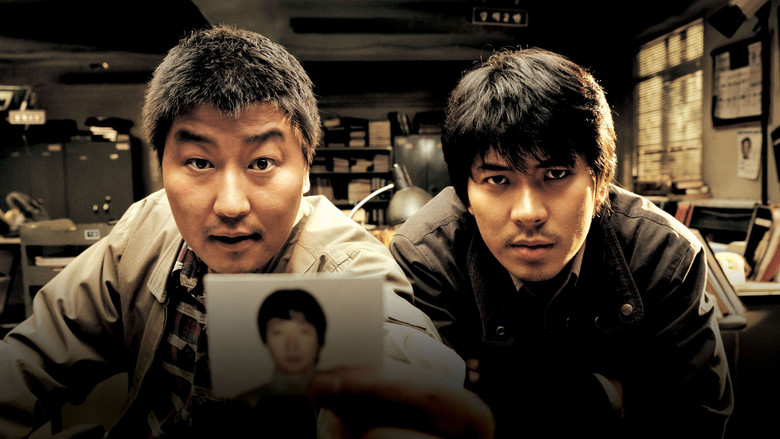
The central twist of "Memories of Murder" is that there is no resolution. The investigation, which the audience and the detectives believe is building towards a final confrontation and reveal, ultimately collapses into failure. After pursuing multiple dead ends, the detectives finally corner their most promising suspect, Park Hyeon-gyu. Seo Tae-yoon, having abandoned his logical principles in a fit of rage and grief over the murder of a schoolgirl he knew, is about to execute Hyeon-gyu in a tunnel.

At that moment, Park Doo-man arrives with the long-awaited DNA results from the United States, which they believe will definitively prove Hyeon-gyu's guilt. In a devastating reversal, the document states the DNA is not a match; the results are inconclusive. This revelation shatters the detectives. Hyeon-gyu walks free, disappearing into the darkness of the tunnel, his guilt or innocence forever an open question within the film's narrative.

The film then jumps forward to 2003. Park Doo-man is no longer a cop but a salesman with a family. He happens to visit the location of the first murder and is told by a small girl that another man had recently been there, reminiscing about something he had done there a long time ago. Park, realizing it was the killer, asks what he looked like. The girl replies, "Kind of plain. Just ordinary." This is the film's final, chilling revelation: the monster they were hunting was not a discernible fiend, but an average person hiding in plain sight. Park then looks directly into the camera, a haunting acknowledgment that the killer was never caught and could be anyone—even a member of the audience watching the film.

Alternative Interpretations

The film's ambiguous ending has led to several interpretations, primarily centered on the final scene and the identity of the killer.

  • The Social Commentary Interpretation: The most widely accepted interpretation is that the killer's identity is secondary to the film's critique of the societal and systemic failures of 1980s South Korea. The inability to catch the killer is a metaphor for the incompetence and corruption of the authoritarian government. The final gaze into the camera is not just about finding one man, but about confronting a society that allows such evil to exist, unseen. The killer is "ordinary" because the potential for such violence is latent within the society itself.
  • The Literal Interpretation: Before the real killer was caught, many viewers debated whether the final suspect, Park Hyeon-gyu, was indeed the murderer. The inconclusive DNA evidence could mean he was innocent, or it could be another failure of the bungled investigation (e.g., contaminated evidence). His calm demeanor could be a sign of innocence or the chilling composure of a psychopath. The film deliberately leaves this unresolved, forcing the viewer to grapple with the uncertainty that haunted the real detectives.
  • The Metaphysical Interpretation: Some viewers interpret the film on a more philosophical level, seeing it as a story about the inherent unknowability of evil. The detectives' journey from certainty (Park's intuition, Seo's faith in facts) to utter despair reflects a confrontation with a chaos that logic and belief cannot penetrate. The killer is less a person and more an abstract force of brutal randomness that defies explanation. The final stare is a moment of existential horror, a recognition that evil is an ordinary, inexplicable part of the human landscape.