
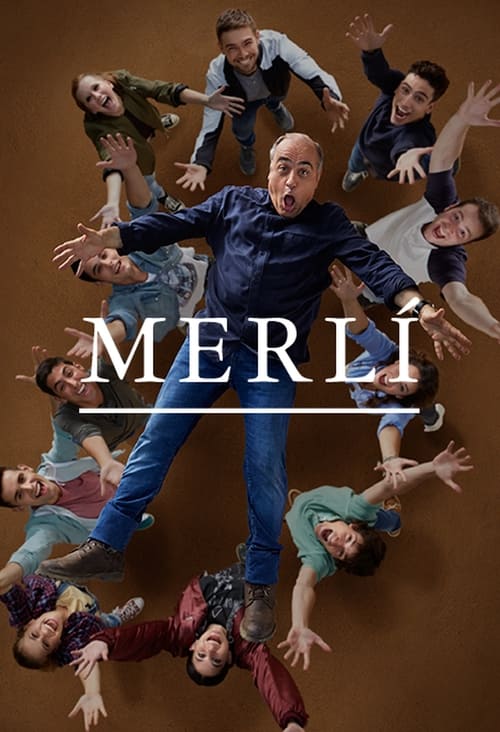
Cast: Francesc Orella, Carlos Cuevas, David Solans, Elisabet Casanovas, Adrian Grösser
Merlí — Characters & Cast
Character Analysis
Merlí Bergeron
Francesc Orella
Motivation
Merlí's primary motivation is to provoke critical thinking and challenge the status quo, both in the education system and in his students' minds. He is driven by a narcissistic need to be the center of attention and the smartest person in the room, but this is coupled with a genuine desire to see young people liberate themselves from conformity. His motivation evolves to include a more paternalistic, albeit unconventional, care for his students' well-being.
Character Arc
Merlí begins as a brilliant but arrogant and ethically questionable teacher, forced into his role by circumstance. Throughout the series, his primary arc is not one of radical personal change, but of deepening impact. While he remains flawed—often manipulative and self-serving—his genuine passion for philosophy and his profound effect on his students are undeniable. He learns to connect with his son, Bruno, on a deeper level and is forced to confront the consequences of his methods. His ultimate legacy is cemented not in his own perfection, but in the intellectual fire he ignites in his students, particularly Pol.
Pol Rubio
Carlos Cuevas
Motivation
Initially, Pol is motivated by a desire to appear strong and mask his vulnerability and difficult family situation. Merlí provides him with an intellectual escape and a sense of purpose. His motivation shifts from mere survival and posturing to a genuine thirst for knowledge and self-understanding. He is driven to become someone better than his circumstances would suggest, inspired entirely by his mentor.
Character Arc
Pol starts as a tough, popular, and seemingly indifferent student from a troubled home who repeats courses. Initially resistant, he is captivated by Merlí's teaching and becomes his most brilliant and devoted student. His arc is one of the most significant in the series. He transforms from a hot-headed teen into a passionate, intellectually curious young man. He grapples intensely with his sexuality, particularly his feelings for Bruno, and his identity. By the end of the series, he has decided to follow in Merlí's footsteps, a journey that continues in the spin-off, Merlí: Sapere Aude.
Bruno Bergeron
David Solans
Motivation
Bruno is primarily motivated by a need for connection and love. He seeks the approval of his often-absent father and yearns for the romantic affection of Pol. His journey is about learning that his self-worth cannot be dependent on others. His motivation evolves from seeking external validation to finding internal acceptance and the courage to pursue his own happiness.
Character Arc
Bruno's arc is defined by his struggle for identity and acceptance, both as Merlí's son and as a gay teenager. Initially embarrassed by his father, he slowly comes to appreciate his influence. His central conflict is his unrequited, and later complicated, love for his best friend, Pol. Throughout the series, Bruno grows from an insecure and sometimes petulant teen into a more confident and self-aware young man. He learns to stand up for himself, confronts his feelings openly, and ultimately makes the decision to forge his own path, separate from both his father and Pol, by choosing to live in Rome.
Tània Illa
Elisabet Casanovas
Motivation
Tània is motivated by a deep desire for love and to be seen as desirable. She is incredibly loyal to her friends, and much of her action is driven by supporting them. As the series progresses, her motivation shifts towards finding her own voice and happiness, culminating in her budding relationship with Pol at the end of the series, where she demands to be treated as more than just a friend.
Character Arc
Tània begins as the kind, reliable, and often overlooked best friend, particularly to Bruno. She is insecure about her body and often feels invisible to boys. Her arc is a quiet but powerful journey of self-esteem. Over the three seasons, she learns to value herself beyond her friendships and romantic prospects. She becomes a more assertive and confident young woman, navigating the complexities of her close but sometimes fraught relationships with Pol and Bruno. She represents the struggle for self-worth in a world that often judges based on superficial standards.
Cast
Explore More About This Movie
Dive deeper into specific aspects of the movie with our detailed analysis pages