"There can be no understanding between the hands and the brain unless the heart acts as mediator."
Director: Fritz Lang
Cast: Gustav Fröhlich, Brigitte Helm, Alfred Abel, Rudolf Klein-Rogge, Theodor Loos
Metropolis — Characters & Cast
Character Analysis
Freder Fredersen
Gustav Fröhlich
Motivation
Initially driven by his infatuation with Maria, Freder's motivation quickly evolves into a profound sense of justice and empathy for the oppressed workers. He is horrified by their dehumanizing conditions and feels a deep, personal responsibility to rectify the wrongs of his father's system and prevent the city's destruction.
Character Arc
Freder begins as a naive and privileged son of the elite, oblivious to the suffering that powers his idyllic life. His journey is one of awakening, initiated by his encounter with Maria. He descends into the workers' world, experiences their hardship firsthand, and is radicalized by the injustice he sees. He transforms from an idle aristocrat into a compassionate activist, driven to bridge the chasm between the classes. His arc culminates in him fulfilling Maria's prophecy by becoming the "heart," the mediator who physically and symbolically unites the head (his father) and the hands (the workers).
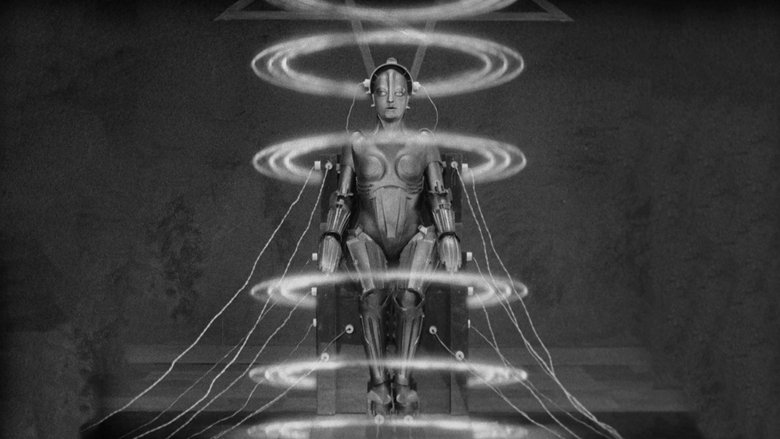
Maria / The Machine-Man
Brigitte Helm
Motivation
The real Maria is motivated by faith, compassion, and a belief in peaceful reconciliation. She wants to uplift the workers and bring unity to Metropolis without violence. The Machine-Man, in contrast, is programmed by Rotwang to incite chaos and rebellion, motivated by its creator's desire for revenge against Joh Fredersen and the destruction of his city.
Character Arc
Maria begins as a saintly, prophetic figure, preaching patience and hope to the workers, advocating for a peaceful mediator. Her arc involves being violently replaced by her technological double. After being kidnapped by Rotwang, her likeness is stolen and used to create the false Maria—a chaotic, seductive agent of destruction. While the real Maria fights to save the workers' children from the flood caused by the ensuing riot, the false Maria is consumed by the mob's fury. In the end, the real Maria returns to her role as a moral guide, witnessing Freder's fulfillment of her prophecy.
Joh Fredersen
Alfred Abel
Motivation
His primary motivation is maintaining absolute power and control over Metropolis. He is driven by a cold logic that prioritizes the city's efficiency above all else. He fears any form of dissent or rebellion that could threaten his perfectly ordered system. His actions are guided by a misguided belief that his oppressive control is necessary for the city's stability.
Character Arc
Joh Fredersen is the cold, calculating master of Metropolis, the "head" who views his workers not as people but as components of his machine. His arc is a slow, painful journey towards humility. He initially seeks to crush the workers' spirit through manipulation. However, his plan backfires spectacularly, leading to the city's near-destruction and, most importantly, endangering his son, Freder. Witnessing Freder's peril and the chaos he has unleashed forces him to recognize his own fallibility and the importance of human connection. He begins as an unfeeling tyrant but ends by accepting the mediation of his son, the "heart," and shaking the hand of his foreman.
C.A. Rotwang
Rudolf Klein-Rogge
Motivation
Rotwang is driven by a deep-seated desire for revenge against Joh Fredersen, who married Hel, the woman Rotwang loved. He is also motivated by a twisted ambition to overcome death and human limitations through his science, specifically by creating a robot to "resurrect" Hel. His actions are a blend of personal vendetta and scientific hubris.
Character Arc
Rotwang is a brilliant but tormented inventor. His arc is one of vengeful obsession. Once a rival of Fredersen for the love of a woman named Hel, he has channeled his grief and resentment into his scientific creations. When Fredersen asks him to help suppress the workers, Rotwang sees an opportunity for revenge. He agrees to the plan but secretly programs the robot to destroy Fredersen, his son, and the entire city. His obsession descends into complete madness, as he begins to believe the real Maria is his creation. His arc ends tragically when he chases Maria to the cathedral rooftop, fights with Freder, and falls to his death.
Cast
Explore More About This Movie
Dive deeper into specific aspects of the movie with our detailed analysis pages