Metropolis
A German Expressionist sci-fi dystopia breathes with the rhythmic pulse of oppressive machinery, evoking a chilling yet awe-inspiring vision of a fractured future.
Metropolis

Metropolis

"There can be no understanding between the hands and the brain unless the heart acts as mediator."

06 February 1927 Germany 153 min ⭐ 8.1 (2,943)
Director: Fritz Lang
Cast: Gustav Fröhlich, Brigitte Helm, Alfred Abel, Rudolf Klein-Rogge, Theodor Loos
Drama Science Fiction
Class Struggle and Social Inequality Humanity vs. Dehumanization and Technology Reconciliation through Mediation Biblical and Religious Allegory
Budget: $5,300,000
Box Office: $1,350,322

Overview

Set in the futuristic, dystopian city of Metropolis in the year 2026, society is starkly divided into two classes: the wealthy thinkers and planners who live in luxurious skyscrapers, and the oppressed workers who toil underground to power the city. The city's master is the ruthless Joh Fredersen. His son, Freder, lives a life of privilege until he encounters Maria, a prophetic and compassionate figure from the workers' world.

Haunted by her and the brutal conditions he witnesses in the machine halls, Freder descends into the depths, seeking to understand the workers' plight. Meanwhile, his father, fearing an uprising, conspires with the brilliant but unhinged inventor Rotwang. Fredersen orders Rotwang to create a robotic double of Maria to manipulate the workers and quell their revolutionary spirit. However, Rotwang has his own vengeful agenda, setting in motion a plan that threatens to destroy the entire city.

Core Meaning

The central message of Fritz Lang's Metropolis is encapsulated in its final intertitle: "The Mediator Between the Head and the Hands Must Be the Heart." This theme posits that for a society to function harmoniously, there must be a compassionate and empathetic connection between the ruling class (the "head," or thinkers) and the working class (the "hands," or laborers). The film critiques the dehumanizing effects of industrialization and unchecked capitalism, which create a vast chasm between the classes. It argues against both totalitarian oppression and chaotic, destructive revolution, suggesting instead a path of mutual understanding and cooperation. Ultimately, the film serves as a moral fable, advocating for humanity and empathy to bridge societal divides, portraying love and compassion as the essential forces needed to unite a fractured world.

Thematic DNA

Class Struggle and Social Inequality 35%
Humanity vs. Dehumanization and Technology 30%
Reconciliation through Mediation 25%
Biblical and Religious Allegory 10%

Class Struggle and Social Inequality

The film's most prominent theme is the extreme division between the wealthy elite and the exploited workers. The vertical architecture of Metropolis visually represents this hierarchy: the thinkers reside in opulent skyscrapers while the workers are confined to a grim, subterranean world. This stark contrast highlights the dehumanization of the laborers, who are depicted as cogs in a vast machine, moving in rhythmic, oppressed unison. The narrative explores the inevitable conflict that arises from this inequality, as the workers, inspired first by Maria's hope and later by the Machine-Man's incitement, are driven to revolt against their oppressors.

Humanity vs. Dehumanization and Technology

Metropolis examines the fear of industrialization and the potential for technology to strip individuals of their humanity. The workers are physically and spiritually crushed by the monstrous machines they operate, most notably the 'Moloch' machine, which Freder hallucinates as a demonic entity demanding human sacrifice. This theme is further embodied by the creation of the Machine-Man, a robot that represents the complete distortion of humanity. The false Maria, a seductive and chaotic being, symbolizes how technology can be used for manipulation and destruction, contrasting sharply with the authentic human compassion of the real Maria.

Reconciliation through Mediation

The film's core message revolves around the necessity of a mediator—the "heart"—to bridge the gap between the ruling class ("head") and the working class ("hands"). Freder, the son of the city's ruler, embodies this role as he develops empathy for the workers and seeks to connect the two disparate worlds. The film rejects violent revolution as a solution, showing how the workers' destructive uprising, instigated by the false Maria, only harms themselves by flooding their own city. The narrative argues that true progress comes not from conflict, but from understanding and compassion, culminating in the final scene where Freder unites the hands of his father and the lead worker.

Biblical and Religious Allegory

The film is rich with religious symbolism. Maria's sermon to the workers in the catacombs retells the story of the Tower of Babel, equating the planners of Metropolis with the arrogant builders of the tower who cared nothing for their laborers. Maria herself is a messianic, Madonna-like figure who preaches peace and patience. Freder can be seen as a Christ-like figure, the son of the city's god-like ruler who descends to the underworld to save the people. The false Maria, in contrast, is depicted as the Whore of Babylon, inciting sin and chaos among the upper class and destruction among the workers.

Character Analysis

Freder Fredersen

Gustav Fröhlich

Archetype: The Hero / The Mediator
Key Trait: Idealistic

Motivation

Initially driven by his infatuation with Maria, Freder's motivation quickly evolves into a profound sense of justice and empathy for the oppressed workers. He is horrified by their dehumanizing conditions and feels a deep, personal responsibility to rectify the wrongs of his father's system and prevent the city's destruction.

Character Arc

Freder begins as a naive and privileged son of the elite, oblivious to the suffering that powers his idyllic life. His journey is one of awakening, initiated by his encounter with Maria. He descends into the workers' world, experiences their hardship firsthand, and is radicalized by the injustice he sees. He transforms from an idle aristocrat into a compassionate activist, driven to bridge the chasm between the classes. His arc culminates in him fulfilling Maria's prophecy by becoming the "heart," the mediator who physically and symbolically unites the head (his father) and the hands (the workers).

Maria / The Machine-Man

Brigitte Helm

Archetype: The Saint / The Temptress (Doppelgänger)
Key Trait: Dualistic (Hopeful/Destructive)

Motivation

The real Maria is motivated by faith, compassion, and a belief in peaceful reconciliation. She wants to uplift the workers and bring unity to Metropolis without violence. The Machine-Man, in contrast, is programmed by Rotwang to incite chaos and rebellion, motivated by its creator's desire for revenge against Joh Fredersen and the destruction of his city.

Character Arc

Maria begins as a saintly, prophetic figure, preaching patience and hope to the workers, advocating for a peaceful mediator. Her arc involves being violently replaced by her technological double. After being kidnapped by Rotwang, her likeness is stolen and used to create the false Maria—a chaotic, seductive agent of destruction. While the real Maria fights to save the workers' children from the flood caused by the ensuing riot, the false Maria is consumed by the mob's fury. In the end, the real Maria returns to her role as a moral guide, witnessing Freder's fulfillment of her prophecy.

Joh Fredersen

Alfred Abel

Archetype: The Authoritarian Ruler
Key Trait: Ruthless

Motivation

His primary motivation is maintaining absolute power and control over Metropolis. He is driven by a cold logic that prioritizes the city's efficiency above all else. He fears any form of dissent or rebellion that could threaten his perfectly ordered system. His actions are guided by a misguided belief that his oppressive control is necessary for the city's stability.

Character Arc

Joh Fredersen is the cold, calculating master of Metropolis, the "head" who views his workers not as people but as components of his machine. His arc is a slow, painful journey towards humility. He initially seeks to crush the workers' spirit through manipulation. However, his plan backfires spectacularly, leading to the city's near-destruction and, most importantly, endangering his son, Freder. Witnessing Freder's peril and the chaos he has unleashed forces him to recognize his own fallibility and the importance of human connection. He begins as an unfeeling tyrant but ends by accepting the mediation of his son, the "heart," and shaking the hand of his foreman.

C.A. Rotwang

Rudolf Klein-Rogge

Archetype: The Mad Scientist
Key Trait: Vengeful

Motivation

Rotwang is driven by a deep-seated desire for revenge against Joh Fredersen, who married Hel, the woman Rotwang loved. He is also motivated by a twisted ambition to overcome death and human limitations through his science, specifically by creating a robot to "resurrect" Hel. His actions are a blend of personal vendetta and scientific hubris.

Character Arc

Rotwang is a brilliant but tormented inventor. His arc is one of vengeful obsession. Once a rival of Fredersen for the love of a woman named Hel, he has channeled his grief and resentment into his scientific creations. When Fredersen asks him to help suppress the workers, Rotwang sees an opportunity for revenge. He agrees to the plan but secretly programs the robot to destroy Fredersen, his son, and the entire city. His obsession descends into complete madness, as he begins to believe the real Maria is his creation. His arc ends tragically when he chases Maria to the cathedral rooftop, fights with Freder, and falls to his death.

Symbols & Motifs

The Tower of Babel

Meaning:

The Tower of Babel symbolizes the hubris and ambition of the ruling class and the disastrous disconnect between the planners and the laborers. Joh Fredersen's central office building is even named the "New Tower of Babel." In Maria's sermon, she uses the biblical story to illustrate how a great vision can fail when the "head" (the dreamers) and the "hands" (the builders) do not understand or care for one another, speaking different languages of purpose and experience.

Context:

The symbol is most explicitly used during Maria's sermon to the workers in the catacombs. She narrates the ancient legend as a direct parallel to their own situation in Metropolis, explaining why a mediator is needed to bridge the gap between the thinkers and the workers.

The Moloch Machine

Meaning:

The Moloch machine symbolizes the dehumanizing, sacrificial nature of industrial capitalism. Moloch is an ancient deity associated with child sacrifice. In the film, this machine consumes workers, representing how the industrial system feeds on human life for its own sustenance. It is the embodiment of technology as a monstrous, oppressive force.

Context:

Early in the film, Freder witnesses a horrific explosion at a massive machine. Overwhelmed, he has a terrifying hallucination where the machine transforms into the monstrous, temple-like head of Moloch, with workers being fed into its fiery maw. This vision awakens him to the true horror of the workers' existence.

The Machine-Man (Maschinenmensch)

Meaning:

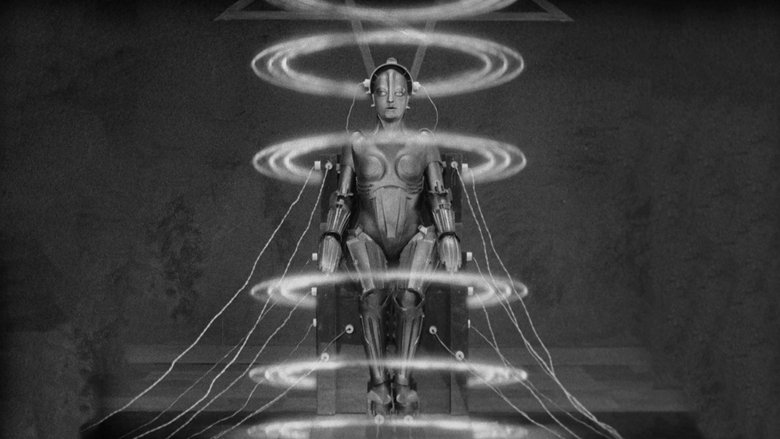
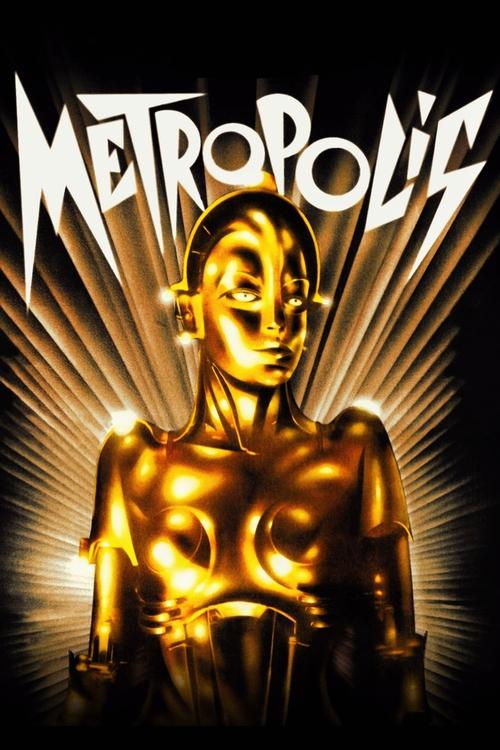
The Machine-Man, particularly in its guise as the false Maria, symbolizes the seductive and destructive potential of technology when devoid of a soul or heart. It represents the duality of creation: technology can be a tool for progress or a catalyst for chaos. The robot is both a scientific marvel and a monstrous perversion of humanity, capable of inciting lust, riot, and ruin.

Context:

The robot is created by Rotwang, initially as a resurrection of his lost love, Hel. Joh Fredersen commands him to give it Maria's likeness to sow discord. Its transformation is a key sequence. As the false Maria, it performs a seductive dance for the upper class and later preaches violent revolution to the workers, leading them to destroy the city's machines.

The Pentagram

Meaning:

The pentagram symbolizes the occult, dark, and unnatural forces associated with Rotwang's science. In contrast to the Christian crosses behind the real Maria in the catacombs, the pentagram marks Rotwang's laboratory as a place of anti-religious and dangerous creation. It visually aligns his technological prowess with black magic, suggesting his creation of the Machine-Man is a transgression against the natural order.

Context:

A large, glowing pentagram is prominently displayed on the wall of Rotwang's laboratory, notably behind the Machine-Man as it sits inanimate. This symbol is present during the robot's creation and transformation, framing the act as something mystical and sinister.

Memorable Quotes

The Mediator Between the Head and the Hands Must Be the Heart.

— Intertitle

Context:

This line appears as an intertitle at both the very beginning and the end of the film, framing the narrative and explicitly stating its intended message to the audience.

Meaning:

This is the film's central thesis and moral. It argues that logic and labor, or the ruling class and the working class, cannot be reconciled without empathy, compassion, and mutual understanding. It summarizes the entire philosophical message of the story.

We shall build a tower that will reach to the stars!... But those who toiled knew nothing of the dreams of those who planned.

— Maria

Context:

Maria says this while addressing the workers in the catacombs deep beneath Metropolis. She uses the biblical allegory to explain their own plight and to instill the idea that a "mediator" is needed to connect the two divided classes.

Meaning:

This quote, part of the retelling of the Tower of Babel story, illustrates the fundamental disconnect between the visionaries and the laborers in Metropolis. It highlights how ambition without communication and empathy for the workforce is doomed to create conflict and suffering rather than true greatness.

Let the machines starve, you fools! Let them die! Kill them - the machines!

— The Machine-Man (as Maria)

Context:

The false Maria shouts this to a frenzied crowd of workers, turning their despair into rage. This speech directly leads them to abandon their posts and attack the Heart Machine, which catastrophically floods their underground city.

Meaning:

This quote represents the perversion of Maria's message of peace into a call for violent, anarchic destruction. It is the moment the robot incites the workers to revolution, not for liberation, but for pure chaos. It demonstrates the destructive power of demagoguery and mob mentality.

Philosophical Questions

What is the role of technology in human society, and can it exist without dehumanizing its creators?

The film portrays technology as a double-edged sword. On one hand, it creates the magnificent city of Metropolis; on the other, it enslaves the working class, turning them into extensions of the machinery. The Moloch machine represents technology as a monstrous, sacrificial god. The Machine-Man further explores this by showing how technology can perfectly imitate humanity but lack a soul, becoming a tool for immense destruction. Metropolis asks whether humanity can control its creations or if it is destined to be controlled by them, suggesting that technology without a guiding "heart" or moral compass leads inevitably to oppression and disaster.

Can true reconciliation between social classes be achieved without fundamentally altering the structure of power?

The film's central message advocates for mediation and empathy—the "heart"—to unite the ruling "head" and the working "hands." However, the conclusion is ambiguous on this point. Joh Fredersen agrees to cooperate, but he remains the master of Metropolis. The workers gain a voice, but the system of inequality is not dismantled. The film raises the question of whether a change of heart in the powerful is enough to create lasting justice, or if it's a naive solution that papers over the cracks of a fundamentally broken and exploitative system.

What is the relationship between individual identity and the collective mob?

Metropolis contrasts the individual's journey with the actions of the masses. Freder's individual awakening drives the narrative of reconciliation. The workers, however, are often shown as a faceless, uniform collective, easily swayed from passive suffering to destructive rage by a charismatic leader. The film explores how quickly a crowd can become a mindless mob, losing all reason in a frenzy of destruction, as seen when they celebrate wrecking the machines while their children are drowning. It questions the nature of collective action and warns of its potential to become an irrational force, divorced from the well-being of the individuals within it.

Alternative Interpretations

Despite its seemingly straightforward moral, Metropolis has been subject to various and often conflicting interpretations, particularly regarding its ending and political message. Many critics, and even Fritz Lang himself later in life, found the film's resolution—"the heart" as mediator—to be overly simplistic and childish for a complex social problem.

A Fascist Reading: Some interpretations, notably by film theorist Siegfried Kracauer, have viewed the film's ending as pre-fascist. This reading argues that the reconciliation between labor and capital doesn't empower the workers but rather co-opts their revolutionary energy into the existing power structure. The industrialist, Joh Fredersen, does not relinquish his authority; instead, the workers are pacified by a charismatic mediator (Freder), and the totalitarian system remains intact, merely managed with a more compassionate face. This interpretation sees the finale not as a true union of equals but as the establishment of a corporatist state where the collective soul is managed by an unchallenged leader.

A Critique of Revolution: Another interpretation focuses on the film's depiction of the workers' revolt. Rather than a heroic uprising, the revolution is shown as a chaotic, self-destructive act of mob mentality. The workers, incited by a manipulative demagogue (the false Maria), destroy the very machines that sustain their lives and foolishly forget about their children in the flooding city below. From this perspective, the film can be seen as a conservative warning against the dangers of violent revolution, arguing that it leads only to anarchy and suffering, making the existing oppressive order seem preferable to chaos.

An Unresolved Ending: A more open-ended interpretation suggests the final handshake is not a definitive solution but merely the beginning of a dialogue. The film ends on a promise of hope, but the fundamental power imbalance has not been structurally altered. It leaves the audience to question whether this newfound understanding will genuinely change the dystopian society or if it's a temporary, fragile truce. This view sees the ending less as a happy resolution and more as a single, hopeful step in a long, unresolved struggle.

Cultural Impact

Fritz Lang's Metropolis, created during Germany's Weimar Republic, is a landmark of science fiction cinema and the German Expressionist movement. Its creation reflected the anxieties of a society grappling with rapid industrialization, class conflict, and political instability in the aftermath of World War I. Upon its initial release, the film received mixed reviews; while critics lauded its stunning visual effects and ambitious production design, many found its story and its simplistic moral message to be naive. H.G. Wells famously called it "silly."

Despite the initial lukewarm reception, the film's influence on cinema has been immense and enduring. Its visual language—the towering art deco cityscapes, the stark contrast between light and shadow, and the iconic design of the Machine-Man robot—set a visual vocabulary for science fiction that is still used today. The film's DNA can be seen in countless later sci-fi classics, including Blade Runner (1982), Star Wars (1977), Brazil (1985), and The Matrix (1999). It pioneered special effects techniques like the Schüfftan process and established the archetype of the "mad scientist" in popular culture with the character of Rotwang.

Ironically, the film's message of class reconciliation was noted by members of the rising Nazi party, including Joseph Goebbels, though they twisted its themes for their own propaganda purposes; Lang himself would later flee Germany to escape the regime. In pop culture, the film's imagery has been referenced extensively in music videos by artists like Queen ("Radio Ga Ga") and Madonna ("Express Yourself"). The 1984 restoration by Giorgio Moroder, featuring a contemporary rock soundtrack with artists like Freddie Mercury and Pat Benatar, introduced the film to a new generation, cementing its cult status.

Audience Reception

Upon its premiere in 1927, Metropolis received a polarized reception. Critics and audiences were widely impressed by the film's monumental visuals, groundbreaking special effects, and imaginative art direction, which drew from Art Deco, Bauhaus, and Gothic influences. The sheer scale and technical achievement of the production were undeniable. However, the narrative was heavily criticized for being overly simplistic, melodramatic, and naive. Many commentators, including prominent figures like author H.G. Wells, dismissed the story's central message—that "the heart must mediate between the head and the hands"—as ludicrously simplistic for addressing complex socio-economic problems. The film was a financial disaster, nearly bankrupting the UFA studio. Due to its poor box office performance and length, it was drastically cut for its American release and subsequent re-releases, with nearly a quarter of the original film being lost for decades. Over time, however, its reputation has grown immensely, and it is now universally regarded as a masterpiece of cinema and a foundational work of the science-fiction genre.

Interesting Facts

  • The film was one of the most expensive silent films ever made, with its budget estimated at over five million Reichsmarks, nearly bankrupting the studio UFA.
  • Over 37,000 extras were reportedly used during the production, including 25,000 men and 11,000 women.
  • Director Fritz Lang was notoriously demanding; actress Brigitte Helm, who played Maria and the robot, reportedly found the experience excruciating, especially while wearing the heavy and painful robot costume.
  • The pioneering visual effects were created by Eugen Schüfftan, who invented the "Schüfftan process," a technique using mirrors to create the illusion of actors being inside vast miniature sets.
  • The film's vision of a futuristic city was partly inspired by Fritz Lang's first visit to New York City in 1924.
  • For decades, over a quarter of the film was considered lost after being cut by distributors following its premiere. A nearly complete print was discovered in a museum in Buenos Aires, Argentina, in 2008, leading to a major restoration.
  • In 2001, Metropolis was the first film to be inscribed on UNESCO's Memory of the World Register.
  • The creators of Superman, Jerry Siegel and Joe Shuster, named the superhero's home city after this film.
  • The design of the Machine-Man directly inspired the look of C-3PO in Star Wars.

⚠️ Spoiler Analysis

Click to reveal detailed analysis with spoilers

Frequently Asked Questions

Explore More About This Movie

Dive deeper into specific aspects of the movie with our detailed analysis pages

Comments (0)

Leave a comment

No comments yet. Be the first to share your thoughts!