Mickey's Christmas Carol
An animated holiday classic that masterfully blends Dickensian redemption with Disney charm. Beneath the snow-dusted Victorian streets, a cold-hearted duck's frozen spirit is thawed by spectral guides, offering a warm cinematic embrace of generosity and second chances.
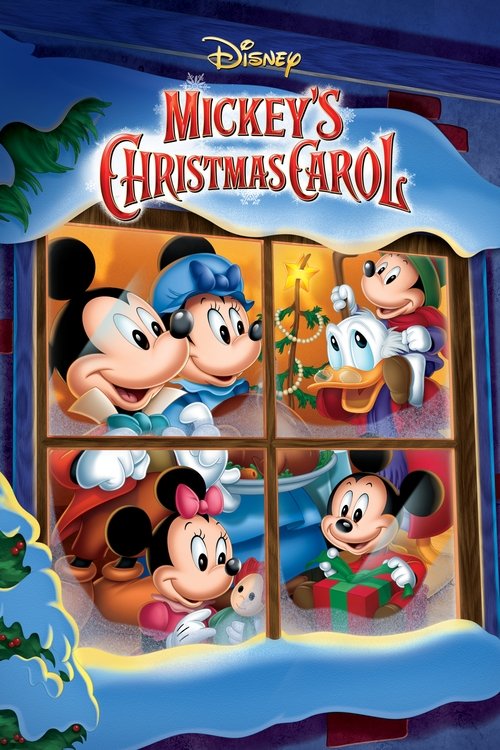
Mickey's Christmas Carol

"All your Disney pals star in this retelling of a Dickens Christmas classic."

19 October 1983 United States of America 25 min ⭐ 7.7 (972)
Director: Burny Mattinson
Cast: Alan Young, Wayne Allwine, Clarence Nash, Hal Smith, Will Ryan
Animation Family
Redemption and Second Chances The Destructive Nature of Greed The True Wealth of Family and Love Memory and Consequence
Budget: $3,000,000
Box Office: $21,000,000

Mickey's Christmas Carol - Ending Explained

⚠️ Spoiler Analysis

The film strictly follows the narrative arc of Dickens' classic, but its specific twists lie in the character reveals. The most dramatic twist occurs during the Christmas Yet to Come segment. Scrooge finds himself in a dark, misty graveyard where he watches Bob Cratchit mourning at Tiny Tim's grave. The silent, hooded phantom then points Scrooge to another neglected grave. When Scrooge wipes away the snow, he reads his own name.

The hidden meaning of the scene is amplified when the spirit throws back its hood to reveal the villainous Pete. Pete lights a match, illuminates a terrifying smirk, and shoves Scrooge into the grave, which breaks open into the fiery pits of Hell. This moment is surprisingly dark and frightening for a Disney short, solidifying the dire stakes of Scrooge's morality.

Scrooge falls, screaming, only to wake up tangled in his bed curtains on Christmas morning. Realizing he has been given a second chance, he rushes out, buys toys and a massive turkey, and heads to the Cratchit house. In a final narrative fake-out, Scrooge enters the house pretending to be his usual cruel self, threatening to fire Cratchit for his "appalling behavior." He then breaks into a warm smile, announcing he is giving Cratchit a raise and making him his partner, completing his character arc and securing a happy ending for Tiny Tim.

Alternative Interpretations

The Secular vs. Religious Reading: While Dickens' original novella carries subtle Christian undertones regarding salvation, critics note that Mickey's Christmas Carol strips away almost all religious dogma, presenting a purely secular, moral philosophy. The redemption is strictly social and psychological; Scrooge is saved not by divine grace, but by recognizing his duty to the human community.

The Psychological Dream Theory: A common alternative interpretation among literary analysts is that the ghosts are not literal supernatural entities, but rather manifestations of Scrooge's own guilty subconscious. Just as Scrooge blames Marley's appearance on an "undigested bit of beef," the film can be viewed as an intense psychological fever dream where a lonely man's repressed guilt and trauma force a sudden, desperate psychological breakthrough.

The "Disneyfication" Debate: Some literary purists interpret the film as an overly sanitized version of a grim tale, arguing that replacing the starving, skeletal children "Ignorance and Want" with colorful Disney animals dilutes Dickens' critique of Victorian poverty. Conversely, others argue that this "Disneyfication" is precisely what makes the story's moral core immortal, translating complex socio-economic critiques into universal fables of kindness that children can easily digest.