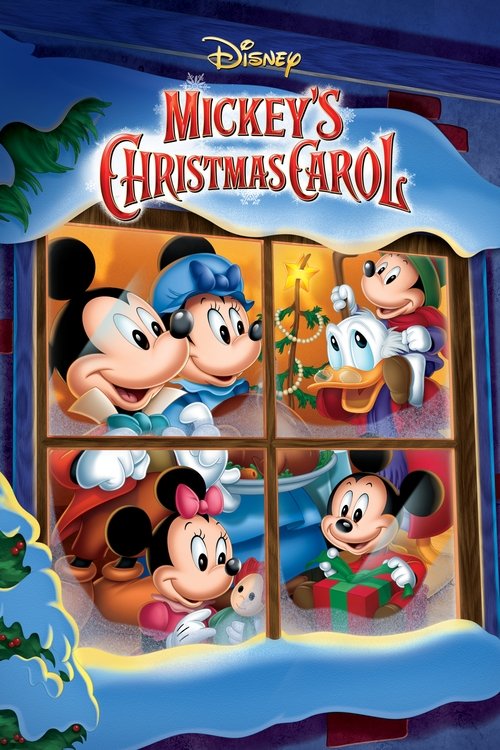
Mickey's Christmas Carol
An animated holiday classic that masterfully blends Dickensian redemption with Disney charm. Beneath the snow-dusted Victorian streets, a cold-hearted duck's frozen spirit is thawed by spectral guides, offering a warm cinematic embrace of generosity and second chances.
Mickey's Christmas Carol

Mickey's Christmas Carol

"All your Disney pals star in this retelling of a Dickens Christmas classic."

19 October 1983 United States of America 25 min ⭐ 7.7 (972)
Director: Burny Mattinson
Cast: Alan Young, Wayne Allwine, Clarence Nash, Hal Smith, Will Ryan
Animation Family
Redemption and Second Chances The Destructive Nature of Greed The True Wealth of Family and Love Memory and Consequence
Budget: $3,000,000
Box Office: $21,000,000

Overview

In 19th-century London, Ebenezer Scrooge (played brilliantly by Scrooge McDuck) is a bitter, greedy moneylender who despises the joy of Christmas. He actively mistreats his overworked and underpaid clerk, Bob Cratchit (Mickey Mouse), and rejects the festive invitations of his cheerful nephew, Fred (Donald Duck). Scrooge's sole focus is the accumulation of wealth, entirely devoid of empathy for the suffering of those around him.

On Christmas Eve, Scrooge is visited by the ghost of his deceased partner, Jacob Marley (Goofy), who warns him of a terrible afterlife forged by a lifetime of greed. Marley foretells the arrival of three spirits: the Ghosts of Christmas Past (Jiminy Cricket), Present (Willie the Giant), and Yet to Come (Pete). Through a whirlwind journey across time, these apparitions force Scrooge to confront the heartbreak of his youth, the impoverished yet loving reality of the Cratchit family, and the terrifying, lonely demise that awaits him if he does not change his ways.

Running at a brisk 26 minutes, this featurette perfectly condenses Charles Dickens' classic narrative without losing its emotional resonance. By casting beloved Disney icons in these legendary literary roles, the film creates a highly accessible and profoundly moving holiday tale that has captivated generations of viewers.
Core Meaning

At its core, the film communicates the timeless message that compassion and generosity are the true measures of a person's wealth. Director Burny Mattinson utilizes the innocence of Disney characters to soften, yet preserve, Dickens' harsh critique of capitalism and greed. The film emphasizes that no soul is entirely lost; self-reflection and empathy can lead to profound redemption. By confronting his past mistakes and the grim inevitability of his future, Scrooge learns that true joy comes from serving others and participating in the shared human experience, rather than hoarding material wealth in isolation.

Thematic DNA

Redemption and Second Chances 40%
The Destructive Nature of Greed 30%
The True Wealth of Family and Love 20%
Memory and Consequence 10%

Redemption and Second Chances

The film's primary focus is Scrooge's transformation from a heartless miser to a benevolent benefactor. It demonstrates that regardless of how entrenched one is in their flaws, the capacity for profound moral change always exists if one is willing to confront their own soul.

The Destructive Nature of Greed

Through the physical chains worn by Jacob Marley and the loss of Scrooge's former fiancée, Isabelle (Daisy Duck), the story illustrates how the relentless pursuit of money isolates individuals, destroys personal relationships, and ultimately leads to a hollow existence.

The True Wealth of Family and Love

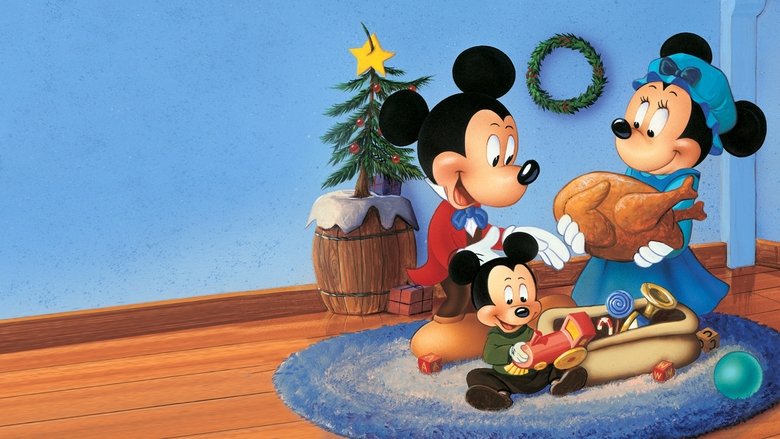
Contrasting Scrooge's cold, lonely mansion with the warm, albeit impoverished, household of Bob Cratchit, the film highlights that joy and familial love far outweigh material riches. Tiny Tim's enduring optimism serves as the ultimate proof of this theme.

Memory and Consequence

The Ghost of Christmas Past forces Scrooge to realize that our present character is shaped by past choices. The film explores how repressing painful memories allows bitterness to grow, while confronting them can spark healing and accountability.

Character Analysis

Ebenezer Scrooge (Scrooge McDuck)

Alan Young

Archetype: Antihero / Protagonist
Key Trait: Miserly

Motivation

Initially motivated purely by the preservation and accumulation of wealth. By the end, his motivation shifts entirely to spreading joy, alleviating the suffering of the Cratchit family, and avoiding his doomed fate.

Character Arc

Scrooge begins as a cynical, ruthless moneylender who views Christmas as a nuisance. After experiencing a terrifying and heartbreaking journey through time, his emotional barriers break down. He awakens reborn, bursting with joy, and immediately sets out to right his wrongs, ultimately becoming a generous figure and a second father to Tiny Tim.

Bob Cratchit (Mickey Mouse)

Wayne Allwine

Archetype: The Innocent / The Everyman
Key Trait: Optimistic

Motivation

To provide for his family and maintain a positive, loving environment for his children, particularly the ailing Tiny Tim, despite the crushing weight of poverty.

Character Arc

Bob remains static in his goodness throughout the film. He acts as the moral anchor and the emotional catalyst for Scrooge's redemption. His unwavering kindness, despite severe mistreatment and poverty, highlights the resilience of the human spirit.

Jacob Marley (Goofy)

Hal Smith

Archetype: The Herald
Key Trait: Repentant

Motivation

To warn his former partner to change his ways, hoping to save Scrooge from suffering the same eternal punishment he currently endures.

Character Arc

As a spirit, Marley's development has already concluded in tragedy. He serves solely to initiate Scrooge's journey, bringing a mix of clumsy physical comedy and dire, supernatural warnings.

Symbols & Motifs

Marley's Chains

Meaning:

The heavy chains forged of lockboxes and weights symbolize the spiritual burden of a life dedicated solely to greed and the exploitation of others. They represent the unavoidable consequences of prioritizing money over humanity.

Context:

Jacob Marley (Goofy) trips over and drags these chains into Scrooge's bedroom, explicitly stating that he forged them in life and is now forced to carry them through eternity as punishment for swindling the poor.

The Lonely Grave

Meaning:

The open, fiery grave serves as a stark metaphor for the absolute finality of death and the ultimate uselessness of hoarded wealth. It represents the terrifying void of a life lived without love or legacy.

Context:

In the film's climax, the Ghost of Christmas Future (Pete) points Scrooge toward a neglected tombstone. When Scrooge asks whose it is, he is shoved toward the fiery pit as the ghost mocks him as "the richest man in the cemetery."

The Mistletoe

Meaning:

The mistletoe represents lost love, missed opportunities, and the moment Scrooge allowed his obsession with money to eclipse human connection.

Context:

During the sequence with the Ghost of Christmas Past, a young Scrooge is seen with his fiancée Isabelle (Daisy Duck) under the mistletoe. Instead of embracing love, Scrooge forecloses on her honeymoon cottage, choosing gold over his heart.

Memorable Quotes

Listen, Scrooge, if men were measured by kindness, you'd be no bigger than a speck of dust.

— Ghost of Christmas Past (Jiminy Cricket)

Context:

Spoken by Jiminy Cricket shortly after he arrives at Scrooge's house, right before they fly out the window to observe Scrooge's earlier, happier days at Fezziwig's.

Meaning:

This quote profoundly summarizes the film's philosophical stance on human worth. It juxtaposes Scrooge's immense financial wealth against his utter lack of moral and spiritual value.

Spirit... whose lonely grave is this? / Why, yours, Ebenezer! The richest man in the cemetery! HAHAHAHAHAHA!

— Ebenezer Scrooge & Ghost of Christmas Future (Pete)

Context:

The terrifying climax of the film in the dark graveyard, right before Pete pushes Scrooge into his own open, fiery grave.

Meaning:

A chilling reminder that wealth cannot follow you into the afterlife. It marks the absolute lowest point in Scrooge's journey, stripping away his arrogance and replacing it with pure existential terror.

What's so merry about it? I'll tell you what Christmas is. It's just another workday, and any jackanape who thinks else should be... boiled in his own pudding!

— Ebenezer Scrooge

Context:

Scrooge yells this at his nephew Fred (Donald Duck) when Fred visits the counting house to invite Scrooge to Christmas dinner.

Meaning:

This establishes Scrooge's cynical, capitalist worldview early in the story, showcasing his absolute disdain for joy, tradition, and rest.

And as punishment, I'm forced to carry these heavy chains through eternity. Maybe even longer.

— Jacob Marley (Goofy)

Context:

Marley explains his spectral predicament to a terrified Scrooge in his bedchamber, warning him of the impending visitations.

Meaning:

A humorous yet dark admission of consequence. The addition of "Maybe even longer" injects classic Goofy humor into a deeply somber Dickensian concept.

Philosophical Questions

Are our destinies predetermined, or does human free will have the power to alter the future?

The film explores this through the Ghost of Christmas Yet to Come. The future shown is horrific, but the spirit's silence leaves it ambiguous whether this is a fixed fate or merely a projection of current trajectories. Scrooge's desperate plea and subsequent survival posit that the future is malleable and highly dependent on daily moral choices.

What is the true measure of a human life?

Jiminy Cricket's assertion that Scrooge is "no bigger than a speck of dust" when measured by kindness challenges the capitalist notion that a person's worth is tied to their financial accumulation. The film asks the audience to weigh material wealth against spiritual and communal wealth.

Alternative Interpretations

The Secular vs. Religious Reading: While Dickens' original novella carries subtle Christian undertones regarding salvation, critics note that Mickey's Christmas Carol strips away almost all religious dogma, presenting a purely secular, moral philosophy. The redemption is strictly social and psychological; Scrooge is saved not by divine grace, but by recognizing his duty to the human community.

The Psychological Dream Theory: A common alternative interpretation among literary analysts is that the ghosts are not literal supernatural entities, but rather manifestations of Scrooge's own guilty subconscious. Just as Scrooge blames Marley's appearance on an "undigested bit of beef," the film can be viewed as an intense psychological fever dream where a lonely man's repressed guilt and trauma force a sudden, desperate psychological breakthrough.

The "Disneyfication" Debate: Some literary purists interpret the film as an overly sanitized version of a grim tale, arguing that replacing the starving, skeletal children "Ignorance and Want" with colorful Disney animals dilutes Dickens' critique of Victorian poverty. Conversely, others argue that this "Disneyfication" is precisely what makes the story's moral core immortal, translating complex socio-economic critiques into universal fables of kindness that children can easily digest.

Cultural Impact

Mickey's Christmas Carol holds a deeply significant place in both Disney history and popular holiday culture. Released during a massive transitional period for Walt Disney Animation Studios (often referred to as their "slump" era before the Disney Renaissance), the featurette proved that the classic roster of Disney characters still held massive audience appeal. Historically, it served as Mickey Mouse's grand return to the silver screen after a 30-year absence.

Its most profound industry impact, however, was establishing the character of Scrooge McDuck—and Alan Young as his definitive voice—in animated media. This directly paved the way for the creation of the blockbuster television series DuckTales in 1987, which subsequently launched "The Disney Afternoon" programming block and revolutionized serialized television animation.

Culturally, the film is widely regarded as the ultimate "gateway" to Charles Dickens for children. By utilizing familiar, comforting characters, it managed to translate the heavy Victorian themes of poverty, death, and capitalism into an accessible format. It became an annual television staple on networks like NBC, CBS, and the Disney Channel, embedding itself into the nostalgic holiday traditions of millions of families worldwide.

Audience Reception

Audience reception for Mickey's Christmas Carol is overwhelmingly positive, with the film currently holding a legacy as a beloved holiday staple. Viewers frequently praise its brisk, engaging pacing and the ingenious casting of Disney IPs into Dickensian roles (particularly Goofy as the clumsy but tragic Jacob Marley, and Pete as a terrifying Ghost of Christmas Future).

The animation is highly regarded for its warm, nostalgic 1980s Disney house style, utilizing "sketchy" lines that lend a gritty, storybook feel to Victorian London. The emotional beats—especially the subtle, tear-jerking depiction of Tiny Tim's crutch resting by an empty chair—are consistently highlighted by audiences as masterclasses in visual storytelling.

The main points of criticism usually stem from adult audiences and literary purists who feel the 26-minute runtime is far too brief. Some reviews note that the pacing rushes through Scrooge's emotional transformation, omitting the nuanced philosophical observations found in feature-length adaptations (such as the Alastair Sim or George C. Scott versions). Despite this, the overall verdict remains stellar, with most audiences accepting it as a masterpiece of childhood nostalgia and a perfect holiday short.

Interesting Facts

  • The film marked Mickey Mouse's first appearance in a theatrical short in 30 years, ending a hiatus that began after 1953's 'The Simple Things'.
  • It features the theatrical debut of Wayne Allwine as the voice of Mickey Mouse, and the final performance of Clarence Nash voicing Donald Duck.
  • Actor Alan Young voiced Scrooge McDuck on screen for the very first time. He had previously voiced the character on the 1974 Disney record album that inspired the film, and he would continue voicing Scrooge for over 30 years, most notably in 'DuckTales'.
  • The film was nominated for an Academy Award for Best Animated Short Film in 1984, but lost to the stop-motion film 'Sundae in New York'.
  • This was the directorial debut of Burny Mattinson, who pitched the film to Disney executives after listening to the 1974 Disneyland Records audio adaptation in his car.
  • Because many of the original voice actors (such as Walt Disney, Pinto Colvig, and Billy Bletcher) had passed away, Clarence Nash was the only original voice actor to reprise a classic character role (Donald Duck) from the golden age of Disney.

Easter Eggs

Fezziwig's Party Cameos

During the Christmas Past sequence, Mr. Toad's party is a treasure trove of Disney cameos. Attendees include characters from Robin Hood (Lady Kluck), The Wind in the Willows (Angus MacBadger), The Aristocats (Uncle Waldo), and classic shorts (Clarabelle Cow, Horace Horsecollar, and Chip 'n Dale). It serves as a visual celebration of Disney's animation history.

The Big Bad Wolf and The Three Little Pigs

In the opening street scenes, the Big Bad Wolf is seen dressed as a corner Santa Claus collecting charity, while the Three Little Pigs are singing Christmas carols nearby. It playfully places classic antagonistic characters in a setting of festive harmony.

The Gravediggers

In the chilling Christmas Yet to Come sequence, the two gravediggers casually discussing Scrooge's death are played by the Weasels from The Wind in the Willows segment of The Adventures of Ichabod and Mr. Toad.

⚠️ Spoiler Analysis

Click to reveal detailed analysis with spoilers

Frequently Asked Questions

Explore More About This Movie

Dive deeper into specific aspects of the movie with our detailed analysis pages

Comments (0)

Leave a comment

No comments yet. Be the first to share your thoughts!