Misery
Psychological Horror/Thriller + Dread/Claustrophobia + The Writer's Cage. A snowbound nightmare where adoration turns to captivity, transforming a cozy shelter into a claustrophobic prison of obsession and shattered ankles.
Misery
Misery

"Paul Sheldon used to write for a living. Now, he’s writing to stay alive."

30 November 1990 United States of America 107 min ⭐ 7.7 (5,041)
Director: Rob Reiner
Cast: Kathy Bates, James Caan, Richard Farnsworth, Lauren Bacall, Frances Sternhagen
Drama Thriller
Toxic Fandom and Parasocial Relationships Addiction and Dependency The Agony of the Creative Process Power, Control, and Emasculation
Budget: $20,000,000
Box Office: $61,300,000

Misery - Ending Explained

⚠️ Spoiler Analysis

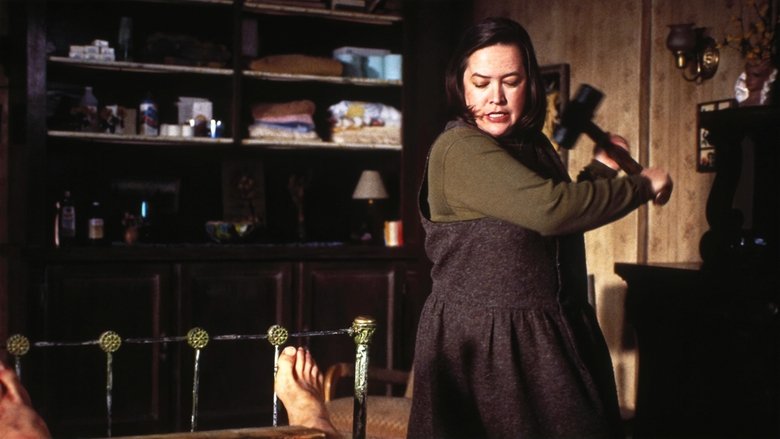
The film is built on a series of escalations. The first major twist is that Annie is not just a fan but a serial killer who murdered infants in a hospital (the 'Dragon Lady'). The turning point is the 'hobbling' scene, where Annie breaks Paul's ankles to keep him captive.

The climax involves a battle of wits: Paul pretends to burn the new Misery novel (actually burning blank paper/decoy pages) to distract Annie. In the ensuing physical brawl, Paul manages to trip Annie, smash her with the typewriter, and finally kill her by bludgeoning her with a heavy metal pig doorstop (ironically named Misery). The film ends with Paul back in New York, walking with a cane. He sees Annie in a hallucination at a restaurant, revealing that while he is free, the trauma (and the 'Misery') will haunt him forever.

Alternative Interpretations

Annie as Addiction: Stephen King has stated that Annie Wilkes is a metaphor for his own struggle with substance abuse (specifically cocaine) during the 1980s. Annie represents the drug: she isolates him, tortures him, claims to love him, and forces him to work only for her, cutting him off from the rest of the world.

The Battle of Genres: The film can be seen as a clash between 'low art' (romance novels/genre fiction) and 'high art' (Paul's serious manuscript). Annie represents the mass market that demands the comfortable and familiar, violently rejecting the author's attempt to grow or change genres.