"Paul Sheldon used to write for a living. Now, he’s writing to stay alive."
Misery - Symbolism & Philosophy
Symbols & Motifs
The Typewriter
Symbolizes Paul's career, his burden, and ultimately his weapon. The missing 'N' key represents the handicap he works under, both physically and creatively.
Paul is forced to use an old Royal typewriter to write Misery's Return. The missing key forces him to fill in letters by hand, highlighting the arduous nature of his forced labor. Ultimately, he uses the heavy machine to physically bludgeon Annie.
The Ceramic Penguin
Represents Paul's fragile control over his environment and the immense tension of his situation. It is a totem of order that must be perfectly maintained to avoid detection.
Paul accidentally knocks the penguin off the table while exploring the house. His desperate attempt to replace it exactly as it was facing (due South) becomes a suspenseful focal point, symbolizing the thin line between safety and punishment.
The Sledgehammer
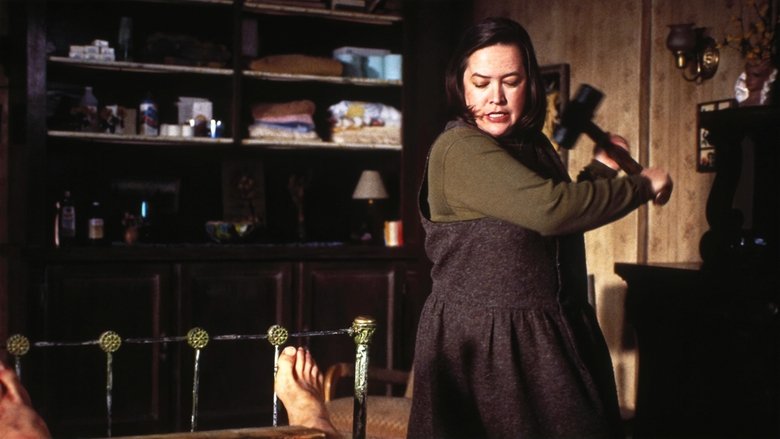
The ultimate instrument of control and permanent limitation. It represents the destruction of hope and the brutal enforcement of captivity.
Used in the infamous 'hobbling' scene. When Annie discovers Paul has been leaving his room, she doesn't kill him; she breaks his ankles to ensure he can never run away, physically manifesting her crippling hold on him.
Misery Chastain (The Character)
Represents Paul's past success and his creative cage. She is the entity that keeps him alive (because Annie loves her) but also the reason for his imprisonment.
Annie is obsessed with Misery's 'spirit.' Paul's attempt to kill Misery in his book incites Annie's rage, and his resurrection of her in the new manuscript is the key to his survival.
The Match and The Manuscript
Fire represents both destruction and liberation. Burning the book is a ritualistic sacrifice.
Annie forces Paul to burn his 'serious' manuscript, symbolizing the death of his artistic freedom. In the climax, Paul burns the Misery manuscript (or appears to) to distract and devastate Annie, using her own obsession against her.
Philosophical Questions
Does an artist owe their audience?
The film questions the contract between creator and consumer. Paul wants to kill Misery and move on, but Annie (the audience) demands she live. It asks whether an artist is a servant to their fans or if they have the right to destroy their own creations despite public outcry.
Is suffering necessary for great art?
Annie claims she is Paul's muse. Under her terror, he writes what he considers his best work in years. This raises the uncomfortable question of whether comfort leads to complacency, and if pain, isolation, and 'misery' are required fuel for a masterpiece.
Core Meaning
At its heart, Misery is a metaphorical exploration of addiction and the struggle of the artist. Director Rob Reiner and author Stephen King (who wrote the source novel) use the narrative to examine the toxic relationship between a creator and their audience. Annie Wilkes represents not just an obsessive fan, but the drugs and alcohol that once held King captive, as well as the 'fanatical' expectations that imprison an artist in a specific genre. The film posits that creativity can be a tool for survival, but it often comes at a physically and emotionally agonizing price.