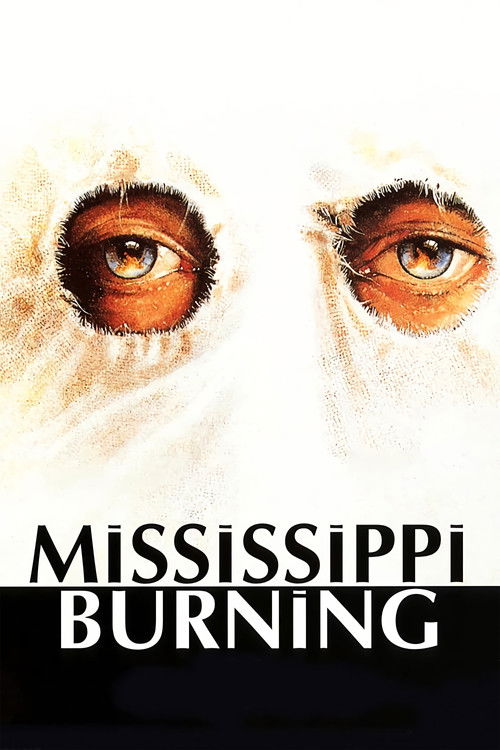
"1964. When America was at war with itself."
Mississippi Burning - Symbolism & Philosophy
Symbols & Motifs
Fire
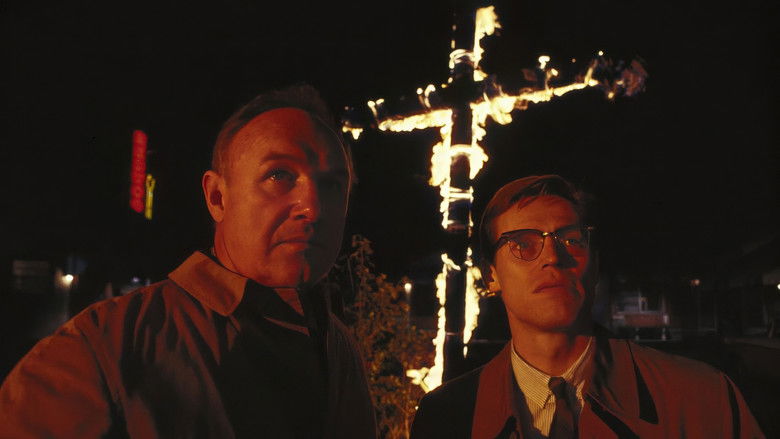
Destruction, hatred, and cleansing. It represents the Klan's terror (burning crosses, churches) but also the 'burning' pressure the FBI applies to the town.
Used in the burning cross scenes, the burning of the church, and the title itself.
The Swamp
The murky, concealing nature of the South's secrets. It physically hides the bodies and metaphorically represents the depth of the corruption.
The bodies are buried in an earthen dam; the agents are constantly wading through mud and water.
Segregated Water Fountains
The visceral reality of 'Separate but Equal'. One is clean and modern, the other dirty and broken.
Shown early in the film to visually establish the apartheid-like conditions of the setting.
Broken Tombstone
The incompleteness of justice and the erasure of Black identity in history.
The final shot focuses on a tombstone reading '1964 Not Forgotten', with the name broken off.
Philosophical Questions
Do the ends justify the means?
The film posits that in an unjust society, legal methods are insufficient. Anderson's use of kidnapping, coercion, and threats (illegal acts) achieves the justice that Ward's warrants cannot. It asks the audience if they are comfortable with law enforcement breaking the law to catch the bad guys.
Is neutrality possible in the face of oppression?
Through the townspeople and the Mayor, the film explores how silence and 'staying out of it' act as active support for the oppressors. It argues that there are no innocent bystanders in a system of terror.
Core Meaning
At its heart, Mississippi Burning is a study of pragmatism versus idealism in the face of absolute evil. Director Alan Parker argues that when confronting a system as deeply retrenched and violent as the institutionalized racism of the 1960s South, the moral high ground of the law may be insufficient. The film suggests that fighting fire with fire—using the enemy's own brutal tactics—might be the only way to achieve justice, raising the uncomfortable question of whether the ends truly justify the means.