MobLand
Overview
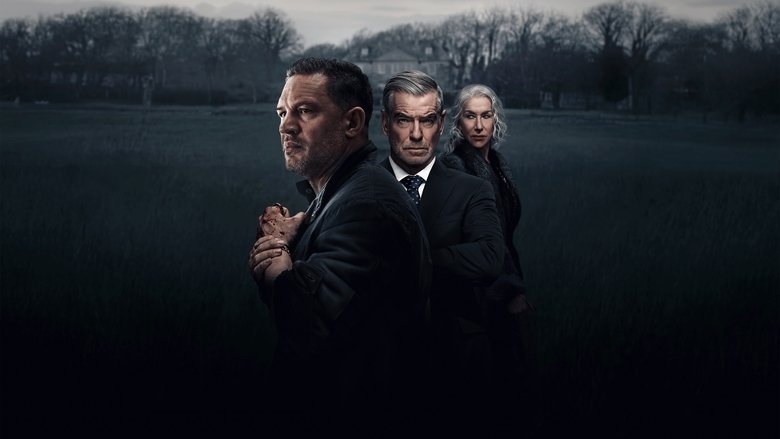
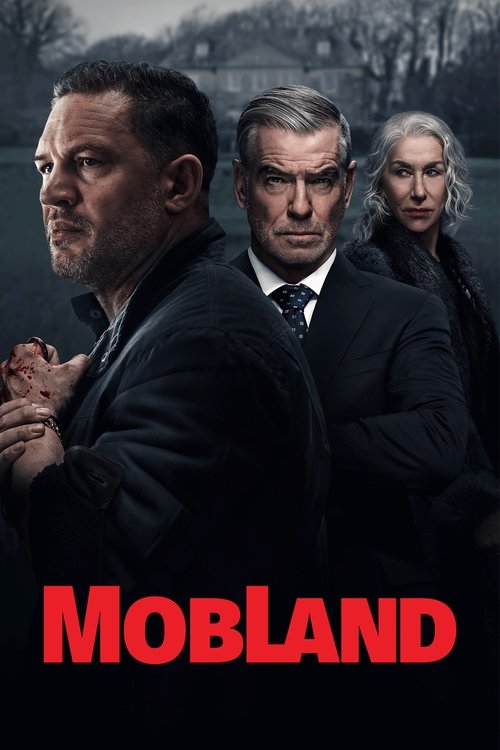
MobLand delves into the treacherous world of London's organized crime, focusing on the powerful Harrigan family and their intense rivalry with the up-and-coming Stevenson clan. At the center of this maelstrom is Harry Da Souza (Tom Hardy), the indispensable and enigmatic 'fixer' for the Harrigans. The series chronicles the escalating tensions and violent clashes between the two families, a battle for control that threatens to destroy both empires. Harry must navigate a landscape of shifting allegiances, brutal power plays, and deep-seated family secrets, all while trying to manage his own fractured personal life. The narrative explores the complex dynamics within the Harrigan dynasty, led by the formidable patriarch Conrad (Pierce Brosnan) and his cunning wife Maeve (Helen Mirren), exposing the psychological toll that a life of crime exacts on each member.
As the first season unfolds, a reckless act by a younger member of the Harrigan family ignites an all-out war, forcing Harry to employ his full range of skills—from subtle manipulation to ruthless violence—to protect the family he is bound to. The series weaves a complex tapestry of crime, betrayal, and the corrosive nature of power, questioning whether loyalty to family can ever truly be absolute in a world where survival is the only law. The show was renewed for a second season in June 2025.
Core Meaning
At its heart, MobLand is an exploration of the paradox of family within the brutal ecosystem of organized crime. Created by Ronan Bennett, the series posits that the very bonds of kinship that provide strength and identity are also the catalysts for destruction and betrayal. It scrutinizes the concept of loyalty, not as a noble virtue, but as a volatile and often transactional commodity. The creators seem to argue that in a world built on violence and dominance, the institution of family becomes a gilded cage, its traditions and expectations twisting individuals into roles they are forced to play. The series ultimately suggests that power is a corrosive force that inevitably consumes not only rivals but also the very foundations of the family that wields it, leaving a legacy of trauma and ruin.
Thematic DNA
The Corrosive Nature of Power
The series consistently illustrates how the pursuit and maintenance of power corrupt everyone in the Harrigan family's orbit. From Conrad's ruthless decisions to Maeve's manipulative strategies, power is shown to erode morality, empathy, and personal relationships. Harry's journey, in particular, highlights this theme as his role as a 'fixer' forces him into increasingly dark moral compromises to uphold the family's dominance.
Loyalty and Betrayal
Loyalty is the central pillar of the criminal underworld depicted, but it is also its greatest vulnerability. The narrative is driven by acts of betrayal, both large and small, from within the family and from outside forces. The series explores the complexities of allegiance, questioning whether loyalty is born of love, fear, or self-preservation, and demonstrates how quickly it can be shattered when personal ambitions and survival instincts take precedence.
Family as Both a Haven and a Prison
For the Harrigans, family is the source of their strength and influence. However, it is also a rigid structure that traps its members in predefined roles and violent cycles. Characters like Kevin and Eddie Harrigan struggle against the expectations and burdens of their lineage. Jan Da Souza's attempts to pull her husband Harry away from the family's destructive influence underscore the theme of family as a cage from which escape is nearly impossible.
The Cycle of Violence
MobLand portrays a world where violence is not just a tool but a language and a legacy. The conflict between the Harrigans and the Stevensons is rooted in a history of bloodshed that perpetuates itself. Each act of aggression demands retribution, ensnaring the younger generation, like Eddie Harrigan, in the same violent patterns as their parents, suggesting that the cycle is inescapable.
Character Analysis
Harry Da Souza
Tom Hardy
Motivation
Initially, Harry is motivated by a deep-seated, almost familial loyalty to Conrad Harrigan and a professional pride in his ability to solve problems. As the series progresses, his motivation shifts towards survival and the desperate, perhaps futile, hope of protecting his own family from the world he inhabits.
Character Arc
Harry begins the series as a supremely competent and loyal 'fixer', seemingly in control of the chaos he manages. His arc throughout the first season involves the gradual erosion of this control and his emotional detachment. He is increasingly caught between his duty to the Harrigans and the pleas of his wife, Jan, to escape their toxic influence. The escalating violence forces him to confront the true cost of his loyalty, pushing him towards a breaking point where he must question the entire foundation of his life and career.
Conrad Harrigan
Pierce Brosnan
Motivation
Conrad's primary motivation is the preservation and expansion of his criminal empire and the security of the Harrigan family name. He is driven by a desire to maintain his legacy and ensure that his family remains at the apex of London's underworld.
Character Arc
Conrad starts as the confident and powerful head of the Harrigan crime family. His arc sees him challenged by the rival Stevenson family and internal strife. He is forced to grapple with his own aging and the potential inadequacy of his sons to carry on his legacy. Brosnan describes him as a man from a broken, abusive background, now filled with pride in his family and what he has built, adding a layer of sentimentalism to his ruthlessness. Events throughout the season test his authority and force him to become even more ruthless to maintain his grip on power.
Maeve Harrigan
Helen Mirren
Motivation
Maeve is fiercely motivated by the protection of her family, particularly her children. Her actions are driven by a desire to secure their positions and eliminate any threat to the Harrigan dynasty. She is shown to have a particular disdain for Conrad's illegitimate daughter, Seraphina, seeing her as outside the core family unit.
Character Arc
Maeve is introduced as the poised and influential wife of Conrad, the quiet power behind the throne. Her arc reveals the true extent of her cunning and ruthlessness. She is not merely a supportive spouse but a key strategist and manipulator within the family. As the threats against the family mount, Maeve's protective instincts become more pronounced and deadly, and she proves to be just as, if not more, formidable than her husband.
Kevin Harrigan
Paddy Considine
Motivation
Kevin is motivated by a conflicted desire for his father's approval and a yearning for a different life. He is constantly trying to prove his worth within the family hierarchy while simultaneously being repulsed by the brutality it requires.
Character Arc
Kevin is Conrad's son and Harry's longtime working partner. He is portrayed as being caught in his father's shadow, struggling with the immense pressure and the violent nature of the family business. His arc focuses on his internal conflict between his duties as a Harrigan and his own moral compass, which seems more fragile than that of his relatives. His actions often create complications, forcing Harry to intervene.
Symbols & Motifs
The Thames River
The River Thames serves as a visual metaphor for the constant, murky, and powerful undercurrent of London's criminal world. It represents the flow of dirty money, the hidden secrets, and the unstoppable momentum of the conflict. Its presence in shots of Harry's apartment suggests his proximity to and immersion in this dangerous world.
The river is frequently shown in establishing shots and is visible from Harry and Jan's luxury apartment. Key deals and clandestine meetings often take place with the river in the background, reinforcing its symbolic connection to the city's criminal lifeblood.
Family Portraits/Photographs
Throughout the Harrigan home, portraits and photographs symbolize the family's carefully constructed image of unity and power. They represent the legacy and tradition they are fighting to uphold, but also serve as an ironic counterpoint to the deep-seated dysfunction and betrayal that lies beneath the surface.
In several scenes within the Harrigan household, the camera lingers on family photos, especially during moments of intense conflict or private turmoil. This juxtaposition highlights the chasm between their public facade and their private reality.
Memorable Quotes
Name's Conrad Harrigan – family man, and if you cross my family, well, you'd better pray.
— Conrad Harrigan
Context:
This quote is used in the official trailer to introduce Pierce Brosnan's character and the central conflict of the series.
Meaning:
This line, featured in the trailer, perfectly encapsulates Conrad's character. It establishes his core identity as being intrinsically linked to his family and serves as a clear, ominous warning of the violent retribution that awaits anyone who dares to threaten his kin. It defines the central ethos of the series: family above all, defended with lethal force.
Episode Highlights
Stick or Twist
The premiere episode, directed by Guy Ritchie, establishes the world of MobLand and the key players. It kicks off the central conflict when Eddie Harrigan (Anson Boon), the rebellious son of Kevin, stabs a member of the rival Stevenson gang. This singular act of violence immediately throws the fragile peace into disarray and showcases Harry Da Souza's role as he is called in to clean up the mess, placate the Stevensons, and control the fallout.
This episode is pivotal as it sets the entire season's plot in motion. It introduces the primary conflict between the Harrigan and Stevenson families, establishes the personalities and roles of the main characters, and demonstrates the high stakes of the criminal underworld they inhabit.
Rat Trap
Titled "Rat Trap," this episode likely deals with themes of betrayal and infiltration. As the war between the families intensifies, suspicions mount within the Harrigan camp about a potential informant in their midst. Harry is likely tasked with identifying the 'rat', leading to intense interrogations and a pervasive atmosphere of paranoia that threatens to tear the family apart from the inside.
This episode marks a turning point where the primary threat shifts from an external enemy to an internal one. It deepens the psychological drama of the series, forcing characters to question the loyalty of those closest to them and highlighting the corrosive effect of paranoia on the family's power structure.
Philosophical Questions
Can true loyalty exist in a world governed by self-preservation?
The series constantly tests the bonds of its characters. Harry's loyalty to the Harrigans is his defining trait, yet it is continually pitted against his own survival and the well-being of his wife. The show explores whether his allegiance is a genuine emotional bond or a professional code that can be broken when the price becomes too high. The internal betrayals and shifting alliances suggest that in the brutal calculus of the criminal underworld, loyalty is often a temporary convenience, ultimately subordinate to the primal instinct to survive.
Is family a source of strength or a destructive cage?
MobLand presents the Harrigan family as a powerful entity, its strength derived from its name and collective will. However, the series delves into how this same institution stifles individuality and perpetuates a cycle of violence. Characters are trapped by their lineage, forced into roles and conflicts they might not have chosen. The narrative questions whether the benefits of belonging to such a powerful clan outweigh the loss of personal freedom and the moral compromises required, framing the family unit as both a fortress and a prison.
Alternative Interpretations
While on the surface MobLand is a straightforward crime drama, some critics have interpreted it as a critique of modern corporate capitalism disguised as a gangster saga. The Harrigan family's business, with its ruthless efficiency, hierarchical structure, and hostile takeovers of rival territories, can be seen as a violent metaphor for multinational corporations. Harry Da Souza's role as a 'fixer' mirrors that of a high-powered corporate lawyer or crisis manager, whose job is to clean up the company's messes and maintain its public image, regardless of the ethical cost. This reading suggests the show is not just about a single criminal family, but about the inherently brutal nature of any system built on unchecked ambition and the relentless pursuit of dominance.
Cultural Impact
Premiering in the spring of 2025, MobLand entered a television landscape rich with crime dramas, yet it distinguished itself through its high-profile, star-studded cast and the stylistic influence of executive producer Guy Ritchie. The series capitalized on the enduring appeal of the British gangster genre, often compared to creator Ronan Bennett's previous work, Top Boy, but with a more global, high-stakes feel. Its premiere was a massive success for Paramount+, setting a new record for the streaming service's largest global series launch and quickly becoming its second biggest global hit. This immediate popularity demonstrated a strong audience appetite for character-driven crime sagas featuring established movie stars like Tom Hardy, Pierce Brosnan, and Helen Mirren. Critics noted Hardy's 'magnetic' performance and the show's adherence to crime drama formulas, albeit elevated by its powerful cast. The series' success, marked by a swift renewal for a second season, solidified its place as a flagship show for Paramount+ in 2025 and reaffirmed the viability of big-budget, star-led productions in the streaming era.
Audience Reception
Audience reception for MobLand was overwhelmingly positive, as evidenced by its record-breaking premiere for Paramount+. Viewers were drawn in by the high-caliber cast, with Tom Hardy, Pierce Brosnan, and Helen Mirren receiving significant praise for their compelling performances. The series quickly cultivated a dedicated fanbase, becoming one of the hottest new shows of 2025. The combination of a gripping crime narrative, penned by Top Boy creator Ronan Bennett, and the slick, cinematic style influenced by Guy Ritchie resonated strongly with viewers. The show's popularity was sustained throughout its first season, leading to it becoming the second most-watched Paramount+ original series ever and dominating viewership charts both domestically and internationally. This strong reception culminated in a swift renewal for a second season, confirming its status as a global phenomenon for the streaming service.
Interesting Facts
- The series was created by Ronan Bennett, known for his work on 'Top Boy'.
- Guy Ritchie serves as an executive producer and directed the first two episodes.
- The series was originally announced as a spinoff to 'Ray Donovan' before being completely reworked into a standalone series.
- Production took place in London between November 2024 and March 2025.
- Filming wrapped just four days before the series premiered on Paramount+.
- During production, a bag of camera equipment was stolen from the set in East London; the thieves later returned and stole more, leading to the replacement of the security team.
- The premiere broke Paramount+'s record for its largest global series launch, with 2.2 million viewers on its first day.
- The series was renewed for a second season on June 23, 2025, after attracting over 26 million viewers.
⚠️ Spoiler Analysis
Click to reveal detailed analysis with spoilers
Frequently Asked Questions
Explore More About This Movie
Dive deeper into specific aspects of the movie with our detailed analysis pages
Comments (0)
No comments yet. Be the first to share your thoughts!