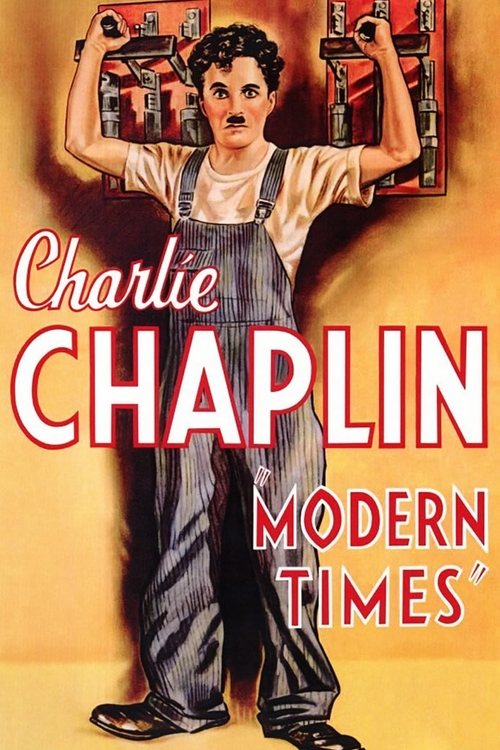
"He stands alone as the greatest entertainer of modern times! No one on earth can make you laugh as heartily or touch your heart as deeply...the whole world laughs, cries and thrills to his priceless genius!"
Director: Charlie Chaplin
Cast: Charlie Chaplin, Paulette Goddard, Henry Bergman, Tiny Sandford, Chester Conklin
Modern Times — Characters & Cast
Character Analysis
A Factory Worker (The Tramp)
Charlie Chaplin
Motivation
Initially, his motivation is simple survival and, at times, a comical desire to return to the relative comfort of prison. After meeting the Gamin, his motivation shifts to building a life and a home with her, embodying the universal dream for happiness and domesticity, however humble.
Character Arc
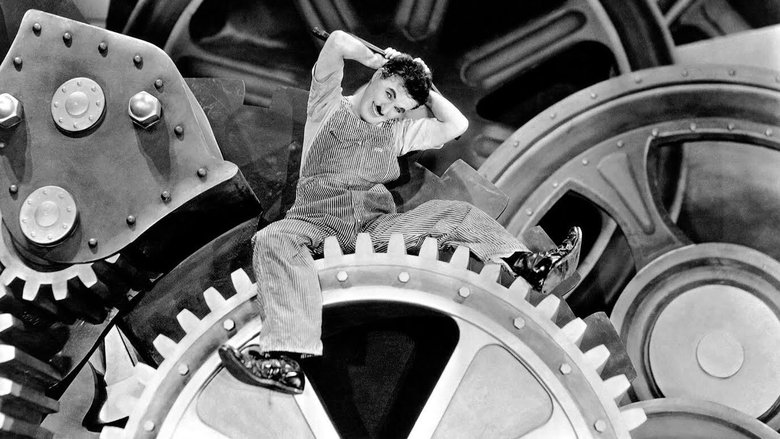
The Tramp begins as a cog in the industrial machine, literally broken by his work. His journey is a cyclical struggle of trying to fit into various roles society offers—factory worker, prisoner, night watchman, waiter—and failing comically at each. He finds purpose not in conforming, but in his relationship with the Gamin. His arc is not about achieving societal success but about discovering that resilience and happiness come from human connection, ending his journey not alone, but with a companion to face the future.
A Gamin
Paulette Goddard
Motivation
Her primary motivation is survival and escaping the clutches of the juvenile welfare officers who threaten her freedom. This broadens to a desire for stability, love, and a home, a dream she shares with The Tramp and actively works towards by securing them both jobs.
Character Arc
The Gamin starts as a fiercely independent orphan, stealing to feed her family and fleeing authorities. After meeting The Tramp, she channels her resourcefulness into their shared dream of a home. She is the catalyst for The Tramp's more concerted efforts to find work and is often the more pragmatic of the two. While she has moments of despair, her spirit is rekindled by The Tramp's optimism, and she evolves from a lone survivor into a hopeful partner.
Big Bill
Tiny Sandford
Motivation
His motivation is simple and stark: hunger. As he tells The Tramp during the robbery, "We ain't burglars, we're hungry." This line encapsulates the plight of the unemployed during the Great Depression.
Character Arc
Big Bill is first seen as a fellow assembly line worker alongside The Tramp. He later reappears as a burglar in the department store where The Tramp is a night watchman. His arc demonstrates the social decay caused by unemployment; a once-honest worker is forced into crime by hunger and desperation. His recognition of The Tramp humanizes him, showing that his actions stem from need, not malice.
Café Proprietor
Henry Bergman
Motivation
His motivation is to run a successful café. He is willing to take a chance on new talent, first with the Gamin and then, reluctantly, with The Tramp, recognizing their potential to entertain his customers.
Character Arc
The Café Proprietor represents a rare opportunity for legitimate success for the main characters. He initially sees potential in the Gamin's dancing and hires her. Despite The Tramp's disastrous performance as a waiter, the proprietor gives him a second chance as a singer, which proves to be a huge success. His arc, though brief, provides a glimpse of the stability the couple yearns for before it is snatched away by outside forces.
Cast
Explore More About This Movie
Dive deeper into specific aspects of the movie with our detailed analysis pages