
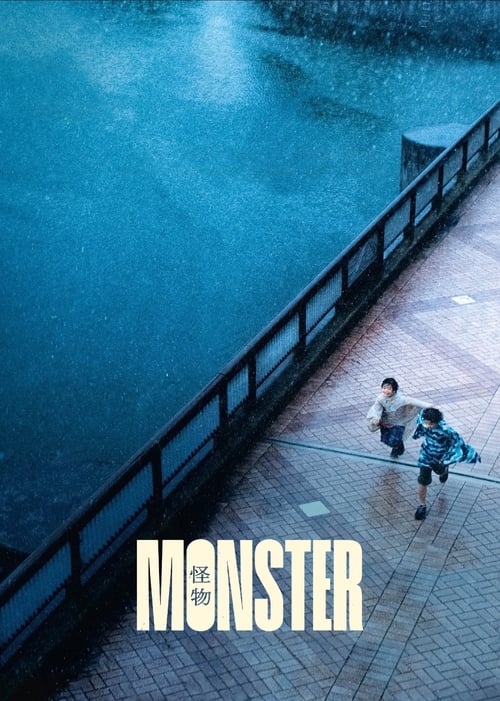
怪物
"Are they the ones we dream of, or the ones we fail to see among us?"
Monster - Symbolism & Philosophy
Symbols & Motifs
The Abandoned Train Car
The train car symbolizes a sanctuary and a private world for Minato and Yori. It is a space of freedom and acceptance, away from the confusing and judgmental eyes of classmates and adults, where they can be their true selves without fear.
The boys find and decorate the abandoned train car in a secluded railway tunnel. It becomes their secret base, the only place where their bond can flourish. They share moments of intimacy and vulnerability there, starkly contrasting with their tense interactions at school.
Fire and Storm
The film opens with a building fire and culminates in a typhoon. These elements symbolize destruction and renewal. The fire acts as a catalyst, bringing underlying tensions to the surface, while the storm washes away misunderstandings and falsehoods, ultimately leading to a form of rebirth or liberation for the boys.
The fire at the hostess bar is the backdrop for the initial events and is revisited from each perspective. The torrential typhoon occurs during the film's climax, creating a sense of crisis that forces confrontations and ultimately leads to the boys' escape into a sun-drenched, renewed world.
The French Horn and Trombone
The sounds of the French horn and trombone played by the boys represent their non-verbal communication and the expression of their true feelings, which they cannot articulate in words. The music is a pure, honest form of connection that transcends the misunderstandings of spoken language.
Minato and Yori sneak into the school's music room to play their instruments. In a key scene, they play them loudly out of the window, a cathartic release of their pent-up emotions and a way of communicating their shared experience to a world that doesn't listen.
"Pig's Brain"
The phrase "pig's brain" symbolizes internalized homophobia and the fear of being abnormal or monstrous. It originates from Yori's abusive father, who uses it to denigrate his son. Yori, and subsequently Minato, grapple with this insult, fearing that their feelings for each other make them less than human.
Minato unsettlingly asks his mother if he'd still be human with a pig's brain transplant at the beginning of the film. This is initially misinterpreted by the adults. The truth is later revealed: Yori's father claims his son has a pig's brain, a slur that Minato internalizes due to his closeness with Yori.
Philosophical Questions
Who is the real 'monster'?
The film relentlessly poses this question, shifting the audience's suspicions with each new perspective. It challenges the very idea of a singular monster, suggesting instead that monstrosity is a product of circumstance, misunderstanding, and societal failure. Is it the abusive father? The rigidly bureaucratic school staff? The mother who makes false accusations in her desperation? Or is it the intangible pressure of social norms that forces children to hide their true selves? Ultimately, the film suggests the 'monster' is the collective failure of empathy and the act of judging others without understanding their full story.
Can truth be perceived from a single viewpoint?
Through its narrative structure, "Monster" argues that objective truth exists, but it cannot be grasped from a single, subjective perspective. Each character holds a piece of the truth, but their personal biases, emotions, and limited information create a distorted picture. Saori sees an abuser, Hori sees a bully, and only when the audience sees through the children's eyes do the pieces assemble into a coherent, heartbreaking whole. The film is an exercise in epistemology, exploring how we come to know things and the dangers of certainty in a complex world.
What is the nature of humanity when stripped of societal labels?
At the beginning of the film, Minato asks his mother if a person is still themselves if their brain is replaced with a pig's. This question frames the film's exploration of identity. The boys' sanctuary in the abandoned train is a space outside of society where they can simply 'be'. The film contrasts the adults, who are defined by their roles and social obligations, with the children, who are grappling with their fundamental sense of self. It questions what it means to be human when faced with labels like 'bully', 'victim', or 'monster', suggesting that true humanity lies in the capacity for connection and love, as exemplified by the boys' pure, un-categorizable bond.
Core Meaning
"Monster" explores the profound and often damaging gap in understanding between the world of adults and the world of children. The film posits that the true 'monster' is not a person but rather the societal pressures, preconceived notions, and rush to judgment that create misunderstanding and suffering. Director Hirokazu Kore-eda and screenwriter Yuji Sakamoto suggest that it is the adult world's rigid definitions of normalcy, particularly concerning masculinity, that persecute the children. It is a moving damnation of the effects of shame and a call for empathy, urging viewers to look beyond surface appearances and listen to the truths that children often cannot articulate.